


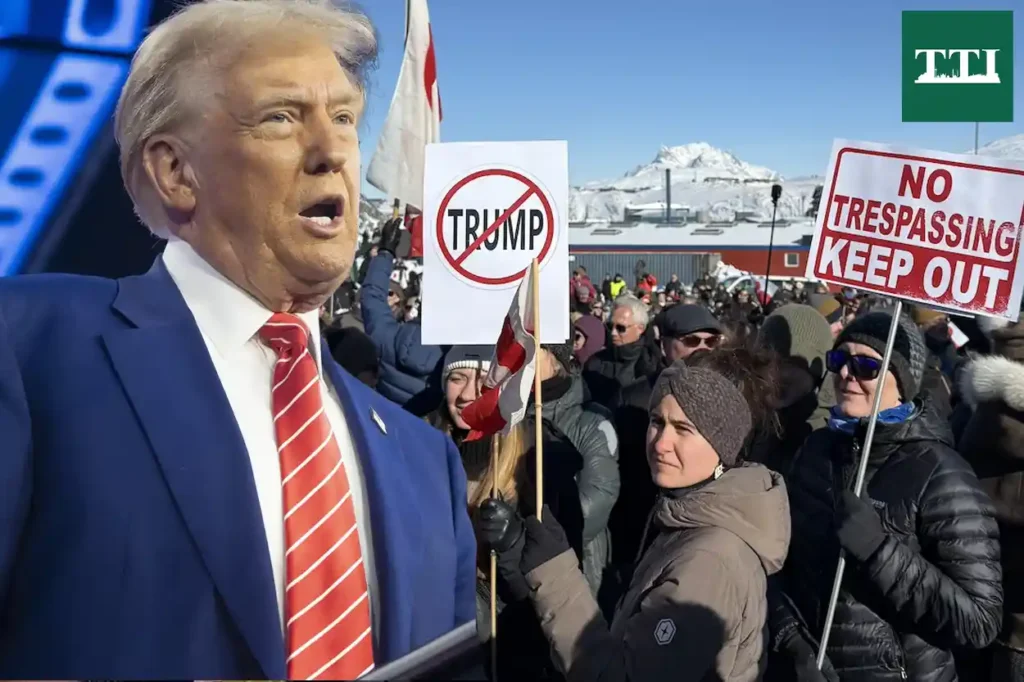
The geopolitical landscape of the Arctic has undergone a dramatic shift in recent years, placing Greenland at the center of a complex tug-of-war between sovereignty and superpower security interests. While the idea of a nation-state purchasing a massive, inhabited territory may sound like an artifact of 19th-century diplomacy, the persistent interest from President Donald Trump suggests that, for the United States, Greenland is far more than just a frozen expanse. It is a vital piece of the North American defense architecture, a potential treasure trove of critical resources, and a strategic gatekeeper in an increasingly contested northern frontier.
A Bastion of National Defense
The primary driver behind the American interest in Greenland is its indispensable role in national security. Geographically, Greenland is part of the North American continent, situated along the shortest flight paths between Europe and North America. This positioning makes it the ideal location for the U.S. ballistic missile early-warning system. Currently, the U.S. military maintains a significant presence at the Pituffik Space Base in the island’s northwest. This facility serves as a critical node in detecting potential threats before they reach the mainland.
As President Trump recently noted while aboard Air Force One, “We need Greenland from the standpoint of national security, and Denmark is not going to be able to do it. We’ll worry about Greenland in about two months… let’s talk about Greenland in 20 days.” His insistence that “We do need Greenland, absolutely. We need it for defence,” underscores a belief that the U.S. must have direct control over the territory to ensure long-term stability in the region.
Beyond missile defense, Greenland acts as a sentinel for the “GIUK gap”—the waters between Greenland, Iceland, and the United Kingdom. This maritime corridor is the primary gateway for Russian naval vessels and nuclear submarines entering the Atlantic. By securing a stronger foothold on the island, Washington aims to monitor and, if necessary, restrict the movements of rival powers, ensuring that no other major nation can establish a competing presence on North American soil.
Also Read: One hand bag rule vital amid power bank fire fears: Experts
The Wealth Beneath the Ice
While defense is the immediate priority, the economic potential of Greenland provides a secondary, yet equally compelling, motivation. As the global economy shifts toward green energy and high-tech manufacturing, the demand for “critical raw materials” has skyrocketed. Greenland is uniquely positioned to meet this demand. A 2023 survey revealed that 25 of the 34 minerals deemed critical by the European Commission—including lithium, graphite, and rare earth elements—are located within the island’s borders.
These minerals are the lifeblood of the electric vehicle industry and modern electronics, sectors currently dominated by Chinese supply chains. Accessing Greenland’s reserves would allow the United States to secure its own supply lines and reduce its dependence on foreign adversaries. However, the path to extraction is fraught with difficulty. Greenland currently maintains a ban on the extraction of oil and natural gas for environmental reasons, and its economy remains heavily reliant on fishing and annual subsidies from Denmark. The transition from a fishing-based economy to a mining powerhouse would require massive infrastructure investment and a complete overhaul of the island’s environmental policies.
Diplomatic Tensions and Legal Hurdles
The renewed American interest has not been met with open arms by the local population or the Danish government. The push for acquisition has sparked significant international condemnation. Prime Minister Jens-Frederik Nielsen has been vocal in his opposition to what he perceives as a violation of the island’s dignity. In a recent statement, Nielsen urged, “That’s enough now.” He further clarified the island’s stance by stating, “No more pressure. No more insinuations. No more fantasies of annexation. We are open to dialogue. We are open to discussions. But this must happen through the proper channels and with respect for international law.”
The legal reality of Greenland’s status further complicates any potential transfer of power. Since 1953, Greenland has been a formal territory of Denmark, and its status is protected by the Danish constitution. Any change in its legal standing would require a formal constitutional amendment in Copenhagen. Furthermore, the Act on Greenland Self-Government passed in 2009 granted the island broad autonomy, including the explicit right to declare independence from Denmark through a referendum. This means that any decision regarding the future of Greenland ultimately rests with its 57,000 residents, who have shown little interest in becoming a U.S. territory.
The strategic significance of Greenland is undeniable. It sits at the intersection of modern missile defense, maritime security, and the global race for mineral wealth. However, as long as the United States approaches the island as a commodity to be purchased rather than a sovereign partner to be engaged, the friction between Washington, Nuuk, and Copenhagen is likely to persist.