


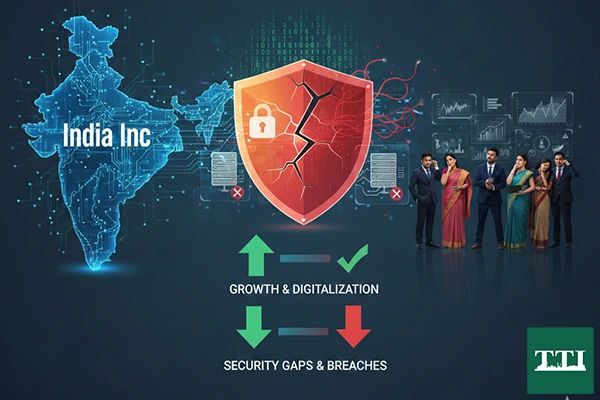
In the rapidly evolving landscape of 2026, Indian enterprises find themselves at a crossroads. As businesses accelerate their digital transformation journeys, a startling contradiction has emerged: despite record-breaking investments in cybersecurity software, digital defenses appear more vulnerable than ever.
This phenomenon, dubbed “India Inc’s Cyber Paradox,” highlights a critical gap between the procurement of security tools and the actual resilience of the organizations using them. According to recent ET Graphics data, while the number of security tools per organization has surged, the effectiveness of incident response and overall security posture has not followed suit.
What is the Cyber Paradox?
The Cyber Paradox refers to the counterintuitive reality where increasing the quantity of security solutions leads to a decrease in overall protection. For India Inc, this is not just a theoretical problem—it is an operational crisis.
Many Chief Information Security Officers (CISOs) in India now manage stacks consisting of 15 to 20 different security vendors. Instead of creating a “fortress,” this sprawl creates:
- Integration Friction: Tools from different vendors often fail to communicate, leaving “blind spots” that hackers exploit.
- Alert Fatigue: A surplus of tools generates thousands of notifications, many of which are false positives, burying genuine threats in digital noise.
- Operational Complexity: Maintaining, patching, and updating a bloated stack requires more manpower than most Indian firms currently possess.
Key Drivers of India’s Digital Security Gap
Why is India Inc struggling despite having the “best-in-class” technology? Several systemic issues are at play.
1. The Human Element and Talent Shortage
While software can be bought, expertise must be built. India currently faces a significant cybersecurity talent gap. Without skilled analysts to interpret the data generated by AI-driven tools, the software becomes little more than “shelfware.” A 2025 PwC report noted that nearly 60% of Indian organizations cited a lack of internal expertise as their primary barrier to effective AI-driven defense.
2. Execution Gaps and “Broken Basics”
The most sophisticated AI threat-hunter is useless if the underlying infrastructure is weak. Many Indian firms continue to operate with:
- Unpatched Servers: Known vulnerabilities are left open for months.
- Weak Third-Party Controls: Supply chain attacks have surged as hackers enter through smaller, less-secure vendors.
- Untested Incident Response: Having a plan is not the same as practicing it. Many firms find their “recovery plans” fail during a live ransomware event.
3. The Industrialization of Cybercrime
Threat actors have professionalized their operations. In 2025 and 2026, “Ransomware-as-a-Service” (RaaS) became a dominant model, allowing even low-skilled criminals to launch high-impact attacks against Indian sectors like BFSI (Banking, Financial Services, and Insurance) and EdTech.
The Rising Cost of Getting It Wrong
The financial and reputational stakes have never been higher. For a mid-sized Indian firm, a single ransomware attack can cost upwards of ₹10 crore in recovery and lost revenue. For larger enterprises, the figure often exceeds $1 million (₹8.4 crore) per incident.
| Metric | Impact on India Inc (2025-2026) |
| Median Detection Time | 30 Minutes |
| Median Resolution Time | 45 Minutes+ (Growing due to complexity) |
| Cost of Downtime | ~$1.8 Million per hour for Financial Services |
| Malware Detections | ~505 detections per minute nationwide |
From Procurement to Resilience: The Shift to 2026
To resolve the paradox, Indian business leaders are moving away from “buying more” and toward “securing better.” This shift involves three core strategies:
Embracing “Zero Trust” and Identity-First Security
Since AI can now mimic executive voices and write perfect business emails, “content-based” security is dead. Organizations are shifting to Zero Trust Architectures, where identity is the new perimeter. Every user and device must be continuously verified, regardless of whether they are inside or outside the corporate network.
Tool Consolidation and Platform Thinking
Rather than using 20 niche products, CISOs are consolidating their stacks into unified platforms (often via SASE or XDR solutions). This reduces complexity and ensures that security signals are correlated in one place, providing a “single pane of glass” view of the threat landscape.
Prioritizing Cyber Hygiene Over “Shiny Objects”
Industry experts now advocate for a “Basics-First” approach. This includes:
- Strict Patch Management: Prioritizing internet-facing assets.
- MFA Everywhere: Implementing multi-factor authentication for all access points.
- Simulation Drills: Running real-world “war games” to ensure teams know how to react when a breach occurs.
Conclusion: Securing the Future of Digital India
India’s digital economy is a powerhouse, contributing significantly to the national GDP. However, the Cyber Paradox proves that technology alone is not a silver bullet. True digital security requires a cultural shift—moving cybersecurity from an “IT problem” to a “C-suite strategic priority.”
As we head deeper into 2026, the winners will not be the companies with the most tools, but those with the most disciplined processes and the highest levels of operational visibility.