


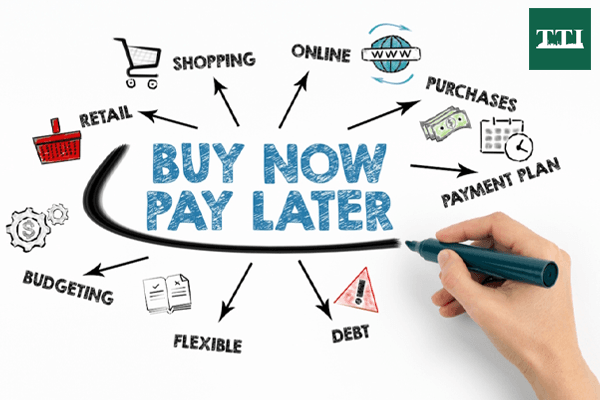
In an era where the accumulation of commodities has become the standard, it is increasingly easy to believe that an aspirational lifestyle is always within reach. Digital platforms and the convenience of e-commerce have put countless transaction options at our fingertips, making the “next best thing” feel like it is just one click away. Pop culture and social media frequently promote maximalist ideas of success and good living, which seep into the consumer psyche—particularly among younger generations. This cultural landscape has paved the way for the pervasiveness of Buy Now, Pay Later (BNPL) schemes, which offer a modern way for brands to encourage consumption through instant gratification.
BNPL is a type of short-term financing that provides buyers with real-time access to credit. These plans are often marketed as a tool to obtain goods and services that might otherwise be financially out of reach, and they are frequently touted as a friendlier replacement for credit cards. However, while they offer undeniable convenience, they also carry subtle risks that can lead to financial disorder if not managed with discipline.
The Psychology of Spending and Instant Gratification
The rise of these schemes is closely tied to shifting consumer habits. Many shoppers have moved away from the traditional practice of setting aside money for indulgent purchases, opting instead for instant transactions. BNPL services capitalize on this by providing a repayment period that is typically interest-free for the first 30 to 45 days. By breaking down a large purchase into smaller, more manageable installments, the “pain of paying” is minimized, making it easier for a consumer to justify a purchase they might otherwise skip.
Psychological biases often play a significant role in how these services are used. For instance, individuals with a high framing bias—those whose decisions are heavily influenced by how information is presented—may see BNPL as a stress-free payment option because it is seamlessly integrated into the checkout experience. Similarly, those with a self-control bias might succumb to the promise of instant gratification without fully considering the long-term consequences of defaulting on their repayments.
Also Read: Win-Win for Industry: How the India-U.S. Trade Deal Revitalizes Auto, Aero, and Pharma Sectors
Hidden Challenges and Financial Risks
While the accessibility of credit is a major advantage, BNPL schemes can inadvertently encourage overspending. Because these plans are often not labeled as traditional credit products, users may underestimate their total debt. This lack of a complete financial picture, combined with the ease of use, can lead to a debt trap.
One of the most significant “tricky” aspects of these schemes involves the consequences of delayed payments. If a consumer fails to pay within the interest-free window, the interest rates can skyrocket. In some cases, these rates are equivalent to or even higher than those charged by traditional credit cards. Furthermore, late or missed payments can negatively impact a person’s credit score, affecting their ability to secure loans in the future.
Additionally, navigating the logistics of BNPL is not always as simple as the initial purchase. Not all types of purchases are eligible for these formats, and the process for returning a product or obtaining a refund can become complicated when a third-party financier is involved. Consumers may find themselves caught between the merchant and the lender when trying to resolve a transaction issue.
Navigating the New Regulatory Landscape
The environment for BNPL is also changing due to tighter regulations. In many regions, authorities have begun to implement stricter rules around Prepaid Payment Instruments and digital lending to protect consumers from falling into cycles of debt. These regulations mean that BNPL providers may no longer be able to offer credit as easily or as widely as users have become accustomed to. For the consumer, this serves as a reminder that these services are, at their core, a form of debt that requires the same level of scrutiny as any other loan.
Balancing Convenience with Financial Discipline
Despite the potential pitfalls, BNPL can be a beneficial financial tool when used judiciously. For conscientious consumers who can resist impulse buys, it serves as a way to defer payments for necessary items without the immediate burden of a large lump-sum payment. Using these services responsibly can even help build a good credit history, provided that payments are made consistently and on time.
Before agreeing to a BNPL plan, it is essential to plan your cash flows carefully. Take note of the specific interest-free period, your personal credit limit, and the potential late fees. Understanding the terms and conditions is vital to ensuring that the convenience of the service does not outweigh the financial cost. If there is ever any doubt about the ability to repay, the safest path is to stick to spending well within your immediate means. Credit can be a powerful tool for building a lifestyle, but only when it is backed by a foundation of financial discipline.
Also Read: Building Your Safety Net: Why You Need a Divorce Fund and How to Start