


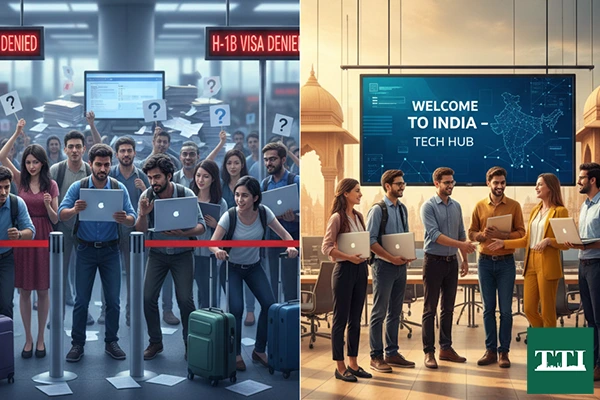
For decades, the United States has been the undisputed magnet for the world’s brightest minds. The H-1B visa program served as the primary pipeline, funneling thousands of elite engineers, data scientists, and AI specialists into Silicon Valley. However, a seismic shift is underway. According to a recent Bloomberg report from January 23, 2026, the tide has turned: the U.S. is now losing its top-tier tech talent to India in the wake of unprecedented H-1B visa “chaos.”
This migration isn’t just a ripple in the labor market; it is a fundamental realignment of the global tech economy. As policy shifts make the American dream increasingly prohibitively expensive and bureaucratically risky, India is emerging not just as a back-office hub, but as the new primary destination for high-end innovation.
The Catalyst: A $100,000 Barrier to Entry
The primary driver of this exodus is a radical overhaul of the H-1B fee structure. In late 2025, a new policy imposed a staggering $100,000 application fee for each new H-1B visa. Previously, these visas cost employers a few thousand dollars in administrative and legal fees.
The Financial Strain on Startups
While tech giants like Google or Microsoft might absorb these costs as “the price of doing business,” the impact on the startup ecosystem has been catastrophic. Early-stage companies, which historically relied on H-1B talent to scale quickly, now find themselves priced out of the market.
- Innovation Stagnation: Without access to global talent, U.S. startups are struggling to meet the technical demands of the AI race.
- Funding Shifts: Venture capitalists are increasingly advising founders to build their core engineering teams in Bangalore or Hyderabad rather than San Francisco to preserve runway.
The “Trump Gold Card” and Elite Selection
Compounding the fee hike is a shift toward a wage-based selection system. Effective February 2026, USCIS has transitioned from a random lottery to a weighted system that favors the highest-paid applicants. While intended to protect American wages, it has effectively barred entry-level “junior geniuses”—the very people who often grow to become the next generation of founders.
India’s Gain: From “Back Office” to “Innovation Frontline”
While the U.S. builds walls, India is building infrastructure. The “chaos” in the American immigration system has provided the Indian tech sector with a historic opportunity to retain its best and brightest.
The Rise of Global Capability Centers (GCCs)
Major multinationals are no longer waiting for talent to come to the U.S.; they are taking the jobs to the talent. India now hosts over 1,600 Global Capability Centers (GCCs). These are not just call centers; they are sophisticated R&D hubs for companies like Goldman Sachs, Walmart, and Adobe.
- Projected Growth: The GCC segment in India is expected to reach $105 billion by 2030.
- Sophisticated Roles: Roles in AI, cybersecurity, and cloud architecture are being filled locally in India, bypassing the need for H-1B sponsorship entirely.
Reversing the “Brain Drain”
For years, India’s top graduates from the IITs (Indian Institutes of Technology) viewed a move to the U.S. as the pinnacle of success. That aspiration is fading. Faced with “administrative processing” delays, social media screenings, and the risk of being “stranded” abroad due to unpredictable visa renewals, many are choosing to stay home.
The Human Cost of Visa Uncertainty
Beyond the financial metrics, there is a profound human element to this shift. The Bloomberg report highlights a growing sense of “visa fatigue” among Indian nationals in the U.S.
The “Travel Trap”
New regulations and increased scrutiny have made international travel a gamble for H-1B holders. Many professionals have spent years in the U.S. but are now advised by corporate counsel not to leave the country for fear of being denied reentry. This “gilded cage” effect is driving high-level attrition, as talented individuals choose career mobility in India over legal limbo in America.
The Green Card Backlog
The elephant in the room remains the decades-long wait for permanent residency. For Indian-born professionals, the wait for an EB-2 or EB-3 green card can exceed 50 years. When coupled with the new $100,000 H-1B fee, the path to American citizenship seems more like an impossible obstacle course than a viable future.
Economic Implications for the United States
The long-term consequences of this talent drain are starting to manifest in the U.S. economy.
| Feature | Pre-2025 H-1B System | 2026 “Chaos” Era |
| Primary Fee | ~$2,500 – $8,000 | $100,000 |
| Selection Basis | Random Lottery | Wage-Based Priority |
| Startup Access | High | Low/Prohibitive |
| Talent Direction | Inward (to U.S.) | Outward (to India/Canada) |
The Productivity Gap
Economists warn that the loss of H-1B workers—who contribute an estimated $100 billion annually to U.S. output—will lead to a decline in total factor productivity. If the U.S. cannot secure the specialized talent needed for the next phase of the AI revolution, it risks losing its competitive edge to offshore hubs.
Conclusion: A New Era of Global Tech
The H-1B visa chaos of 2026 marks the end of an era where the U.S. was the default destination for tech excellence. As India strengthens its position as a global tech powerhouse, the “Great Tech Reversal” is likely to accelerate. For the U.S., the challenge will be to find a balance between protecting domestic labor and maintaining the open-door policy that built Silicon Valley.