


Delhi is a city that doesn’t just sit on the map; it breathes, pulses, and occasionally overwhelms. As the capital of India, it serves as a living museum where the remnants of several empires—from the Mughals to the British—coexist with the glass-fronted skyscrapers of a modern superpower. For the traveler, Delhi is a rite of passage. It is a place where you can find serenity in a 16th-century garden in the morning and navigate the most chaotic market in the world by the afternoon. To truly appreciate Delhi, one must look past the initial layer of noise and dust to find the intricate beauty that lies beneath.
The Grandeur of Old Delhi
The journey through Delhi often begins in the walled city, originally known as Shahjahanabad. Here stands the Red Fort, an imposing fortress of red sandstone that once served as the main residence of the Mughal Emperors. Walking through its massive Lahori Gate, you are transported back to 1639. The architecture is a masterclass in the Indo-Islamic style, featuring marble palaces and intricate floral carvings. Just across from the fort is the Jama Masjid, one of the largest mosques in India. Standing in its vast courtyard, you feel the weight of history. To get the best perspective of the city’s scale, you can climb the narrow stairs of its southern minaret, which offers a bird’s-eye view of the sprawling labyrinth of the Old City.
Connecting these heritage sites is Chandni Chowk, a market that has been active for over three centuries. Navigating this area is an art form in itself. Instead of fighting the crowds, it is best to hire a cycle rickshaw. Your driver will skillfully weave through lanes so narrow that you can touch the walls on both sides. This is where you will find the Khari Baoli, Asia’s largest wholesale spice market. The air here is thick with the scent of dried chilies, turmeric, and cardamom, a sensory experience that is as intense as it is unforgettable.
Also Read: The Ultimate Guide to Navigating the City of Dreams: Mumbai Travel Tips
The Architectural Legacy of the Mughals and the British
Moving south, the landscape shifts from the cramped alleys of the old city to the wide, leafy avenues of New Delhi, designed by British architect Edwin Lutyens. At the heart of this district is India Gate, a soaring memorial arch that honors the soldiers of the British Indian Army. It is best visited at night when the structure is bathed in golden light and the surrounding lawns become a massive picnic ground for local families.
Not far from here lies Humayun’s Tomb, a UNESCO World Heritage site that often feels like a peaceful sanctuary. This garden tomb was the first of its kind on the Indian subcontinent and served as the primary inspiration for the Taj Mahal. The symmetry of the Persian-style “Charbagh” gardens provides a sense of order and calm that contrasts sharply with the city’s external energy.
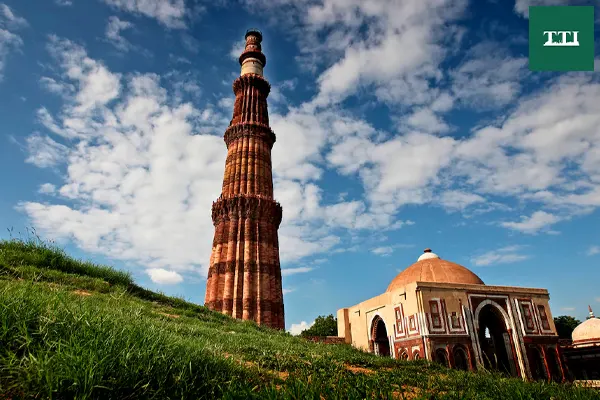
Further south still is the Qutub Minar, a towering 73-meter minaret that marks the beginning of Muslim rule in India. The complex is a fascinating graveyard of history, where stones from older temples were repurposed to build the Quwwat-ul-Islam Mosque. In the center of the courtyard stands the famous Iron Pillar, which has miraculously resisted corrosion for over 1,600 years, standing as a testament to ancient Indian metallurgy.
Spiritual Sanctuaries and Modern Marvels
Delhi is also a city of profound spirituality. The Lotus Temple, with its striking flower-like design, is a Bahá’í House of Worship that welcomes everyone regardless of their religious background. There are no idols or rituals here; instead, the focus is on silence and meditation within its massive marble petals. In contrast, the Akshardham Temple is a sprawling complex that celebrates traditional Hindu culture through high-tech exhibitions and grand stone carvings. It is a modern wonder that requires several hours to explore, especially if you stay for the spectacular musical fountain show at dusk.
For a more intimate spiritual experience, Gurudwara Bangla Sahib is essential. The Sikh temple is recognizable by its stunning golden domes and the large “Sarovar” or holy pool in its center. The most moving part of a visit here is the Langar, a massive community kitchen where volunteers serve free meals to thousands of people every day. It is a powerful display of selfless service and equality that defines the heart of the city.
Practical Tips for the Modern Traveler
Navigating Delhi requires a mix of strategy and patience. The Delhi Metro is your best friend; it is one of the cleanest and most efficient transit systems in the world, allowing you to bypass the infamous surface traffic. For shorter distances, ride-sharing apps like Uber and Ola are preferable to negotiating with auto-rickshaw drivers on the street.
When it comes to food, Delhi is the undisputed culinary capital of India. While street food is tempting, travelers should be cautious. Look for stalls with high turnover—the busier the place, the fresher the ingredients. Always stick to bottled water and avoid ice in drinks. Lastly, dress respectfully. While Delhi is a modernizing metropolis, modesty is still highly valued, especially when visiting the various religious sites that form the backbone of the city’s cultural identity.
Delhi is not a city you simply visit; it is a city you experience. If you approach it with an open mind and a bit of a thick skin, it will reward you with stories and sights that stay with you for a lifetime.
Also Read: The Garden City Guide: Navigating the Magic of Bengaluru