


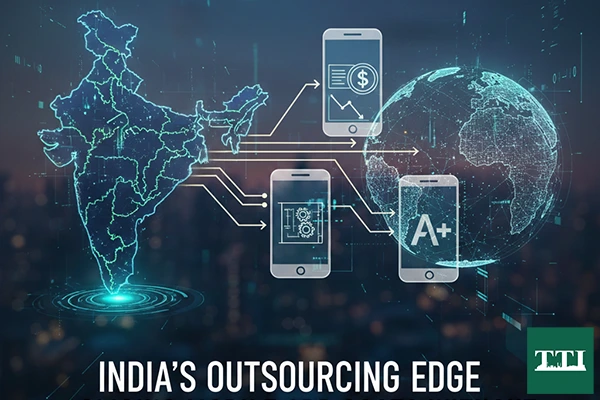
The year 2026 marks a pivotal shift in how global startups and established enterprises approach digital product development. As the cost of engineering talent continues to skyrocket in Silicon Valley and London, the “Indian Outsourcing” model has evolved. It is no longer just about the “cheap labor” narrative; it is about disciplined engineering, strategic waste reduction, and rapid scalability.
A recent report by WebProNews highlights how Indian firms are enabling startups to slash mobile app development costs by 40% to 70% while maintaining enterprise-grade quality. Here is an in-depth look at how India is redefining the economics of app development.
1. The Strategy: Reducing Waste, Not Quality
In Western markets, app development budgets often vanish due to “feature creep” and poor initial planning. Indian firms have countered this by enforcing a culture of structural discipline from day one.
The Power of the MVP (Minimum Viable Product)
Indian developers have mastered the art of the lean MVP. Rather than building a “Swiss Army Knife” app that takes 18 months to launch, they focus on:
- Pinpointing core user pain points.
- Architecting for future growth while building only essential features.
- Accelerating launch cycles to get real-time user feedback.
By narrowing the scope to what truly matters, founders can preserve capital for marketing and user acquisition rather than over-engineering features that may never be used.
2. 2026 Pricing Realities: What Does it Cost?
As we move through 2026, pricing in India remains highly competitive compared to global standards. While there have been moderate increases due to the rising demand for specialized skills (like AI and Blockchain), the value proposition remains unmatched.
| App Complexity | 2026 Estimated Cost (INR) | 2026 Estimated Cost (USD) |
| Basic App | ₹6,90,000 | ~$8,200 |
| Mid-Tier App | ₹12,60,000 – ₹25,22,000 | ~$15,000 – $30,000 |
| Enterprise Solution | ₹65,00,000+ | $80,000+ |
With hourly rates hovering between $12 and $50, Western companies are finding that they can hire a full-stack Indian team for the price of a single senior developer in San Francisco.
3. Technology Choices That Drive Savings
Choosing the right tech stack is critical to long-term affordability. Indian outsourcing firms are increasingly steering clients toward Cross-Platform Development Tools.
Flutter and React Native
By using frameworks like Flutter or React Native, developers can write a single codebase that runs on both iOS and Android. This provides several cost-saving benefits:
- Shared Logic: Up to 90% of the code is shared across platforms.
- Faster Testing: Quality Assurance (QA) teams only need to verify one codebase.
- Simpler Maintenance: Future updates and bug fixes are pushed once rather than twice.
According to WebProNews, choosing the wrong stack can increase long-term maintenance costs by over 200%. Indian firms specialize in selecting scalable stacks that minimize the need for expensive future rewrites.
4. Agile Discipline: Catching Errors Before They Become Expenses
One of the biggest misconceptions about outsourcing is a lack of control. Modern Indian firms have debunked this through rigorous Agile practices.
- Short Sprints: Weekly check-ins ensure the product aligns with the founder’s vision.
- Proactive Rhythms: Detecting a logic flaw in week two costs far less than fixing it in week twenty.
- Flexible Contracts: Many firms now offer hybrid models—fixed costs for the MVP and “dedicated team” models for the scaling phase.
5. Case Study: Innovation Beyond Borders
The article highlights success stories where Indian firms delivered U.S.-caliber designs for global giants. Companies like eSparkBiz, HCL Technologies, and Mobcoder are no longer just service providers; they are innovation partners.
For instance, Konstant Infosolutions recently revamped a food delivery platform by integrating AI-driven recommendations and AWS cloud architecture while slashing the previous development quote by 60%. Similarly, firms like AppSierra have successfully served Fortune 500 companies, proving that scale and quality are no longer mutually exclusive.
6. How to Vet the Right Partner
With the Indian app sector projected to reach $626 billion by 2030, the market is crowded. Success depends on selecting the right partner. The experts suggest looking for:
- Startup Savvy: Does the firm understand the need for speed and pivots?
- Communication Clarity: Do they challenge your ideas or just say “yes”?
- Maintainable Code: Are they providing thorough documentation for future handoffs?
Conclusion: The Ultimate Runway Extender
For a startup, “runway” is life. By tapping into India’s mature ecosystem, founders are not just saving money; they are buying time. Whether it is validating a new concept through an MVP or scaling an enterprise platform with AI integration, India’s outsourcing edge remains the most viable way to build high-performance mobile applications without breaking the bank.
As the industry continues to grow at a CAGR of 17.8%, the message for 2026 is clear: Invest in discipline, reduce waste, and build for scale.