


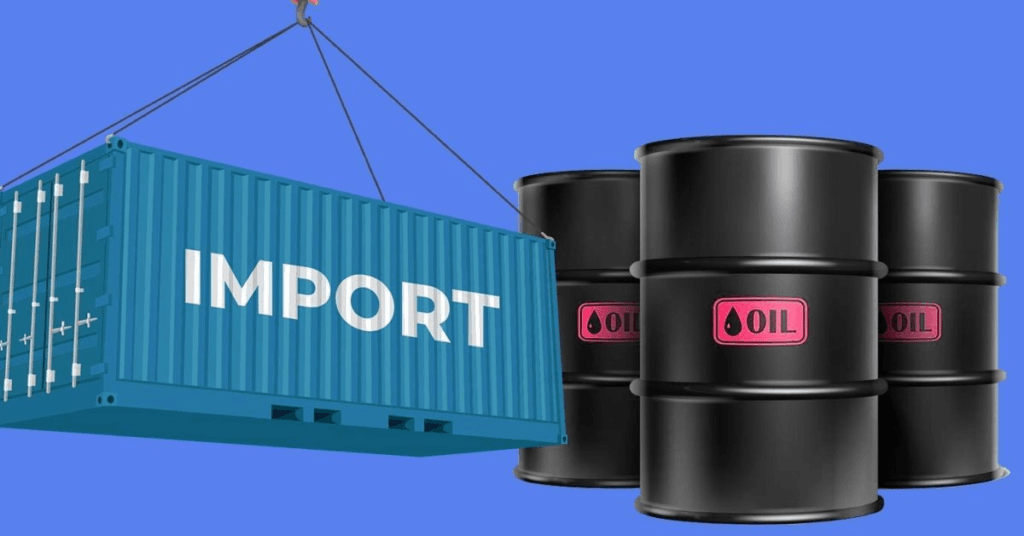
India is the world’s third-largest oil consumer, with demand growing steadily due to industrialization, urbanization, and rising transportation needs. Despite significant domestic production, India imports nearly 80% of its crude oil requirements, making energy security a strategic priority. Oil imports impact the country’s trade balance, foreign exchange reserves, and economic stability, while global price fluctuations can affect inflation and industrial costs. Ensuring energy security involves diversifying import sources, maintaining strategic reserves, adopting alternative energy, and improving domestic production. This article explores India’s oil import dependence, challenges to energy security, government strategies, and future prospects.
India’s Oil Import Landscape
India’s domestic oil production is insufficient to meet its growing energy demand. Crude oil is primarily imported from countries in the Middle East, Africa, and Russia. Major suppliers include Iraq, Saudi Arabia, the United Arab Emirates, and the United States.
Dependence on Middle East
Historically, India has relied heavily on Middle Eastern countries for oil imports. While these nations provide a stable supply, geopolitical tensions, conflicts, and price volatility in the region pose risks to energy security.
Rising Import Costs
Global crude oil prices are influenced by international factors such as OPEC decisions, US shale oil production, and geopolitical conflicts. Fluctuations in oil prices directly affect India’s import bill, trade deficit, and inflation. For instance, a sudden surge in crude prices increases the cost of transportation, fuel, and manufacturing inputs.
Diversification of Sources
To reduce dependence on a single region, India has diversified its oil imports. Countries like the United States, Russia, and Brazil now supply a portion of India’s crude requirements. Diversification helps mitigate geopolitical risks and ensures a more stable supply chain.
Challenges to India’s Energy Security
1. Import Dependence
High dependence on imported crude exposes India to external shocks such as price hikes, supply disruptions, and geopolitical conflicts. This makes the economy vulnerable to oil price volatility, affecting inflation, industrial growth, and fiscal balance.
2. Strategic Vulnerability
Most oil imports arrive via maritime routes passing through chokepoints like the Strait of Hormuz. Any disruption due to conflict, piracy, or accidents can significantly impact supply, posing a strategic challenge for energy security.
3. Domestic Production Limitations
While India has domestic oil reserves in states like Assam, Gujarat, and offshore fields, production growth has not kept pace with rising demand. Aging fields, exploration challenges, and declining reserves limit the contribution of domestic production.
4. Environmental Concerns
Reliance on fossil fuels contributes to carbon emissions and environmental degradation. India faces pressure to transition toward cleaner energy while balancing economic growth and industrial demand.
5. Infrastructure and Storage Constraints
Insufficient crude storage capacity and aging refining infrastructure can limit India’s ability to respond to supply disruptions. Maintaining adequate strategic petroleum reserves is critical to managing short-term crises.
Government Initiatives for Energy Security
India has undertaken several measures to enhance energy security and reduce import dependence.
Strategic Petroleum Reserves (SPR)
India maintains strategic petroleum reserves to mitigate supply disruptions. These reserves, located in Vishakhapatnam, Mangalore, and Padur, can supply oil for several weeks during emergencies. Plans are underway to expand capacity to cover 90 days of imports.
Diversification of Import Sources
India actively seeks new suppliers and long-term contracts to reduce dependence on the Middle East. Partnerships with the US, Russia, Brazil, and African countries enhance supply stability and mitigate geopolitical risks.
Domestic Exploration and Production
Government policies encourage exploration and production through initiatives like the Hydrocarbon Exploration Licensing Policy (HELP) and Production Sharing Contracts (PSC). These policies aim to attract investment, improve recovery rates, and boost domestic output.
Renewable Energy and Alternative Fuels
To reduce crude dependency, India is promoting renewable energy sources such as solar, wind, and biofuels. Electric vehicles (EVs) and compressed natural gas (CNG) adoption also help lower oil consumption, contributing to energy security.
Infrastructure Development
Investments in pipelines, refineries, and storage facilities improve supply chain resilience. Enhanced port facilities, inland pipelines, and fuel terminals ensure smooth distribution and minimize dependency on vulnerable transport routes.
Role of Technology in Energy Security
Technological advancements are critical in enhancing energy security.
Exploration and Production Technology
Advanced seismic imaging, deep-water drilling, and enhanced oil recovery techniques increase domestic production and extend the life of existing fields.
Smart Refineries and Digitalization
Digital tools and AI optimize refinery operations, reduce wastage, and improve efficiency. Predictive maintenance and process automation ensure consistent supply and cost savings.
Renewable Energy Integration
Technology enables integration of solar, wind, and biofuels into the energy mix. Energy storage solutions and smart grids improve reliability and reduce dependence on imported oil.
Economic Implications of Oil Imports
High oil import dependence impacts India’s economy in several ways:
Trade Deficit
Oil imports constitute a significant portion of India’s import bill, contributing to a trade deficit. Rising global prices exacerbate this issue, putting pressure on foreign exchange reserves.
Inflationary Pressures
Crude price fluctuations affect fuel costs, transportation, and industrial inputs, leading to inflation. High oil prices can slow economic growth and reduce consumer spending.
Industrial Competitiveness
Energy-intensive industries such as chemicals, steel, and cement are directly affected by oil prices. Volatile costs can reduce competitiveness and profitability in domestic and global markets.
Future Outlook
India’s energy security strategy focuses on diversification, domestic production, renewable energy adoption, and technological innovation. By reducing import dependence, strengthening strategic reserves, and promoting clean energy, India aims to build a resilient energy ecosystem.
The government’s push for electric mobility, biofuels, and energy efficiency programs will further reduce crude consumption. At the same time, strengthening partnerships with oil-producing nations ensures stable supply at competitive prices.
Global trends such as energy transition, decarbonization, and advanced extraction technologies will shape India’s energy landscape. Investments in research, infrastructure, and policy reforms are key to achieving long-term energy security while supporting economic growth.
Conclusion
Oil imports remain a critical factor in India’s energy security. Dependence on foreign crude exposes the country to price volatility, geopolitical risks, and strategic vulnerabilities. Challenges such as limited domestic production, infrastructure constraints, and environmental concerns further complicate the scenario.
India has responded with measures including strategic petroleum reserves, diversification of suppliers, enhanced domestic exploration, renewable energy adoption, and technological integration. Strengthening infrastructure, promoting alternative fuels, and encouraging clean energy transitions are essential to reducing oil dependency.
Achieving energy security requires a balanced approach that combines economic efficiency, environmental sustainability, and strategic foresight. By implementing these strategies, India can ensure a stable, resilient, and sustainable energy supply, supporting industrial growth, consumer needs, and national development goals.
FAQs
- Why is India highly dependent on oil imports?
Domestic production is insufficient to meet growing demand, requiring nearly 80% of crude oil to be imported from other countries. - What are the main risks associated with oil imports?
Risks include price volatility, supply disruptions due to geopolitical conflicts, maritime chokepoint vulnerabilities, and environmental concerns. - How is India reducing its dependence on imported oil?
Through strategic petroleum reserves, diversification of suppliers, domestic exploration, renewable energy adoption, and promotion of electric vehicles and alternative fuels. - How do oil imports impact India’s economy?
They affect the trade deficit, fuel costs, industrial competitiveness, and inflation, influencing overall economic stability and growth.
Next Topic: AI and Quantum Technologies: Redefining Business Competitiveness in 2026
Also Check: Supply Chain Challenges in Indian Manufacturing