


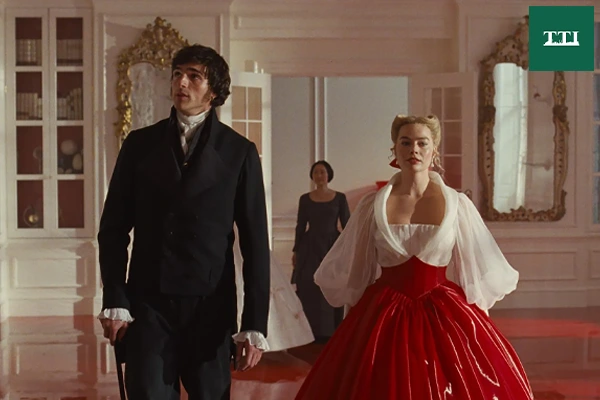
In Emerald Fennell’s bold new cinematic adaptation of Wuthering Heights, the wild and wind-swept moors are not just a setting, but a sartorial directive. Starring Margot Robbie as Catherine Earnshaw and Jacob Elordi as Heathcliff, the film reimagines Emily Brontë’s 1847 classic with a primal, visceral energy that is reflected intensely in its costume design. This exclusive first look reveals a wardrobe that balances historical silhouettes with a raw, “wild and wonderful” aesthetic, capturing the suppressed desire and chaotic passion of its iconic characters.
A Departure from Regency Politeness
While many Victorian adaptations lean into the stiff collars and pristine linens of the era, Fennell’s vision—and the work of her costume team—takes a decidedly more “sweaty” and organic approach. The costumes for Catherine and Heathcliff are designed to feel lived-in, reacting to the harsh Yorkshire elements. Instead of the delicate embroidery typically seen in period dramas, the fabrics here are heavy, textured, and often distressed. This choice highlights the “primal” nature of the story that Fennell has frequently cited in interviews, moving away from the domesticity of the Grange and into the rugged, unyielding atmosphere of the Heights.
Also Read: 8 Hydrating Setting Sprays for a Natural, Skin-Like Finish
Catherine Earnshaw: Mythic Charisma and Bound Spirit
Margot Robbie’s Catherine is portrayed with what Fennell describes as “mythic charisma.” Her wardrobe evolves alongside her tragic arc, shifting from the uninhibited, almost feral garments of her childhood on the moors to the restrictive, structured corsetry of her life as Mrs. Linton. The early costumes feature layers of wool and linen in earthy tones—moss greens, deep browns, and Slate grays—that allow her to blend into the landscape. As she transitions into the world of the Lintons, the costumes become more “civilized” but carry a sense of suffocation. The lacing of a corset, featured prominently in early previews, serves as a visual metaphor for the societal expectations tightening around her wild spirit.
Heathcliff: The Dark, Distressed Anti-Hero
Jacob Elordi’s Heathcliff is a study in rugged masculinity and “Otherness.” His costumes are characterized by a lack of refinement that speaks to his status as an outsider. He is often seen in heavy, dark overcoats and salt-and-pepper knits that appear weathered by the Atlantic gales. There is a deliberate tactile quality to his clothes—rough wools and stained leathers—that emphasizes his physical labor and his connection to the earth. Unlike the polished gentlemen of the era, Heathcliff’s attire is functional and fierce, designed to withstand the moors while reflecting the internal fire that drives his quest for revenge.
Symbolism Through Fabric and Silhouette
The costume design utilizes a distinct visual language to contrast the two main households. The residents of Wuthering Heights wear “wild” garments—unstructured, layered, and durable—while the inhabitants of Thrushcross Grange are draped in “wonderful” but fragile silks and velvets. This sartorial divide underscores the class conflict and the clash between nature and civilization that sits at the heart of Brontë’s novel. The use of “sweat-dappled” textures and raw edges ensures that the characters never feel like they are merely wearing costumes; they are wearing their histories and their heartbreaks.
A Modern Gothic Vision
Ultimately, the costumes in Fennell’s Wuthering Heights serve to bridge the gap between 1847 and 2026. By focusing on the emotional and physical reality of the characters rather than strict historical accuracy, the film creates a “wild and wonderful” world that feels both ancient and contemporary. The clothing doesn’t just dress the actors; it breathes with them, fights with them, and eventually, mourns with them.
Also Read: Big Bags: Why Carrying Everything Is Always in Style