


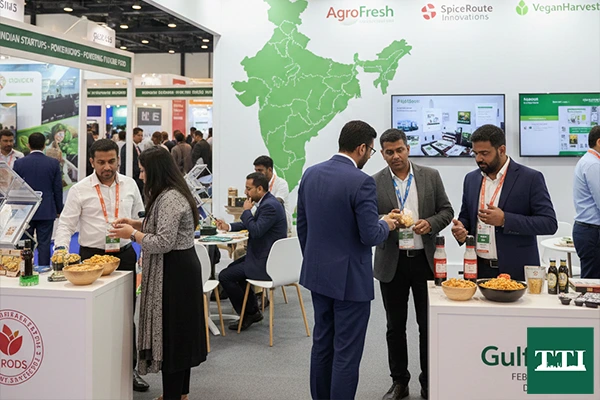
The global food landscape is undergoing a seismic shift, and at the heart of this transformation is the Indian startup ecosystem. As Gulfood 2026 kicks off in Dubai, the spotlight is firmly on India, which has been designated as the Partner Country for the first time in the event’s history. This landmark participation is not just about size—though the Indian pavilion has doubled to a massive 1,434 square meters—but about the technological and innovative prowess of its new-age entrepreneurs.
With the Ministry of Commerce and Industry and APEDA (Agricultural and Processed Food Products Export Development Authority) leading the charge, Indian agri-startups are set to redefine the “Farm to Foreign” vision on a global stage.
The Strategic Importance of Gulfood 2026 for India
Gulfood is widely regarded as the world’s largest annual food and beverage sourcing event. For 2026, the stakes are higher than ever. Held from January 26 to 30, the event spans two major venues: the Dubai World Trade Centre (DWTC) and Dubai Expo City.
Partner Country Status and CEPA
India’s role as the Partner Country underscores its strategic importance as a reliable sourcing hub. This collaboration is deeply rooted in the India-UAE Comprehensive Economic Partnership Agreement (CEPA), which has significantly lowered trade barriers. By leveraging this agreement, Indian startups are gaining unprecedented access to the Middle Eastern, African, and European markets.
Doubling the Footprint
The sheer scale of India’s presence—161 exhibitors from 25 states—reflects a maturing export industry. From the lush hills of Assam to the fertile plains of Bihar and Haryana, the diversity of India’s agricultural output is being showcased through:
- GI-Tagged Products: Highlighting unique regional specialties.
- Organic Produce: Catering to the rising global demand for clean labels.
- Processed Foods: Moving up the value chain from raw commodities to branded goods.
Spotlight on the BHARATI Pavilion: The Startup Engine
A central pillar of India’s 2026 showcase is the BHARATI Pavilion, located within the Startup Zone at the DWTC. This flagship initiative by APEDA is designed specifically to promote export-ready agri-food and agri-tech startups.
The Selection Process
Out of more than 100 applicants nationwide, only eight high-potential startups were selected through a rigorous national-level screening. These startups represent the “best of the best” in Indian innovation, offering solutions that range from AI-driven supply chain management to revolutionary plant-based proteins.
Tech-Driven Solutions
The BHARATI initiative (Bharat’s Hub for Agritech, Resilience, Advancement, and Incubation for Export Enablement) aims to bridge the gap between rural innovation and international markets. The startups featured are focusing on:
- Precision Agriculture: Using IoT and data to improve crop yields and quality.
- Sustainable Packaging: Reducing the carbon footprint of food exports.
- Traceability: Utilizing blockchain to provide “farm-to-fork” transparency for global buyers.
Enhancing Global Engagement Through Culinary Excellence
To ensure that innovation isn’t just seen but also tasted, the Indian Pavilion features a dedicated Culinary Area. Here, renowned chefs conduct live demonstrations using ingredients provided by the participating startups and FPOs (Farmer Producer Organisations).
Why Experiential Marketing Matters
For international buyers, seeing the versatility of Indian pulses, grains, and millets in a gourmet setting is a powerful convincer. These live sessions highlight:
- The adaptability of Indian ingredients in global cuisines.
- The nutritional profile of “Superfoods” like millets.
- The ease of use of modern, processed Indian food products.
Economic Projections: Targeting $30 Billion in Agri-Exports
The push at Gulfood 2026 comes at a time when India’s agri-exports are on a steep upward trajectory. APEDA-promoted exports recorded a 7% growth in the first half of the current fiscal year, reaching approximately $18.6 billion.
The Path Forward
Experts project that with the momentum gained from Gulfood and the integration of the startup engine, India’s agri-exports are poised to cross the $30 billion mark in 2026. This shift from commodity-driven exports to value-added, tech-enabled trade is expected to:
- Increase the income of smallholder farmers.
- Reduce post-harvest wastage through better logistics.
- Establish “Brand India” as a leader in food safety and sustainability.
“India’s participation at Gulfood 2026 is a testament to our expanding engagement in international agri-trade and our commitment to global food security.” — Ministry of Commerce & Industry
Conclusion: A Future-Ready Food System
Gulfood 2026 represents a turning point for Indian agriculture. By placing startups at the forefront, India is signaling to the world that it is no longer just the “world’s pantry,” but also its “innovation lab.” The synergy between government policy (CEPA), institutional support (APEDA), and entrepreneurial grit is creating a robust ecosystem capable of meeting the rigorous standards of the global market.
As these eight selected startups take their place in Dubai, they carry with them the potential to transform India’s agricultural landscape into a modern, sustainable, and highly profitable export powerhouse.