


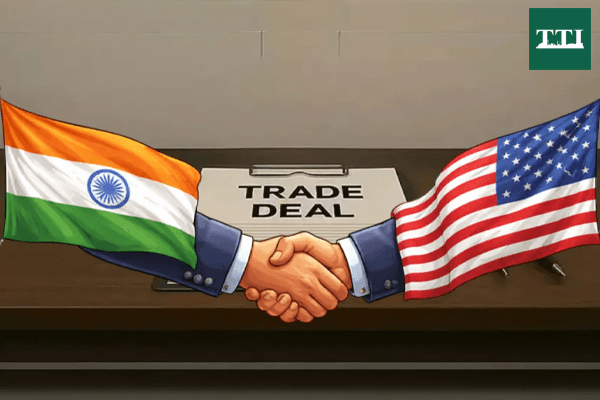
In a major turning point for bilateral ties, India and the U.S. have introduced an Interim Trade Agreement framework, signaling a cooling of trade disputes and a fresh start for economic partnership. Revealed after top-level talks between Prime Minister Narendra Modi and President Donald Trump, the deal grants India vital relief from “national-security” tariffs in exchange for a pledge to buy $500 billion worth of American products over the next five years.
Concessions on National Security Tariffs
A cornerstone of the deal is the relief granted to India from the stringent “Section 232” tariffs, which the U.S. traditionally imposes on imports deemed a threat to national security. Under the new framework, the United States has agreed to remove tariffs on certain Indian aircraft and aircraft parts. These duties were originally part of the metal-related proclamations covering aluminum, steel, and copper.
In the automotive sector, India has secured a preferential tariff-rate quota for automotive parts. This provides Indian manufacturers a distinct advantage in the U.S. market compared to other global suppliers who remain subject to the broad 2019 national security proclamations on automobiles. Furthermore, the agreement paves the way for the pharmaceutical industry; generic pharmaceuticals and their ingredients are slated for negotiated outcomes and potential tariff removals, contingent on the final findings of ongoing U.S. investigations.
Also Read: Madras High Court Upholds ₹1.5 Crore Penalty on Actor Vijay
India’s Market Access and Purchase Commitments
To secure these concessions, India has agreed to provide substantial market access to American producers. New Delhi will eliminate or reduce tariffs on all U.S. industrial goods and a wide variety of agricultural products. Key American exports that will benefit from lower Indian duties include soybean oil, tree nuts, and fresh and processed fruits.
The deal also targets the energy and technology sectors. India has officially indicated its intent to purchase $500 billion worth of U.S. energy products, aircraft, precious metals, technology goods, and coking coal over the coming five-year period. This includes a strategic shift toward American energy resources as India moves to diversify its sourcing. Additionally, both nations have pledged to scale up trade in emerging technologies, specifically highlighting Graphics Processing Units (GPUs) and hardware used in data centers.
Safeguarding Domestic Interests and Farmers
Despite the broad opening of markets, the Indian government has emphasized that “red lines” were maintained to protect vulnerable domestic sectors. Union Commerce Minister Piyush Goyal noted that the agreement reflects a commitment to safeguarding rural livelihoods. Sensitive agricultural and dairy products—including milk, cheese, poultry, wheat, rice, maize, and certain vegetables—remain “completely protected” and are excluded from the tariff concessions offered to the U.S.
The deal also establishes rigorous “rules of origin.” These rules are designed to ensure that the trade benefits accrue strictly to the Indian and American economies, preventing third-party countries from using the agreement as a “pass-through” to bypass their own tariff barriers.
Addressing Non-Tariff Barriers and Regulatory Alignment
Beyond simple duty cuts, the framework addresses the “friction” in trade caused by regulatory hurdles. India has agreed to resolve long-standing non-tariff barriers affecting U.S. medical devices and Information and Communication Technology (ICT) goods. This includes the elimination of restrictive import licensing procedures that have historically delayed market access for American tech firms.
Within six months of the agreement taking effect, India will also review and potentially accept U.S.-developed or international standards for various products, simplifying the certification process for exporters. Both nations have committed to a “consultative and time-bound” approach to ensure these regulatory changes are implemented smoothly.
Path Toward a Comprehensive Bilateral Trade Agreement
This interim framework is viewed as a “stepping stone” toward a more ambitious Bilateral Trade Agreement (BTA). The joint statement clarifies that while the current reciprocal tariff rate for many Indian goods will be set at 18% (down from previous highs of 50% during the peak of the “Russian oil” tariff dispute), there is scope for further reductions as BTA negotiations progress.
The agreement provides a safeguard clause: if either country modifies its agreed-upon tariffs in the future, the other may also adjust its commitments. This flexibility ensures that the partnership remains balanced as both democracies work toward the shared goal of a $30 trillion accessible market for their exporters, entrepreneurs, and small businesses.
Also Read: Buy Now, Pay Later: A Helpful Tool or a Debt Trap?