


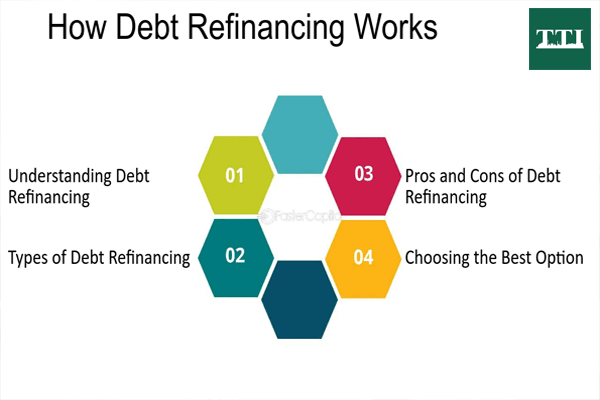
Debt refinancing is a strategic financial move that involves replacing an existing loan with a new one, typically under more favorable terms. This process allows borrowers to reorganize their debt by securing lower interest rates, improving Equated Monthly Installment (EMI) terms, or shortening the loan tenure. While it may seem like an additional administrative step, debt refinancing can be a powerful tool for optimizing your financial health and freeing up capital for future goals.
Understanding the Role of Interest Rates
The primary motivation behind debt refinancing is almost always the pursuit of better interest rates. Most loans, whether they are for a home, an education, or a personal expense, operate on either a fixed or a floating interest rate. Fixed rates remain constant throughout the life of the loan, while floating rates fluctuate based on market conditions.
In a broader economic sense, these rates are heavily influenced by the repo rate—the rate at which central banks lend money to commercial banks. When the repo rate changes, it eventually impacts the lending rates offered to consumers. For example, if the repo rate decreases, you have a direct opportunity to lower your interest costs. You can either negotiate a lower rate with your current lender or seek a new lender who is willing to offer a more competitive package. Conversely, when rates rise, lenders often increase the loan tenure by default to keep EMIs manageable. In such cases, refinancing can help you find a deal that keeps your repayment schedule on track without excessive interest costs.
Also Read: Building Your Safety Net: Why You Need a Divorce Fund and How to Start
The Strategic Benefits of Refinancing
When you take the time to audit your loan agreement and switch to a more suitable deal, you generally experience two major benefits. First, your debt becomes significantly easier or faster to pay off. By reducing the interest component of your loan, a larger portion of your monthly payment goes toward the principal amount, which can drastically shorten your debt-free timeline.
Second, the money saved through refinancing can be repurposed to build wealth. If your monthly EMI drops from a certain amount to a lower figure, the difference is essentially found money. Instead of letting that surplus disappear into daily expenses, you can redirect it into equities, mutual funds, or other asset classes. In this way, debt refinancing serves a dual purpose: it minimizes your liabilities while simultaneously providing the fuel to grow your assets.
Factors to Consider Before You Refinance
While the benefits are clear, refinancing requires careful planning and a thorough comparison of available options. The most critical factor is the “cost of refinancing.” This refers to the actual savings you gain after accounting for any processing fees or administrative charges. Since processing fees vary significantly between lenders, it is essential to choose a partner that offers favorable terms at an affordable entry cost.
You should also be prepared for the operational challenges of the process. Refinancing involves a fair amount of documentation and time, so being organized and patient is key to a smooth transition. Furthermore, it is important to note that lenders are generally more inclined to refinance loans for appreciating assets—those that increase in value over time—such as home or education loans. On the other hand, loans for depreciating assets, like vehicles, may not always be as easy to refinance under better terms.
The Impact on Your Credit Score
Your credit score plays a pivotal role in determining the interest rate you are offered. Before approaching a new lender, ensure that your credit profile is in good standing. A strong score gives you the leverage needed to negotiate the best possible deal.
However, it is worth exercising caution regarding the frequency of your refinancing. While it is a helpful tool, frequent refinancing—especially common with credit card debt—can potentially harm your credit score. If you are managing multiple debts, the most effective strategy is to prioritize the refinancing of high-interest loans first. By focusing on the most expensive debt, you maximize your immediate savings and create a more sustainable path toward total financial freedom.
Also Read: The Age Factor: Rethinking Traditional Investment Rules