


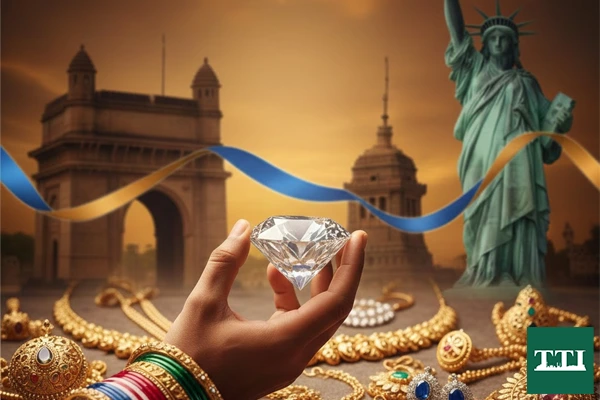
The Indian gems and jewellery industry is entering a new era of growth following the landmark India-US interim trade agreement announced in February 2026. After a bruising year defined by steep tariff hikes and dwindling exports, the sector has lauded the deal as a “critical inflection point” that will restore India’s competitiveness in its largest global market.
For exporters in hubs like Surat and Mumbai, the reduction in reciprocal tariffs isn’t just a policy shift—it’s a lifeline.
The Impact of the New Trade Framework
The interim agreement, reached between Prime Minister Narendra Modi and US President Donald Trump, addresses the punitive tariff regime that had severely strained trade flows over the past year.
Key Highlights of the Deal:
- Tariff Rollback: Punitive tariffs on Indian goods, which had climbed as high as 50–57%, have been capped at a reciprocal rate of 18%.
- Zero-Duty Optimism: The industry is particularly optimistic about zero-duty access for loose diamonds and colored gemstones under Annexure 3 of the US reciprocal tariff list.
- Jewellery Relief: Import duties on finished jewellery have been slashed from an unviable 55% back toward more competitive levels, providing immediate relief to manufacturers.
Why This Matters: Reversing the 2025 Export Slump
The necessity of this deal is underscored by the dramatic decline in exports seen in 2025. When US duties on polished diamonds jumped from 0% to 50% in August 2025, the impact was immediate:
- Export Collapse: India’s gem and jewellery exports to the US plunged by 44.42% between April and December 2025.
- Diamond Crisis: Exports of Cut & Polished Diamonds (CPD) fell by over 60%, dropping from $3.64 billion to $1.45 billion.
- Liquidity Strain: High tariffs drained working capital and squeezed margins for Small and Medium Enterprises (SMEs), which form the backbone of the Indian jewellery craft.
Industry Leaders Respond
The Gem & Jewellery Export Promotion Council (GJEPC) and the All India Gem and Jewellery Domestic Council (GJC) have been vocal in their support of the framework.
Kirit Bhansali, Chairman of GJEPC, noted that the tariff cuts will “lower costs for US importers, provide immense relief to diamond jewellery manufacturers, and stabilize operations.” He emphasized that the deal restores a level playing field against competitors from Thailand, Vietnam, and Hong Kong.
Rajesh Rokde, Chairman of GJC, described the agreement as a recognition of “unmatched artistry and craftsmanship,” stating that lower barriers will allow Indian artisans to reach new audiences while boosting job creation at the grassroots level.
SEO Fast Facts: India-US Gems & Jewellery Trade
| Feature | Previous Status (Late 2025) | New Interim Deal (Feb 2026) |
| Reciprocal Tariff | Up to 50% | Capped at 18% |
| Loose Diamonds Duty | 50% | Aiming for 0% (Annexure 3) |
| Jewellery Duties | 55–57% | Reduced to ~18-24% |
| Market Share | 31% of India’s Exports | Poised for rapid recovery |
Looking Ahead: A “Viksit Bharat” Vision
The India-US trade pact is seen as a stepping stone toward the vision of Viksit Bharat 2047. By securing lower tariffs in the US—a market that accounts for roughly $9.23 billion of India’s annual jewellery exports—the government has cleared the path for a resurgence in “Make in India” luxury goods.
As the industry looks toward the finalization of the Bilateral Trade Agreement (BTA) by March 2026, the sentiment in the markets is clear: the “bling” is officially back.