


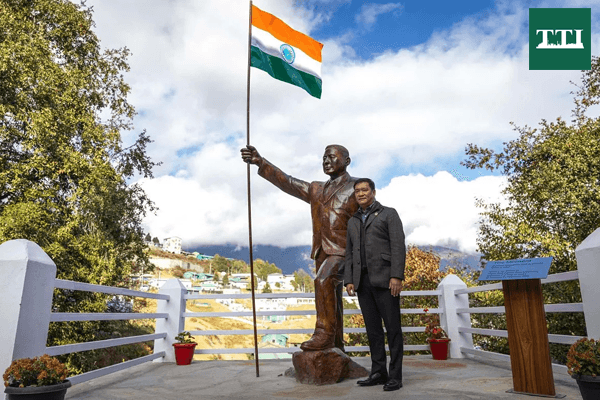
Seventy-five years ago, a watershed moment in Indian history unfolded silently in the high Himalayas. As Mao Zedong’s forces marched through Tibet, a remarkable Naga officer from Manipur, Major Ralengnao ‘Bob’ Khathing, achieved what years of British diplomacy could not: the peaceful integration of Tawang into the Indian Union. On February 14, 1951, the Indian Tricolour was hoisted over Tawang for the first time, securing a strategically vital region without a single shot being fired.
The Strategic Urgency of the Himalayan Frontier
In the early 1950s, the geopolitical landscape of the Northeast was shifting rapidly. Tawang, though located south of the 1914 McMahon Line, remained under Tibetan administrative influence. The annexation of Tibet by China, completed by 1951, effectively destroyed the traditional buffer between the two powers and placed Chinese troops directly on India’s doorstep.
Recognizing the urgent need to consolidate the frontier, the Indian government, under the guidance of Sardar Vallabhbhai Patel and the direct supervision of Assam Governor Jairamdas Daulatram, sanctioned a secret mission. The objective was clear: establish Indian administrative control over Tawang before Chinese interests could expand further south.
The Man for the Mission: Major Bob Khathing
Major Bob Khathing was uniquely qualified for this perilous task. Born on February 8, 1912, in the Tangkhul Naga tribe, he was a decorated soldier, diplomat, and educator. During World War II, he had served with the elite “Victor Force,” conducting guerrilla operations behind enemy lines against Japanese forces in Burma. His deep understanding of tribal cultures and his reputation for tactical brilliance made him the ideal candidate to lead the expedition into the remote NEFA (North-East Frontier Agency) region.
The Perilous March through Sela Pass
The expedition commenced on January 17, 1951. Major Khathing led a small but dedicated contingent consisting of over 100 soldiers from the 5th Battalion of the Assam Rifles, supported by Indian Army Medical Corps staff, roughly 20 civilian officials, and nearly 600 porters.
The journey was a grueling test of human endurance. The team trekked through roadless, high-altitude terrain and insect-infested jungles. They faced the constant threat of being trapped by extreme weather while navigating the 14,000-foot Sela Pass. Despite the rarefied air and freezing temperatures, the expedition pressed forward, driven by the strategic necessity of their mission.
Diplomacy and Cultural Sensitivity in Tawang
Upon reaching Tawang in February 1951, Major Khathing did not rely on military might alone. Instead, he employed a masterclass in soft diplomacy. On February 8—his own birthday—he held a public court, engaging directly with local leaders, Dzongpens (Tibetan officials), and the community.
Khathing spoke with “unmistakable clarity,” assuring the people that the new Indian administration would respect their faith, their religious institutions, and their cultural traditions. This commitment was vital in a region that served as the birthplace of the sixth Dalai Lama and housed the second-largest Buddhist monastery in the world. By promising that the Indian Constitution would protect their way of life, he won the trust of the Monpa population.
A Legacy of Integration and Valour
The successful integration of Tawang remains a rare example of sovereign expansion achieved through cultural sensitivity rather than conflict. Following the mission, Khathing served as the first Assistant Political Officer of Tawang Ridge, institutionalizing Indian presence. His career continued to flourish as he became the Chief Secretary of Nagaland and eventually India’s Ambassador to Burma.
Today, India continues to honor his legacy. In October 2024, the Major Ralengnao Bob Khathing Museum of Valour was inaugurated in Tawang to preserve the memory of this “unsung hero.” As the region marks 75 years of integration, Khathing’s story serves as a reminder that the strongest borders are built not just with steel, but with trust and visionary leadership.
Also Read: Cricket vs. Capital: Pakistan’s Grand Welcome for World Bank Chief Amid India Boycott