


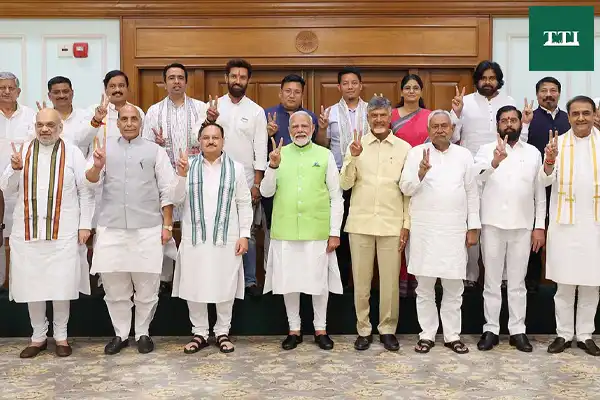
In a significant reflection of the political climate ahead of the next General Elections, the latest India Today-CVoter Mood of the Nation (MOTN) survey for January 2026 reveals a consolidating preference for incumbent Prime Minister Narendra Modi. Despite a complex global economic landscape and internal challenges, the survey underscores a widening gap between the ruling leadership and the opposition, suggesting that the “trust factor” remains firmly with the current administration.
Modi’s Popularity Sees a Resurgence
The January 2026 MOTN data indicates that Prime Minister Narendra Modi remains the most preferred choice for the country’s top post. According to the survey, 55% of respondents believe Modi is best suited to be the next Prime Minister. This figure represents a notable upward trend from 52% in August 2025 and 49% in August 2024. This steady climb suggests that the Prime Minister has effectively regained his “mojo,” successfully navigating through the mid-term fatigue that often affects long-standing governments.
His approval rating as Prime Minister also stands high at 57%, with 16% of the public rating his performance as “average” and 24% as “poor.” This personal popularity appears to be a primary engine for the National Democratic Alliance’s (NDA) broader political momentum. Analysts attribute this resilience to a combination of successful foreign policy maneuvers, such as the recent India-EU trade agreement, and the perceived stability of the government in a “Goldilocks period” of high growth and manageable inflation.
Rahul Gandhi’s Upward Trajectory
While the Prime Minister leads by a substantial margin, the survey also highlights a consistent rise in the popularity of Congress leader Rahul Gandhi. As of January 2026, 27% of respondents back Gandhi as the best-suited Prime Minister, up from 25% in the previous poll.
The growth in Gandhi’s ratings is particularly striking when viewed over a longer timeframe; his support has nearly quadrupled from a mere 7% in January 2022. This shift indicates a growing acceptance of Gandhi as a national alternative. However, the survey suggests a disconnect between personal popularity and electoral conversion. While Gandhi is gaining ground as a leader, the Congress party is projected to secure only 80 seats if elections were held today—a decline from its 2024 performance of 99 seats.
Projected Seat Shares and Electoral Dominance
The MOTN survey projects a dominant return for the BJP-led NDA if Lok Sabha elections were held today. The alliance is projected to win 352 seats, a significant leap from the 293 seats it secured in the 2024 General Elections. The BJP alone is projected to win 287 seats, comfortably crossing the majority mark of 272 on its own.
In contrast, the INDIA alliance appears to be struggling to maintain its post-2024 momentum, with a projected seat share of 182. Other parties and regional independents are expected to account for 176 seats. The data suggests that the BJP has managed to recover sharply from its 2024 setbacks, particularly in key battleground states, while the opposition is perceived as lacking a cohesive strategy to capitalize on economic concerns.
Economic Management and Public Concerns
A major pillar of support for the current government lies in the public’s perception of its economic handling. When asked who handled the Indian economy better, 54% of respondents favored Prime Minister Modi, compared to 36% for former Prime Minister Dr. Manmohan Singh. This 9% increase in economic approval since August 2025 comes on the heels of the Economic Survey 2026, which projected a 7.4% growth for the fiscal year.
However, the mood is not entirely without anxiety. Unemployment remains a “very serious” concern for 42% of the population, and inflation continues to be a sticking point for many households. Despite these “livelihood issues,” the survey indicates that a majority of voters still trust the incumbent government’s macroeconomic stability over the opposition’s alternatives.
Regional Dynamics and Foreign Policy
The survey also provided insights into poll-bound states like West Bengal, where the Trinamool Congress (TMC) is expected to maintain its dominance with 28 seats, though the BJP is projected to marginally increase its tally to 14.
On the global front, the Prime Minister’s standing is bolstered by recent trade deals, including what has been termed the “mother of all deals” with the European Union. Nevertheless, public sentiment regarding the India-US relationship is more cautious, with 54% of respondents believing ties have worsened during Donald Trump’s second term.
In summary, the January 2026 Mood of the Nation survey paints a picture of a nation that, while grappling with domestic issues like jobs and prices, remains largely convinced of Narendra Modi’s leadership. The widening 28-point gap between Modi and Gandhi in the “best-suited PM” category suggests that the opposition has a significant uphill battle to present a leadership alternative that can match the Prime Minister’s current political stature.
Also Read: The Achilles’ Heel? MOTN Poll Suggests Congress is the Weakest Link in the INDIA Bloc