


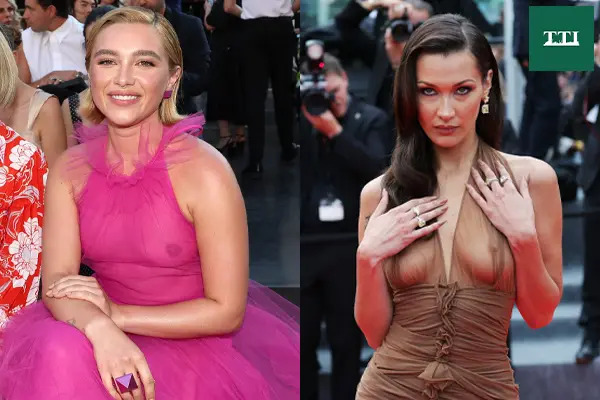
The “naked dress” has long been one of the most provocative and polarizing staples of the red carpet. It is a garment designed to deceive the eye, blending the boundaries between fabric and skin to create an illusion of nudity while maintaining the structural integrity of high fashion. From the smoky halls of 1960s galas to the high-definition flashbulbs of the modern Met Gala, this sartorial phenomenon continues to dominate fashion headlines. Even as trends cycle through minimalism and maximalism, our collective fascination with the sheer, the beaded, and the daring remains unshaken.
The Origins of a Cultural Icon
The history of the naked dress is inextricably linked to moments of rebellion and high-stakes glamour. While contemporary stars like Rihanna and Kim Kardashian are often credited with its modern revival, the garment’s roots trace back to Hollywood’s Golden Age and the daring performers of the mid-20th century. Marilyn Monroe famously set the blueprint in 1962 when she performed “Happy Birthday, Mr. President” for John F. Kennedy. Her Jean Louis gown, covered in thousands of hand-stitched crystals, was so tight she reportedly had to be sewn into it. At the time, the dress was a scandal; today, it is a piece of history that proves the naked dress has always been about more than just showing skin—it is about the power of the female form and the confidence required to put it on display.
Following Monroe, stars like Cher and Jane Birkin pushed the envelope further in the 1970s. Cher’s collaborations with designer Bob Mackie produced some of the most iconic sheer looks in history, utilizing strategically placed feathers and sequins to maintain modesty while celebrating transparency. These early iterations established the naked dress as a tool for female agency, allowing women to reclaim the gaze and command attention on their own terms.
Also Read: Tarun Tahiliani: 30 Years of Fashion and the Magic of the Modern Drape
The Craftsmanship Behind the Illusion
One reason we can’t stop staring at the naked dress is the sheer technical mastery required to create one. These are not simple garments; they are feats of engineering. Designers must balance the weight of heavy embellishments—such as crystals, pearls, and intricate embroidery—against the fragility of fine tulle, organza, or mesh. The goal is to find a “nude” fabric that perfectly matches the wearer’s skin tone, creating a seamless transition that makes the decorations appear as though they are floating on the body.
In recent years, designers like Mugler, Jean Paul Gaultier, and Givenchy have refined this art form. The modern naked dress often incorporates “trompe l’oeil” effects, using shading and beadwork to mimic the contours of the muscles and the curves of the silhouette. This meticulous attention to detail transforms the dress from a mere outfit into a wearable sculpture. When we look at these pieces, we aren’t just reacting to the exposure of skin; we are admiring the labor-intensive artistry that allows such a delicate balance to exist.
A Tool for Modern Self-Expression
In the digital age, the naked dress has taken on a new life as a viral sensation. In an era of “Instagrammable” moments, the sheer dress is a guaranteed way to capture the world’s attention. However, beyond the shock value, the dress has become a symbol of body positivity and the rejection of traditional modesty standards. When celebrities like Lizzo or Florence Pugh wear sheer designs, they are often making a statement about owning their bodies and refusing to be shamed by societal expectations.
The dress has also evolved to fit different aesthetics. We see the “subtle naked dress,” which uses lace and layering to hint at transparency, alongside the “maximalist naked dress,” which leaves very little to the imagination. This versatility ensures that the trend remains fresh. Whether it is a sleek, minimalist slip dress or a dramatic, floor-length gown adorned with metallic hardware, the core appeal remains the same: it is an unapologetic celebration of the person wearing it.
Why the Fascination Persists
Ultimately, we still can’t stop staring at the naked dress because it challenges our perceptions of fashion and privacy. It occupies a unique space between being dressed and undressed, public and private. It demands a level of poise and “it-factor” that few other garments require. To wear a naked dress is to invite scrutiny and then transcend it through sheer charisma.
As long as there are red carpets and runways, the naked dress will likely remain a fixture of the fashion landscape. It is a testament to the enduring power of the human form as the ultimate canvas. By constantly reinventing itself through new fabrics, technologies, and cultural contexts, the naked dress ensures that while we may think we’ve seen it all, there is always something new to admire in the art of the reveal.
Also Read: The Pope of Fashion: Alessandro Michele’s Tribute to the Myth of Valentino