


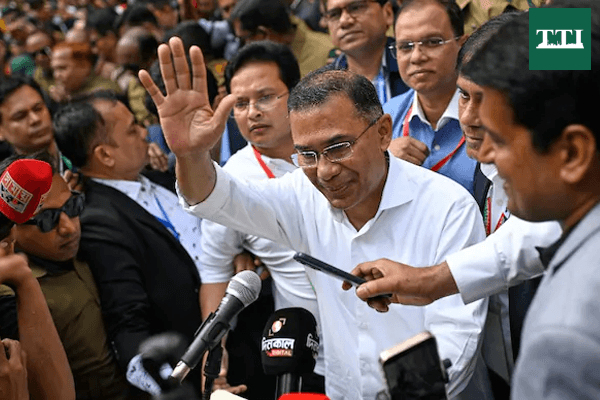
The recent general election in Bangladesh has marked a historic turning point in the nation’s political landscape, signaling the end of the post-2024 uprising transition. With Tarique Rahman and the Bangladesh Nationalist Party (BNP) securing a decisive victory, New Delhi is now navigating a complex shift in its neighborhood policy. The return of the BNP to power after nearly two decades—and the rise of Tarique Rahman as the projected Prime Minister—presents both strategic challenges and a unique opportunity for a diplomatic reset.
A New Chapter in Bilateral Relations
For fifteen years, India enjoyed a period of deep strategic cooperation and stability with the Awami League government under Sheikh Hasina. During her tenure, Bangladesh was viewed as India’s most reliable partner in South Asia, particularly regarding security in the sensitive Northeast and the suppression of anti-India insurgent groups.
However, the political uprising of 2024 and the subsequent ouster of Hasina left a temporary vacuum that cooled relations. With Tarique Rahman’s victory, Prime Minister Narendra Modi has already initiated an outreach, conveying his “warm congratulations” and expressing India’s commitment to supporting a democratic and inclusive Bangladesh. This gesture highlights New Delhi’s pragmatism: the recognition that it must engage with the mandate of the Bangladeshi people to protect its own regional interests.
Also Read: The Second Republic: 70% of Bangladeshis Vote ‘Yes’ to Historic July Charter
Security Concerns and Regional Stability
Historically, New Delhi viewed the BNP leadership as less predictable on security matters compared to the Awami League. Under previous BNP administrations, there were concerns regarding the space provided to extremist elements and the safety of the Hindu minority. In the months leading up to the election, the lynching of Dipu Chandra Das and other instances of violence against minorities sparked significant protests within India, adding pressure on the Indian government to seek firm guarantees from any incoming administration in Dhaka.
Tarique Rahman has made early efforts to address these anxieties. In his first addresses, he appealed for national unity, explicitly calling for peace across religious lines, including Muslims, Hindus, and Christians. For India, the primary benchmark of success for the new Rahman government will be its ability to maintain law and order and ensure that Bangladeshi soil is not used by groups hostile to Indian interests.
The Balancing Act Between Global Powers
Bangladesh remains a critical theater for the geopolitical competition between India and China. While India is Bangladesh’s largest trading partner in Asia—exporting goods worth over $11 billion annually, including textiles, electricity, and agricultural products—China remains a major investor through its Belt and Road Initiative.
The BNP has indicated that it intends to pursue a “Bangladesh-first” foreign policy, which involves diversifying its international partners. This includes a potential warming of ties with Pakistan, as evidenced by the recent resumption of direct trade and military exchanges. While this shift may cause concern in New Delhi, experts suggest that a stable BNP government might be a “best-case scenario” compared to the uncertainty of the interim Yunus administration. The goal for the new leadership will be to balance these powerful neighbors without becoming overly beholden to any single one.
Economic Synergies and the Future
The economic stakes of this transition are immense. India’s exports to Bangladesh cover a vast range of sectors, from auto parts and steel to tea and coffee. Ensuring that these trade corridors remain open and that infrastructure projects continue is vital for the development of India’s northeastern states.
As Tarique Rahman prepares to lead, the focus shifts from the baggage of the past to the necessities of the future. The youthful electorate of Bangladesh, which comprises nearly a third of the population, is demanding economic opportunities and transparency over historical grievances. If the Rahman administration can deliver on these domestic promises while maintaining a stable, non-adversarial relationship with India, it could redefine the strategic map of South Asia for years to come. For India, the win is a signal to move beyond legacy alliances and build a multifaceted relationship based on mutual development and regional security.
Also Read: Beyond the Scale: Why Metabolic Health is the New Benchmark for Long-Term Vitality