


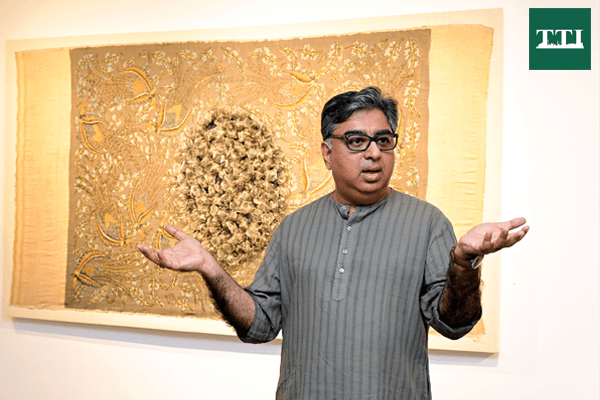
In a fashion landscape often dominated by fleeting social media aesthetics and seasonal fads, Bappaditya Biswas stands as a sentinel for substance over style. As the co-founder of Bailou and Byloom, Biswas has spent over two decades redefining the relationship between the loom and the wearer. His recent launch in Mumbai’s historic Colaba district marks a significant milestone, bringing Kolkata’s storied handloom legacy into conversation with the city’s restless, modern pulse.
His inspiration
For Bappaditya Biswas, the creative process does not begin with a Pinterest board or a digital mood board. While much of the industry looks outward for inspiration, Biswas looks inward—specifically at the mechanics of the craft itself. His inspiration is drawn directly from the techniques, skills, and raw materials he engages with daily.
He operates under a philosophy where the loom dictates the design, rather than the design forcing the loom into unnatural positions. This “craft-first” approach means that ideas are born from watching how an artisan handles a specific yarn or how a particular twist in the thread alters the weight of the fabric. It is a world where memory and labor are woven into every inch of cloth, ensuring that the final product is not just a garment, but a narrative of human skill.
Also Read: Navigating the Enchanted Waters: A Guide to Udaipur, the Romantic Retreat
His experiments with textures
The cornerstone of Biswas’s work for the past 23 years has been an relentless pursuit of tactile innovation. He describes his “forte” as the creation of new textures, and his latest collection is a testament to this mastery. Instead of relying on heavy embroidery or surface-level embellishments to create “luxury,” he manipulates the weave itself to achieve visual depth.
One of the most striking innovations in this collection is the integration of sequins. Traditionally, sequins are an afterthought—stitched onto a finished fabric to add sparkle. However, Biswas has pioneered a method where sequins are woven directly into the fabric on the loom. This structural integration changes the very DNA of the garment; the sparkle is not a decorative layer but a part of the fabric’s soul. This technique alters how the fabric falls and reflects light, shifting the definition of handloom luxury toward something fluid, wearable, and understated.
Rooted to culture
Despite using age-old looms and traditional artisan knowledge, Biswas is adamant that his work is not a nostalgic look backward. He avoids “museum-piece” fashion, opting instead for a contemporary design language that plays with transparency, opacity, and modern silhouettes. The goal is to create clothes that resonate with a global, urban audience—people who appreciate the heritage of a weave but require the functionality and aesthetic of the 21st century.
The brand’s relationship with its artisans is one of mutual respect and evolution. Rather than “teaching” weavers alien skills or modern shortcuts, Biswas encourages them to stretch their existing knowledge. By experimenting with different yarn combinations and subtle shifts in design language, the craft remains authentic while speaking a new, modern dialect.
Bailou’s arrival in Mumbai offers a quiet alternative to the “fast fashion” culture that defines much of the modern world. By prioritizing the intimacy of the loom and the integrity of the texture, Bappaditya Biswas ensures that his fashion world remains grounded, considered, and timelessly relevant.
Also Read: Match Report TATA WPL 2026 Match 17: Giants Survive Prasad-Rana Onslaught to Secure Season Double