


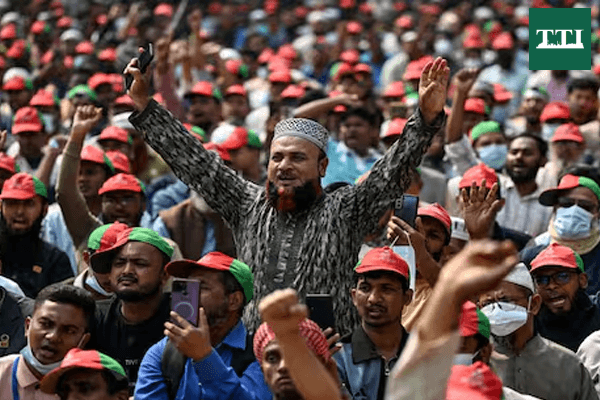
In a historic move that signals the dawn of a “Second Republic,” nearly 70% of Bangladeshi voters have overwhelmingly endorsed the July Charter in a nationwide referendum. Held on February 12, 2026, alongside the 13th General Elections, this referendum marks the first time since 1991 that the nation has used a direct ballot to decide on fundamental constitutional changes. The Election Commission announced on Friday that the reform package won a clear majority, with a voter turnout of approximately 60.26 percent.
The Mandate for a New Era
The July National Charter (Constitutional Amendment) Implementation Order, 2025, is a comprehensive 28-page document born from the blood and sacrifice of the July-August 2024 mass uprising. Following the ouster of Sheikh Hasina’s government, the interim administration led by Professor Muhammad Yunus initiated an ambitious reform agenda. The resulting Charter, endorsed by 25 political parties, consolidates over 80 reform proposals—48 of which are constitutional in nature.
By voting ‘Yes,’ the Bangladeshi people have given the newly elected Parliament a 180-day mandate to function as a Constitutional Reform Council. This overwhelming support reflects a deep-seated national desire to dismantle the “winner-takes-all” political culture and prevent the return of authoritarian rule.
Restructuring Executive Power
One of the most significant implications of the Charter is the end of absolute prime ministerial authority. Under the new framework, a strict term limit has been established: no individual can serve as Prime Minister for more than 10 years or two terms in their lifetime. Furthermore, the Charter bans “dual roles,” meaning the Prime Minister can no longer simultaneously serve as the head of the ruling party and the head of government.
To further balance the scales, the President’s authority will be enhanced in specific areas. For instance, the President will no longer have the unilateral power to pardon criminals without the consent of the victim’s family, a move designed to curb political favoritism and ensure judicial accountability.
Parliamentary and Electoral Reforms
The Charter introduces a bicameral legislature, transforming the existing Jatiya Sangsad into the “Lower House” and establishing a new 100-member “Upper House” (Senate). This second chamber will include representation from smaller parties and professional groups, ensuring a more inclusive national discourse. Crucially, the process for amending the constitution will now require the support of two-thirds of the Lower House and a majority of the Upper House, making it nearly impossible for a single party to alter the nation’s foundational laws unilaterally.
The controversial Article 70, which previously led to the immediate dismissal of any Member of Parliament who voted against their party line, is being significantly weakened. This change is intended to allow for independent thought and more robust debate within the legislative halls. Additionally, the role of the opposition has been institutionalized; the Deputy Speaker must now be elected from the main opposition party.
Identity and Fundamental Rights
In a shift toward inclusive nationalism, the official nationality of citizens has been changed from “Bengali” to “Bangladeshi,” a move intended to embrace the nation’s non-Bengali indigenous groups. While Bengali remains the official state language, all other mother tongues spoken within the borders will now receive official recognition. The state’s core principles have also evolved: the traditional quartet of Nationalism, Socialism, Democracy, and Secularism has been replaced by the values of Equality, Human Dignity, Social Justice, and Religious Harmony.
The Charter also modernizes the bill of rights for the digital age. For the first time, the right to uninterrupted internet service and the protection of personal data are enshrined as constitutional rights, reflecting the pivotal role technology played in the 2024 uprising.
Accountability and Judicial Independence
To ensure the rule of law, the Charter establishes a “Supreme Judicial Council” and an independent Judicial Appointments Commission, removing the Prime Minister’s ability to hand-pick judges. Major oversight bodies, including the Anti-Corruption Commission (ACC), Human Rights Commission, and Information Commission, will be granted full financial and administrative independence.
Finally, the Charter provides legal indemnity for the students and citizens who participated in the 2024 revolution, protecting them from future political retribution. As the new Parliament convenes, the 70% “Yes” vote stands as a clear instruction from the people: the era of “engineered” politics is over, and the era of the Second Republic has begun.
Also Read: The Dhaka Reset: Navigating India-Bangladesh Ties in the Tarique Rahman Era