


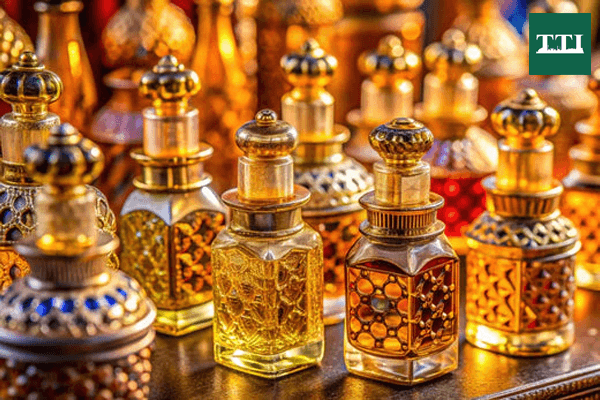
For centuries, India has been the silent engine behind the world’s most prestigious fragrance houses. From the lush jasmine fields of Madurai to the deep, earthy oud of Assam and the prized sandalwood of Mysore, the subcontinent provides the raw soul of luxury perfumery. However, a growing chorus of contemporary Indian perfumers and industry experts is highlighting a persistent irony: while India possesses the ingredients, the history, and the craftsmanship, it still struggles to claim its rightful seat at the high table of global luxury recognition.
The Source of the World’s Scents
The foundation of India’s claim to luxury lies in its unparalleled natural bounty. Data regarding India’s botanical exports reveals a staggering dominance in the raw materials market. India is currently one of the largest producers of Jasmine Grandiflorum and Sambac, essential oils that form the “heart notes” of almost every iconic French perfume. Furthermore, the Grasse region of France—widely considered the world’s perfume capital—relies heavily on tuberose and spice extracts sourced directly from Indian soil.
Despite this, the narrative of luxury has historically been Eurocentric. For decades, the value addition—the blending, the branding, and the storytelling—happened in Paris or Milan. Indian perfumers today argue that the industry is no longer content with being just a supplier. There is a concerted effort to shift the perspective from India as a “source” to India as a “creator.”
Also Read: Detox in a Stroke: A Deep Dive into the Viral Lymphatic Brushing Trend
The Traditional Mastery of the ‘Attar’
To understand the current state of Indian perfumery, one must look at the historical data of the Deg and Bhapka process. This traditional hydro-distillation method, centered in Kannauj, has remained largely unchanged for over 400 years. Unlike modern steam distillation used in mass production, this artisanal process captures the true essence of a botanical, such as the smell of rain hitting parched earth, known as Mitti Attar.
However, tables comparing traditional attars to modern Eau de Parfums show a significant gap in consumer perception. While attars are incredibly concentrated and oil-based, the global luxury market is built on alcohol-based sprays. Modern Indian brands are now bridging this gap by applying rigorous laboratory standards to traditional extractions, ensuring they meet International Fragrance Association (IFRA) standards without losing their cultural soul.
The Challenge of the “Made in India” Label
Market analysis indicates that the primary barrier to entry for Indian luxury brands is not quality, but the “prestige hierarchy.” Historically, a “Made in France” label could command a price point five to ten times higher than a “Made in India” label, even if the primary ingredients were identical. Perfumers like Kasturi Bhaskar and others in the new wave of Indian niche fragrance houses note that international consumers often associate Indian scents with heavy incense or aromatherapy rather than sophisticated, multi-layered luxury.
To combat this, the new generation of creators is focusing on “olfactive storytelling.” They are moving away from clichés and instead using data-driven insights to cater to a global palate that craves authenticity. By focusing on transparency regarding sourcing and the ethical treatment of farmers, Indian brands are aligning themselves with the modern luxury consumer’s values—sustainability and traceability.
Education and the Future of Fragrance
One of the most significant hurdles identified by industry insiders is the lack of formal perfumery education within India. Most renowned “noses” still travel to ISIPCA in France to hone their craft. However, recent trends show a rise in local workshops and specialized chemistry courses aimed at fragrance formulation. The goal is to create a domestic ecosystem where an Indian perfumer can train, source, and manufacture entirely within the country.
Investment data suggests that the Indian fragrance market is poised for exponential growth, with the luxury segment leading the charge. As domestic consumption rises, the reliance on Western validation is slowly diminishing. Indian consumers are starting to take pride in homegrown labels that bottle the scent of their own heritage with world-class refinement.
A New Era of Olfactory Identity
The consensus among today’s perfumers is clear: the ingredients are there, the talent is undeniable, and the history is deep. The final frontier is the psychological shift in global branding. By reclaiming the narrative of their own raw materials and marrying ancient distillation techniques with contemporary aesthetic sensibilities, Indian perfumery is finally moving toward the recognition it has long deserved. The world has always worn the scents of India; now, it is finally learning the names of the hands that craft them.
Also Read: The Golden Seed: How I Used Ear Acupressure to Silence Stress