


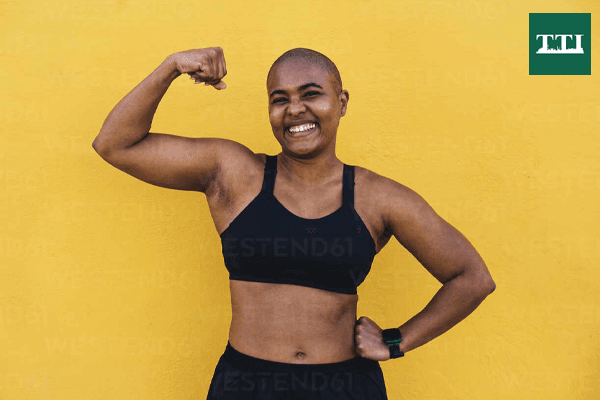
The shifting landscape of female fitness has long been dominated by the pursuit of “tone” over “bulk,” but a new narrative is emerging that celebrates raw strength and muscularity. For many women, the weight room was once an intimidating or even forbidden space, viewed as a domain exclusive to men or those seeking a hyper-masculine physique. However, the sight of a truly chiseled woman—one whose muscles tell a story of dedication and power—is increasingly becoming a source of inspiration rather than apprehension.
The Turning Point: A Room in Awe
The realization that heavy lifting can be a transformative tool for women often comes from a single, striking moment of clarity. For some, it is the sight of a woman in a crowded gym or a public setting whose physical presence commands immediate attention. There is a specific kind of gravity held by a woman who is not just lean, but truly “chiseled”—defined by the hard-earned lines of her shoulders, the sweep of her quads, and the undeniable strength in her posture.
In these moments, the collective “gasp” of a room isn’t one of shock, but of realization. It challenges the long-held societal myth that lifting heavy weights will somehow make a woman “too big.” Instead, it showcases a physique that is aesthetic, capable, and fundamentally powerful. This visual proof serves as a catalyst for many to reconsider their own relationship with the barbell.
Also Read: How Regular Screenings Act as a Shield Against Chronic Disease
Breaking the “Bulk” Myth
For decades, women’s fitness was marketed through the lens of cardiovascular health and light resistance. The fear of “bulking up” kept millions away from the squat rack. However, the biological reality is far more complex. Women generally have significantly lower levels of testosterone than men, making the process of gaining large amounts of muscle mass a slow, intentional, and highly disciplined endeavor.
Lifting heavy doesn’t result in an accidental overnight transformation into a bodybuilder. Instead, it builds “functional mass“—muscle that improves metabolism, bone density, and posture. The chiseled look that many now admire is the result of consistent progressive overload and a commitment to nutrition, debunking the idea that lifting is a one-way street to looking masculine.
The Psychology of Power
Beyond the physical changes, the shift toward heavy lifting offers profound psychological benefits. In a society that often encourages women to take up less space, lifting weights is an act of reclamation. It is about what the body can do rather than just what it looks like. When a woman transitions from five-pound dumbbells to a loaded barbell, her self-perception shifts.
The confidence gained from hitting a personal record on a deadlift or performing a first unassisted pull-up often bleeds into other areas of life. The “chiseled” aesthetic becomes a secondary benefit to the internal sense of capability. This psychological armor is what truly changes the atmosphere of a room; it is the confidence of a woman who knows her own strength.
A New Aesthetic Standard
The rise of strong, muscular women in mainstream media and high-fashion spaces—as seen in the pages of publications like Talk Time India—signals a broader cultural shift. We are moving away from a singular, narrow definition of beauty toward one that encompasses diversity in shape and capability.
Modern fitness isn’t just about weight loss; it’s about the construction of a resilient body. This evolution reflects a desire for longevity and health. A chiseled physique is an outward sign of internal discipline, and it is this discipline that is finally being accorded the respect it deserves.
Conclusion: Stepping Up to the Bar
The journey from fearing the weight room to embracing it is one of the most empowering transitions a woman can make. It begins by letting go of the outdated fear of “becoming too much” and realizing that strength is a birthright. In today’s fitness culture, the gasp of a room at the sight of a strong woman is a sign of progress—it is the sound of old stereotypes breaking under the weight of a new, powerful reality.
As more women claim their space on the lifting platform, the definition of what is “feminine” continues to expand, proving that beauty and brawn are not mutually exclusive, but are instead two sides of the same powerful coin.
Also Read: The Desktop Defense: 11 Hand Creams to Combat Dry Office Air