


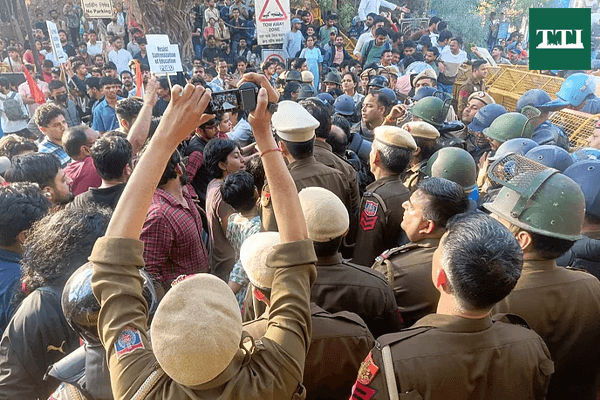
On February 26, 2026, a demonstration by the Jawaharlal Nehru University Students’ Union (JNUSU) shifted from a planned “Long March” to a sharp physical clash with security personnel. The march, which set off from Sabarmati T-point toward the Ministry of Education, broke down into a violent skirmish at the university’s North Gate. The resulting chaos left numerous individuals injured and saw 14 students—among them prominent union leaders—taken into custody.
The Spark: UGC Norms and Controversial Remarks
The unrest stems from a growing rift between the student body and the university administration regarding the implementation of the University Grants Commission (UGC) 2026 Equity (Anti-Discrimination) Regulations. Students have been demanding the immediate enactment of these norms alongside the “Rohith Act,” a proposed legislative framework aimed at preventing caste-based discrimination in higher education.
Adding fuel to the fire were recent remarks made by JNU Vice-Chancellor Santishree Dhulipudi Pandit during a podcast. In the interview, she allegedly stated that marginalized communities “cannot progress by being permanently a victim or playing the victim card.” The JNUSU condemned these statements as “blatantly casteist” and demanded her immediate resignation. However, the university administration has defended the Vice-Chancellor, stating that the UGC regulations are currently under a Supreme Court stay, placing them beyond the university’s independent authority to implement.
Also Read: Worth Every GB: The 5 Most Unique Content Creators Taking Over Your Feed
Conflict at the Gates
Despite being denied official permission for the march, an estimated 500 students gathered on Thursday afternoon to take their grievances to the Ministry of Education. The university administration had locked the main gates and installed multiple layers of barricades to contain the demonstration within the campus.
The situation turned volatile around 3:00 PM when students began breaking the locks on the university gates using stones and screwdrivers. As the protesters pushed past the gates and reached the external police cordons, a two-hour scuffle ensued. Delhi Police officials reported that the crowd became aggressive, damaging barricades and pelting security personnel with sticks, banners, and shoes.
Allegations of Assault and “Biting”
The most startling claims came from the Delhi Police, who accused the protesters of resorting to extreme physical assault. According to Deputy Commissioner of Police (Southwest) Amit Goel, students did not just engage in pushing and shoving but actively attacked officers. Specifically, the police alleged that some protesters went to the extent of biting personnel.
In total, approximately 25 police staff members sustained injuries, including senior officials such as the ACP of Vasant Kunj and the SHOs of the Sarojini Nagar and Kishangarh police stations. Purported videos of the clash shared on social media showed chaotic scenes, including instances where officers were slapped and verbally abused.
Student Counterclaims and Alleged Desecration
In contrast, the JNUSU and the All India Students’ Association (AISA) painted a picture of “brutal police excess.” Student leaders alleged that the police used unprovoked force, including lathi charges, to suppress a democratic gathering. The union claimed that dozens of students were left with bleeding wounds and bruises, and that women students were dragged and mistreated by personnel, some of whom were reportedly in civil clothing.
A major point of contention during the clash was the alleged desecration of a portrait of Dr. B.R. Ambedkar. Protesters claimed that police snatched the portrait from them and damaged it during the scuffle, an act they described as a direct assault on the dignity of marginalized communities.
Legal Repercussions and Judicial Stance
Following the violence, the Delhi Police registered an FIR under several sections of the Bharatiya Nyaya Sanhita (BNS), including Section 132 (assault to deter public servant), Section 221 (obstructing public servant), and Section 121 (voluntarily causing hurt). While 51 protesters were initially detained, 14 were formally arrested, including JNUSU President Aditi Mishra and former President Nitish Kumar.
When the matter reached the court, the prosecution argued that the protest was far from peaceful and cited the injuries to the police as evidence of a premeditated assault. The court expressed gravity over the situation, noting that while peaceful protest is a right, an “assault on police officials is serious and cannot be permitted under the garb of a peaceful protest.” As of February 27, a heavy security presence, including the Rapid Action Force, remains deployed at the JNU gates to prevent further escalation.
Also Read: The Missing Money Trail: Why Lack of Material Evidence Led to Manish Sisodia’s Discharge