


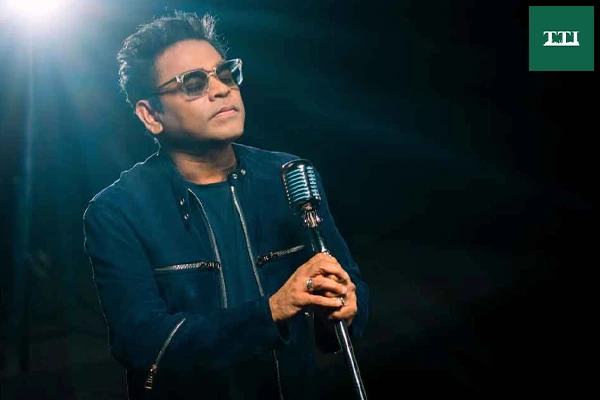
In a sharp escalation of the debate surrounding communal dynamics in the Indian film industry, the Vishva Hindu Parishad (VHP) has slammed legendary music composer A.R. Rahman for his recent remarks regarding a perceived “communal” shift in Bollywood. The controversy erupted following an interview in which Rahman hinted that his workload in Hindi cinema has dwindled over the past eight years due to a change in the political and social climate of the industry.
VHP’s “Ghar Wapsi” Suggestion and the Accusation of Ingratitude
Responding to Rahman’s statements, VHP national spokesperson Vinod Bansal issued a scathing rebuttal, suggesting that the Oscar-winning composer should return to the Hindu fold if he wishes to see his career flourish again in Bollywood. Bansal’s comments were not merely a theological challenge but a direct attack on Rahman’s professional integrity and his historical narrative of his career.
Bansal argued that Rahman’s allegations of communal bias were a way of “defaming the entire industry” rather than acknowledging personal or creative shifts. He characterized Rahman’s stance as ungrateful, pointing out that Bollywood had embraced him with open arms during a period when few South Indian composers could break into the mainstream Hindi market. “He was once a Hindu himself. Why did he convert to Islam? Do ‘ghar wapsi’ now. Maybe you will start getting work once again,” Bansal stated in a video released on January 16, 2026. The VHP leader further dismissed the composer’s remarks as “petty” and more suited to a politician than a world-renowned artist.
Also Read: Bad Situation, No Internet: Indians Return from Iran Amid Unrest, Thank Government
The “Communal Thing”: Rahman’s Narrative of a Power Shift
The firestorm began during Rahman’s recent interaction with the BBC Asian Network. Reflecting on his trajectory in the Hindi film industry, the 59-year-old composer noted a significant decline in opportunities over the last eight years. While he admitted that discrimination was never “in his face,” he referred to “Chinese whispers” suggesting that projects originally intended for him were redirected to other composers by music companies.
Rahman attributed this change to a “power shift” where decision-making authority has supposedly moved from creative visionaries to corporate entities and “non-creative” individuals. “It might have been a communal thing also, but not in my face,” Rahman remarked, suggesting that the current political climate might be influencing which artists are hired. He noted that while he felt like a welcome insider following the success of the 1999 musical hit Taal, the environment has since become more exclusionary.
A Transition of Identity: From Dileep Kumar to A.R. Rahman
The VHP’s focus on Rahman’s religion brings his personal history back into the public eye. Born AS Dileep Kumar, the composer converted to Islam in 1989 along with his family, adopting the name Allah Rakha Rahman. This transition occurred shortly before his meteoric rise with the 1992 film Roja.
Rahman has often spoken about his deep appreciation for Indian cultural roots, recently mentioning his involvement in the upcoming Ramayana project. He noted that having studied in a Brahmin school and participating in Ramayana and Mahabharata plays annually, he holds those values in high regard. However, his recent “communal” observation has evidently overshadowed his attempts to bridge cultural divides, leading to the VHP’s demand for him to look inward rather than blaming the system.
The Industry’s Internal Conflict
The clash between one of India’s most celebrated cultural icons and a major Hindu outfit highlights a growing rift in the entertainment world. While Rahman views himself as a victim of a corporate and ideological shift that favors certain backgrounds, his critics see his comments as a convenient excuse for a natural career lull.
Rahman maintains that he is not “searching for work” and is content spending time with his family, yet his choice to voice these concerns has sparked a national conversation about whether Bollywood remains the inclusive “melting pot” it once claimed to be. As the VHP continues to push its “ghar wapsi” narrative, the debate over the intersection of faith, politics, and art in India’s premier film industry shows no signs of slowing down.
Also Read: Has Khamenei Crushed Iran Protests Using 5,000 Brutal Foreign Fighters?