


In a historic shift for Mumbai’s political landscape, the 2026 Brihanmumbai Municipal Corporation (BMC) election results have signaled a potential end to the era of absolute Thackeray dominance. For decades, the BMC served as the impregnable fortress of the Thackeray family, but the latest figures reveal a city that has moved beyond the singular narrative of “Marathi Asmita” (Marathi pride). Despite a high-stakes reunion between estranged cousins Uddhav and Raj Thackeray, the BJP-led Mahayuti alliance has emerged as the new power broker in India’s richest civic body.
A Fortress Crumbles: The BJP’s Surge
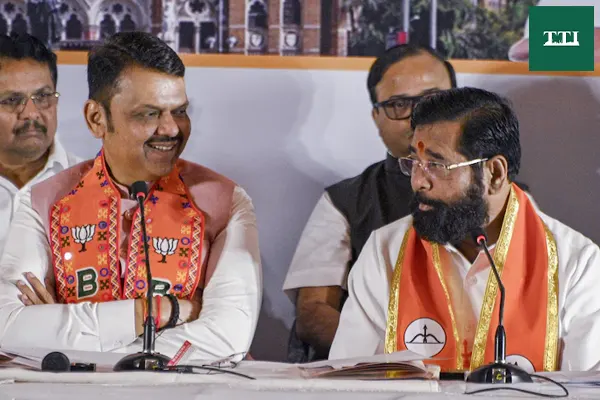
The most striking takeaway from the election is the BJP’s emergence as the single largest party. Securing 89 seats, the BJP has significantly improved its standing, effectively shedding its former “junior partner” status. In tandem with Eknath Shinde’s Shiv Sena, which secured 29 seats, the ruling Mahayuti alliance crossed the crucial 114-seat halfway mark in the 227-member house.
This victory is being viewed as a personal triumph for Devendra Fadnavis, whose strategic interventions blunted the Thackeray brothers’ “threat to Mumbai” narrative. By promising a Marathi and Hindu mayor while simultaneously championing “Sabka Saath Sabka Vikas,” the BJP managed to retain its traditional North Indian and Gujarati vote banks while making significant inroads into the Marathi segment that was once the exclusive domain of the Shiv Sena.
Also Read: West Indies Launch T20 World Cup Strategy with Afghanistan Clash
The Limits of the Thackeray Reunion
The 2026 polls saw a political development many thought impossible: Uddhav Thackeray’s Shiv Sena (UBT) and Raj Thackeray’s Maharashtra Navnirman Sena (MNS) joined forces after nearly two decades. This alliance was a desperate attempt to revive the aggressive “Marathi Manoos” agenda pioneered by Bal Thackeray in the 1960s. However, the results suggest that this nostalgia-driven strategy had limited resonance with a modern, cosmopolitan electorate.
While the Shiv Sena (UBT) showed resilience by winning 65 seats and becoming the second-largest party, the MNS remained a marginal player, securing only 6 of the 53 seats it contested. The “Thackeray effect” failed to create the massive wave needed to displace the BJP. Many political analysts now question whether Uddhav’s decision to align with Raj—and simultaneously distance himself from the Maha Vikas Aghadi (MVA) partners like the Congress—was a tactical error that split the anti-BJP vote.
Counter-Strategies and the “Fake Narrative”
The BJP’s success lay in its ability to neutralize the emotional appeals of the Thackeray brothers. When Uddhav and Raj attempted to stoke fears of an “outsider” takeover and criticized the alleged imposition of Hindi in primary schools, the Mahayuti alliance responded with a carefully orchestrated U-turn. The BJP addressed these cultural concerns directly while labeling the Thackerays’ warnings as a “fake narrative” designed to mask a lack of developmental achievements.
Furthermore, the split within the Shiv Sena in 2022 continued to haunt Uddhav. Much of the party’s ground-level organizational network and resources had migrated to Eknath Shinde. Although Uddhav’s faction outperformed Shinde’s in the final seat count, the division within the “Sena” brand allowed the BJP to capitalize on the chaos and emerge as the dominant force.
New Players and Fragmented Mandates
The election also highlighted the growing influence of other political entities. The Congress, contesting alongside the Vanchit Bahujan Aghadi (VBA), managed 24 seats, while the AIMIM made historic gains. Led by Asaduddin Owaisi, the AIMIM won 8 seats in the BMC, including a maiden victory for Mehzabin Khan in Ward 134. These gains, particularly in Muslim-majority wards, suggest a further fragmentation of the traditional opposition vote, which historically benefited the undivided Shiv Sena.
The Silver Lining and the Road Ahead
Despite the loss of control over the BMC, not all is lost for Uddhav Thackeray. His faction’s performance as the second-largest party proves that the Thackeray name still holds weight in Mumbai’s gullies. However, the results are a “harsh message” that legacy alone is no longer enough to govern.
As the Mahayuti prepares to appoint the next mayor, the Thackeray brothers face a moment of existential reflection. The era where the “Matoshree” remote control dictated Mumbai’s fate has been replaced by a more complex, multi-polar reality. For the Thackeray legacy to survive, it may need to evolve beyond the slogans of the past and offer a vision that encompasses the diverse aspirations of a 21st-century Mumbai.
Also Read: Lungi Uthi, Pungi Baji: Did Raj Thackeray’s Marathi Vitriol Hurt Uddhav’s Sena Too?