


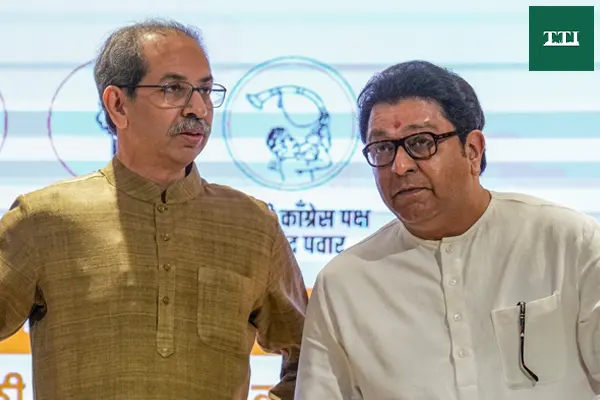
The landscape of Mumbai politics has undergone a seismic shift following the 2026 Brihanmumbai Municipal Corporation (BMC) elections. For nearly three decades, the BMC—India’s richest municipal body—remained a Thackeray bastion. However, the latest results signal a “farewell” for the family as the BJP-led Mahayuti alliance takes the reins. While Eknath Shinde’s Shiv Sena remains part of the winning coalition, the results raise a haunting question: did Raj Thackeray’s return to divisive rhetoric not only sink his own party but also drag down his cousin Uddhav Thackeray’s prospects?
The BMC: A Barometer of Political Might
With an annual budget of ₹74,427 crore for the 2025-26 fiscal year, the BMC holds more financial power than several Indian states, including Goa and Himachal Pradesh. Although the Mayor’s role is largely ceremonial, control over this treasury is the ultimate symbol of political muscle in Maharashtra. For Uddhav Thackeray’s Shiv Sena (UBT) and Raj Thackeray’s Maharashtra Navnirman Sena (MNS), these polls were supposed to be a platform for revival. Instead, the outcome suggests they are edging toward political irrelevance.
Also Read: BMC Election 2026: The Fall of Fort Thackeray as BJP-Sena Alliance Seizes Mumbai Crown
The Failed Resurrection of “Marathi Asmita”
In the final stretch of the campaign, Raj Thackeray pivoted to a decades-old playbook. He revived the controversial 1960s slogan “uthao lungi, bajao pungi”—a derogatory jab at the South Indian community. This attempt to evoke a “sour nostalgia” of Bal Thackeray’s early nativist politics backfired spectacularly. Data suggests that Mumbai has moved on from such divisive tactics. Marathi speakers, who made up 44% of the city’s population in 1951, fell to 36% by 2011. In a cosmopolitan hub increasingly defined by Gen Z and millennial voters—over 30% of the electorate is under 35—hatred toward migrant communities no longer resonates as a viable poll plank.
A Tale of Two Strike Rates
The statistical divide between the two cousins is stark. The MNS contested 52 wards but managed to secure victories in only six, resulting in a dismal strike rate of approximately 11%. In contrast, Uddhav Thackeray’s Shiv Sena (UBT) showed more resilience, winning 66 out of the 164 wards it contested, yielding a strike rate of 40%.
Despite Uddhav’s efforts to rebuild his image and focus on governance and inclusive issues, the proximity of Raj Thackeray’s vitriol acted as an “albatross around his neck.” Because the Mahayuti victory was not a landslide, political analysts argue that a more focused, unified opposition could have turned the tide. Instead, Raj’s rhetoric and the Congress party’s decision to contest solo fragmented the anti-Mahayuti vote, handing the advantage to the BJP and Eknath Shinde.
Missed Opportunities for “Navnirman”
Raj Thackeray has long been viewed as the more dynamic of the two cousins, yet his political record remains underwhelming. The MNS has failed to win a single Lok Sabha seat in its existence and drew a blank in the 2024 Maharashtra Assembly elections. This BMC election was a missed opportunity for Raj to reinvent his party—the “Navnirman” (reconstruction) promised in its name.
Experts suggest that had the MNS pivoted to modern issues such as job creation, housing affordability, and the peaceful preservation of Marathi culture, it could have consolidated votes in traditional strongholds like Dadar and Worli. Instead, by allowing cadres to engage in old-school tactics like harassing North Indians, the party alienated the very youth and middle-class voters it needed to attract.
Urban Apathy and the Mahayuti’s Path Forward
The election was also marked by significant urban apathy, with a voter turnout of just 53%. Those who did show up seemed to prefer the Mahayuti’s focus on infrastructure, including the expansion of the metro and sewage systems. While the Mahayuti alliance also campaigned on the idea of a “Hindu-Marathi Mayor,” they did so with a level of moderation that contrasted sharply with the MNS’s overt vitriol.
As the dust settles, the message from the Mumbai electorate is clear: civic issues and development have overtaken identity politics. For the MNS to survive, it requires a true internal “Navnirman”—shifting toward a policy-focused approach. For Uddhav Thackeray, the challenge remains untangling his brand of “Marathi Asmita” from the toxic contagion of his cousin’s rhetoric, which continues to provide the Mahayuti with an easy path to dominance.
Also Read: Bad Situation, No Internet: Indians Return from Iran Amid Unrest, Thank Government