


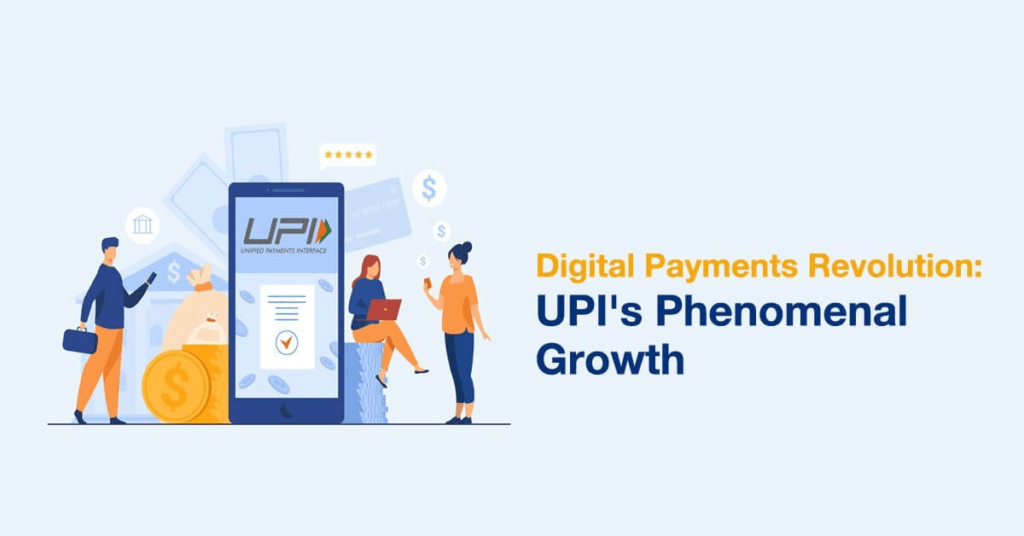
The introduction of the Unified Payments Interface (UPI) in India marked a revolutionary shift in the way financial transactions are conducted. Launched in 2016 by the National Payments Corporation of India (NPCI), UPI has rapidly evolved into the backbone of digital payments, enabling millions of Indians to transfer money, pay bills, and shop online with unprecedented ease. By combining convenience, security, and interoperability, UPI has reshaped the financial landscape, fostered financial inclusion, and played a significant role in India’s journey toward a digital economy.
The Genesis of UPI
Before UPI, India’s digital payment ecosystem was fragmented. Individuals relied on net banking, debit cards, mobile wallets, and cash for daily transactions, often facing delays, high transaction costs, and interoperability challenges. Recognizing the need for a unified system, the NPCI developed UPI to simplify digital transactions while promoting accessibility for all citizens.
UPI allows users to link multiple bank accounts to a single mobile application, enabling real-time, 24/7 fund transfers without requiring IFSC codes or bank details. Its interoperability means that a user of one bank’s app can instantly transfer money to an account in any other bank using just a Virtual Payment Address (VPA), such as “name@bank.” This simplicity has been central to UPI’s adoption and success.
How UPI Works
UPI operates on an open-loop system, meaning it connects all participating banks through a centralized platform maintained by the NPCI. Users can initiate peer-to-peer (P2P) transfers, merchant payments, bill payments, and QR code transactions directly from their smartphones.
A typical UPI transaction involves entering the recipient’s VPA, confirming the amount, and authenticating via a secure PIN. The transaction is instant, and funds are directly debited from the sender’s bank account and credited to the recipient’s account. Unlike traditional banking methods, UPI eliminates delays, reduces transaction costs, and minimizes reliance on physical infrastructure.
The system’s technical architecture is highly secure, with multiple layers of encryption, two-factor authentication, and fraud detection mechanisms, ensuring that users can transact with confidence. Over the years, continuous improvements have enhanced UPI’s scalability, allowing it to handle millions of transactions per second during peak usage periods.

Impact on Financial Inclusion
One of UPI’s most transformative effects has been its contribution to financial inclusion. India has a large unbanked and underbanked population, particularly in rural areas. UPI enables individuals to participate in the formal financial system without visiting banks or relying on cash.
By simplifying digital payments, UPI has empowered small businesses, street vendors, and micro-entrepreneurs to accept payments easily, reducing dependency on cash and enhancing transparency. Government schemes, subsidies, and direct benefit transfers are now seamlessly routed through UPI, ensuring faster delivery and minimizing leakages.
The platform has also encouraged digital literacy, as first-time users learn to navigate mobile banking apps and engage with the broader financial ecosystem. This democratization of access has far-reaching implications for economic growth and social empowerment.
Growth and Adoption Trends
Since its launch, UPI has experienced exponential growth. According to NPCI data in 2026, UPI processes over 10 billion transactions per month, with a value exceeding several trillion Indian rupees. The adoption spans urban and rural India, cutting across demographics, income levels, and geographic regions.
Several factors have driven UPI’s widespread adoption:
- Ease of Use: Transactions can be completed in seconds with minimal technical knowledge.
- Zero or Low Transaction Costs: Many banks and apps charge no fees for UPI transfers.
- Interoperability: Users can transact across banks and platforms seamlessly.
- Integration with Apps: E-commerce platforms, utility providers, and fintech apps have integrated UPI as a primary payment method, further boosting its utility.
Fintech startups and traditional banks have leveraged UPI to offer innovative services, including recurring payments, bill splitting, and cross-border transactions, enhancing user engagement and expanding market reach.
UPI and the Rise of Digital Economy
UPI has been instrumental in India’s transition toward a cashless economy. By reducing dependence on physical currency, it has improved efficiency, transparency, and accountability in transactions. Businesses can track payments digitally, reducing fraud and errors, while consumers enjoy faster and safer payment options.
The government’s push for digital transactions, combined with demonetization in 2016, created an environment conducive to UPI’s growth. Digital payments have become integral to sectors such as e-commerce, retail, education, and healthcare, transforming the way money flows within the economy.
UPI has also strengthened the fintech ecosystem in India. Numerous apps, including Google Pay, PhonePe, Paytm, and BharatPe, have built services around UPI, attracting millions of users and promoting innovation in financial services. This ecosystem has created jobs, fostered competition, and contributed to India’s reputation as a global fintech hub.
Challenges and Security Concerns
Despite its success, UPI faces challenges. Fraud, phishing attacks, and unauthorized transactions have emerged as risks, necessitating robust security measures and user awareness campaigns. Regulatory oversight, secure authentication, and proactive monitoring are essential to maintain trust and confidence.
Another challenge is digital literacy. While UPI has made payments accessible, some rural and older populations still face difficulties navigating apps and understanding transaction processes. Efforts to provide education, customer support, and simplified interfaces are crucial to address these gaps.
Scalability and infrastructure resilience also remain priorities. As transaction volumes continue to surge, NPCI and banks must ensure that systems can handle peak loads without delays or downtime. Continuous technological upgrades and collaborative industry efforts are essential to sustain growth.
Future Prospects
The future of UPI in India looks promising. Expansion into international remittances, integration with emerging technologies like blockchain, and enhanced analytics for personalized financial services are on the horizon. UPI’s role in supporting small businesses, government initiatives, and cross-border trade will likely grow, cementing its position as a cornerstone of India’s digital economy.
As India moves toward greater financial digitization, UPI will continue to shape consumer behavior, business practices, and policy frameworks. Its success serves as a model for other countries seeking to modernize payments and promote financial inclusion.
Conclusion
UPI has transformed the digital payments landscape in India, enabling millions of people to transact seamlessly, securely, and efficiently. By promoting financial inclusion, reducing reliance on cash, and supporting economic growth, it has become a vital component of India’s digital economy. With continuous technological innovation, regulatory support, and user adoption, UPI is set to remain at the forefront of India’s fintech revolution, empowering individuals, businesses, and the nation as a whole.
FAQs
1. What is UPI and how does it work?
UPI is a unified digital payment platform that allows instant fund transfers between bank accounts using a Virtual Payment Address (VPA) on mobile apps.
2. How has UPI promoted financial inclusion in India?
By simplifying digital payments and enabling access for unbanked populations, UPI allows individuals and small businesses to participate in the formal financial system.
3. Is UPI secure for transactions?
Yes, UPI employs encryption, two-factor authentication, and fraud detection systems, though users should remain cautious of phishing and scams.
4. What are the future prospects of UPI?
UPI is expected to expand into international payments, integrate with new technologies, and continue driving digital adoption across India.
Next Topic: Real Estate Investment Trends in Indian Metro Cities
Also Check: How RBI Interest Rate Decisions Affect Indian Markets