


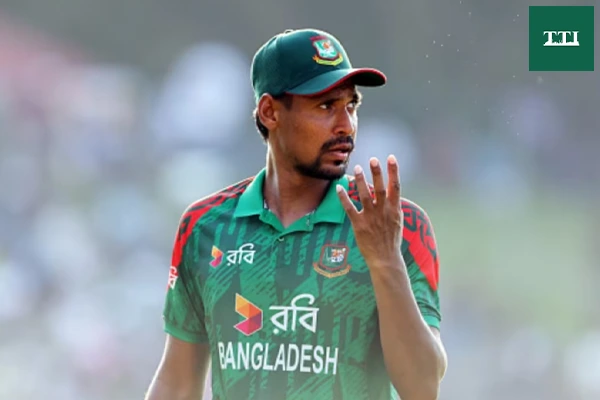
In a significant development that has sent shockwaves through the cricketing world, the Bangladesh Cricket Board (BCB) has officially refused to send its national team to India for the 2026 ICC Men’s T20 World Cup. Citing deep-seated concerns over the “safety and well-being” of its players and staff, the BCB’s decision marks a rare instance of a major cricketing nation boycotting travel to a host country for a marquee tournament. This move comes amid a backdrop of deteriorating political relations and a specific controversy involving Bangladeshi pacer Mustafizur Rahman.
Rising Tensions and the Catalyst for Refusal
The seeds of the current impasse were sown during the lead-up to the 2026 Indian Premier League (IPL). The Board of Control for Cricket in India (BCCI) reportedly instructed the Kolkata Knight Riders (KKR) to release Mustafizur Rahman from their squad, citing “recent developments” and geo-political sensitivities. This directive was widely interpreted as a response to growing communal tensions and protests in India regarding the treatment of minorities in Bangladesh.
The BCB’s response was swift and firm. In an emergency meeting held in early January 2026, the board resolved that if India could not guarantee the security of a single player in a domestic league like the IPL, they could not be expected to provide adequate protection for an entire national contingent during a global event. Bangladesh’s sports adviser, Asif Nazrul, publicly backed the board’s stance, criticizing what he termed the “radical communal policies” of the Indian cricket board. In a retaliatory move, the Bangladesh government also banned the broadcast of the IPL within its borders.
The ICC’s Stance and the Logistics of Group C
The 2026 T20 World Cup is scheduled to be co-hosted by India and Sri Lanka, beginning on February 7, 2026. Bangladesh has been placed in Group C, a competitive pool that includes several emerging and established cricketing nations. According to the current tournament structure, Bangladesh is slated to face heavyweights England and the West Indies, along with Nepal and Italy.
While Italy and Nepal represent the growing global footprint of the sport, the matches against England and the West Indies are crucial for Bangladesh’s hopes of progressing to the Super 8 stage. Under the original schedule, Bangladesh was set to play three of its group matches at the iconic Eden Gardens in Kolkata—a venue often considered a “home away from home” for Bangladeshi players due to cultural and linguistic ties—and its final group game against Nepal at the Wankhede Stadium in Mumbai.
The International Cricket Council (ICC) has held multiple virtual and in-person meetings with the BCB to resolve the crisis. Thus far, the ICC has maintained that the tournament itinerary is final and has shared a security assessment indicating that there is no “specific or heightened threat” to the Bangladesh team in India. However, the BCB remains unmoved, reiterating its request to have all its matches relocated to Sri Lanka.
Potential Outcomes and Tournament Impact
The refusal to travel presents the ICC with a logistical and diplomatic nightmare. Unlike the 2025 Champions Trophy, which adopted a “hybrid model” to accommodate India’s refusal to travel to Pakistan, the 2026 T20 World Cup was not designed with such a contingency in place. Relocating Bangladesh’s matches would require significant adjustments to broadcasting schedules, ticketing, and team travel plans across two countries.
One proposal discussed in recent meetings involves moving Bangladesh to a different group to facilitate playing all their matches in Sri Lanka with minimal disruption to other teams. However, this would require a total redrawing of the tournament groups, which would likely face opposition from other participating boards. If a resolution is not reached, the ICC has warned that Bangladesh risks forfeiting their points, a move that would effectively end their World Cup campaign before it begins.
As the tournament start date of February 7 approaches, the cricketing world remains on edge. The standoff is not just a sporting issue but a reflection of the complex intersection of sports and politics in South Asia. Whether the ICC can find a “middle ground” similar to the hybrid models of the past, or if Bangladesh will stick to its refusal and face the consequences of forfeiture, remains the biggest question looming over the 2026 T20 World Cup.
Also Read: Dhaka Imposes Indefinite IPL Blackout as Mustafizur Rahman Controversy Deepens