


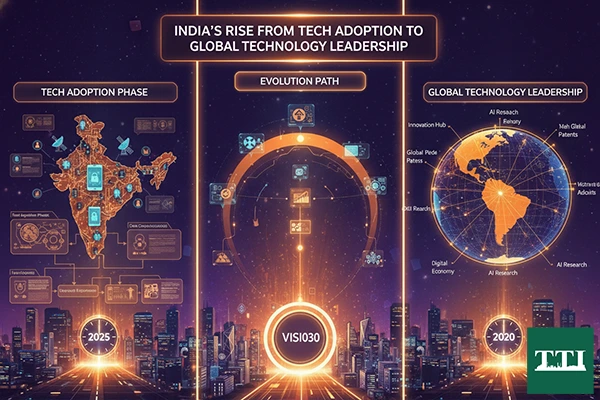
India has undergone a remarkable transition in the last decade — moving from mere adoption of technological trends to becoming a global leader in technology innovation and deep-tech growth. This strategic shift has been driven by supportive policy frameworks, a booming startup culture, and continued investment in research and development. At the recent IIMA Ventures Summit, Union Minister of State for Science & Technology Jitendra Singh highlighted India’s evolution and the role of deep technology in shaping its future.
Understanding the Shift: Tech Adoption to Leadership
Over the past decade, India has not just embraced global technologies but has decisively moved towards technology leadership. This progress is evidenced by India’s rapidly growing startup ecosystem, which is now the third largest in the world with over 175,000 startups, half of which originate from Tier 2 and Tier 3 cities. This decentralization breaks common myths that innovation is limited to metro hubs, showing a democratized landscape of technology access across the country.
From Fragile to Formidable: Economic Influence of Tech
Ten years ago, India was considered part of the fragile eleven economies — a group marked for potential risk. Today, it stands tall among the big four global economies with technology-driven growth as a key contributor to this transformation. India’s progress is no longer tied to external tech adoption but rooted in homegrown innovation, research, and entrepreneurial spirit.
Key Drivers of India’s Tech Leadership
1. A Robust Startup Ecosystem
India’s startup revolution is a central pillar of its tech leadership story. With startups flourishing across sectors including AI, fintech, biotech, and enterprise software, India is building global-scale solutions that compete internationally. Institutions like IIMA Ventures are playing a pivotal role by offering incubation, mentoring, and commercialization support to early-stage innovators.
This ecosystem fosters cross-disciplinary collaboration, where management and technology align to scale innovations effectively — crucial for longevity and global competitiveness.
2. Deep-Tech Focus and Strategic Policies
Deep technology — which includes AI, machine learning, robotics, and quantum computing — is at the heart of India’s future growth strategy. Recent industry discussions emphasize India’s potential to lead deep-tech innovation, not just adopt it. Government bodies, academic institutions, and private stakeholders are increasingly investing in research initiatives that accelerate transformative tech solutions.
This deep-tech emphasis represents a shift from product-focused innovation to high-impact, foundational research and applications that can redefine global industry standards.
3. Empowering Tier 2 & Tier 3 Cities
A significant portion of India’s tech innovation is now emerging from smaller cities and towns — a testament to expanding digital infrastructure and widespread access to digital tools. Affordable smartphones, broadband connectivity, and digital skill programs have democratized participation in the tech economy.
This resurgence resonates with national goals of inclusive growth and resilient digital ecosystems across India’s diverse socio-economic landscape.
Read our previous post: Pimpri Chinchwad Election 2026: Major Turmoil Hours Before Polling; Flying Squad Seizes Truck Loaded with Washing Machines
Bridging Academia and Entrepreneurship
One of the key insights from recent summits is the importance of translating academic research into commercially viable products. Platforms like Translation Endeavours — launched at the IIMA Ventures Summit — aim to bridge the gap between science and entrepreneurship by integrating academic talent with industry mentorship and investment.
This model underscores a broader national trend: interdisciplinary collaboration. Technology and management sciences are no longer siloed; they must work hand-in-hand to drive scalable innovation and market success.
Challenges and Strategic Outlook
While India’s trajectory is inspiring, several challenges remain:
🔹 Skill Gaps and Workforce Readiness
Rapid technological advances demand a skilled workforce. Upskilling initiatives and targeted education programs are essential to equip professionals with deep-tech competencies — particularly in AI, cybersecurity, and advanced manufacturing.
🔹 Global Competition and Innovation Benchmarking
Though India has made massive strides, global tech superpowers continue to dominate in areas like semiconductor design and quantum research. Sustained investments and international collaboration will be vital to remain competitive on the world stage.
Conclusion: India’s Tech Future is Leadership-Oriented
India is more than an adopter — it is now a creator, innovator, and global tech competitor. Government policies, a thriving startup ecosystem, and academic-industry partnerships are collectively driving this shift.
As India continues to champion deep tech and harness its demographic dividend, the nation is positioned to not just participate in the global tech narrative, but to lead it.
If current trends and policies continue, India’s leadership in technology isn’t just imminent — it’s already unfolding.
Also read: January 14, 2026 Nagaland State Lottery – Dear Spark Wednesday 1 PM