


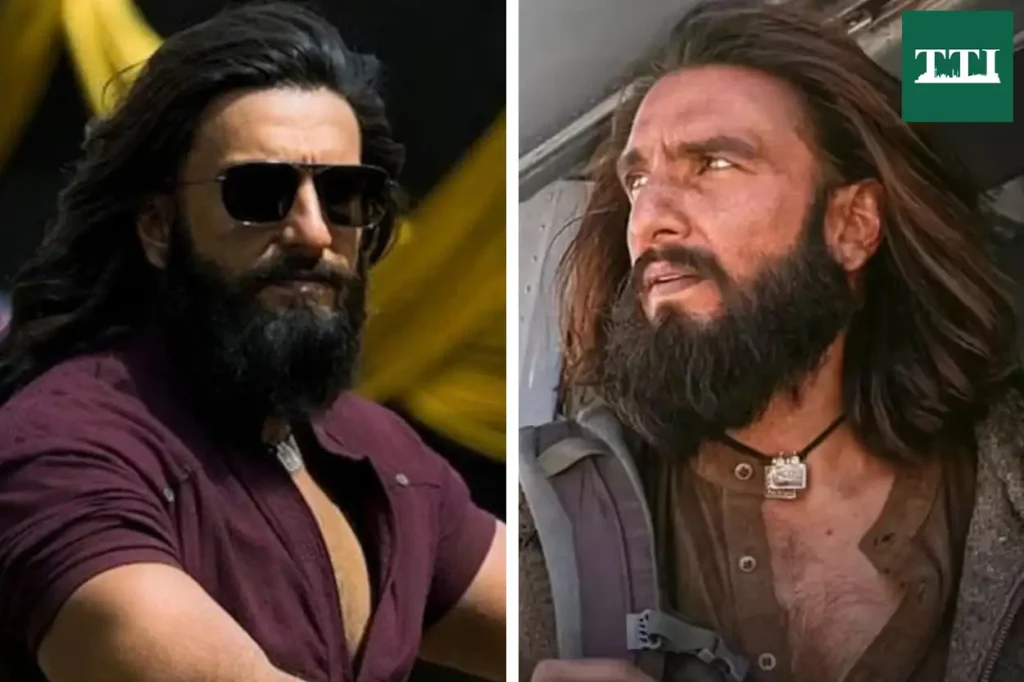
The sustained success of Dhurandhar at the box office has sparked a renewed conversation about the intricate craft of acting and the often-unseen dynamics that play out behind the camera. While the film continues to dominate theaters more than a month after its debut, much of the public discourse has centered on Akshaye Khanna’s haunting portrayal of Rehman Dakait. However, in a revealing conversation with Siddharth Kannan, co-star Naveen Kaushik has offered a different perspective, suggesting that while Khanna’s brilliance is undeniable, the quiet mastery of Ranveer Singh’s performance has been unfairly overlooked by the masses.
Naveen, who shared significant screen time with the leads as Rehman Dakait’s close aide, provided a fascinating glimpse into the psychological environments created by both actors. He noted that the two men occupied opposite ends of the behavioral spectrum, each utilizing a distinct methodology to bring their characters to life. For Akshaye Khanna, the process seemed to involve a rigorous commitment to isolation. Naveen observed that the actor’s off-screen demeanor frequently mirrored the cold, calculated distance of his character.
Reflecting on this atmospheric divide, Naveen shared, “On set, Ranveer Singh always treated us like friends. Akshaye Khanna, on the other hand, maintained a certain distance, mostly because he was deeply invested in his character.” This was not merely a case of a star being unapproachable, but rather a deliberate creative choice that bled into the social fabric of the production. Naveen noted that the film’s gang dynamic was visible even when the cameras were not rolling. “Interestingly, the on-screen dynamic translated into real life as well. You’d see all the gang members sitting together, laughing and having fun, while Rehman Dakait would sit a little apart. That’s how it was throughout the shoot,” the actor said.
Despite the perceived wall between Khanna and the rest of the cast, Naveen was quick to clarify that there was no malice in this detachment. He described a man deeply immersed in his art, stating, “If we went up to him for a conversation, he would speak very warmly. But once the conversation ended, he would retreat back into his space-and so would we. I don’t know if it was method acting, but just like Rehman Dakait, who stays quiet, observes, and remains unpredictable, Akshaye sir was quite similar in real life. He stayed away from the chaos on set and focused solely on his character.”
Also Read: Greenland’s Strategic Significance And Why Trump “Absolutely” Wants It
The Challenge of Subtractive Acting and Hidden Nuance
In stark contrast to Khanna’s stoic presence was the “ball of energy” that is Ranveer Singh. Naveen highlighted the jarring difference between Ranveer’s natural personality and his restrained portrayal of Hamza. While Hamza is a character defined by his internal world, Ranveer himself is known for his infectious enthusiasm and gregarious nature. According to Naveen, “Hamza is completely different from Ranveer. Ranveer is a ball of energy. Whenever he’s on set, he greets everyone. He doesn’t like people sitting around lazily.”
This ability to oscillate between a high-energy persona and a suppressed, disciplined character is what Naveen finds most impressive. He noted that “These two characters-Hamza and Rehman-are poles apart. Every time the director said ‘cut’, Ranveer would instantly switch back to being himself, unless it was a very serious scene. He had a child-like curiosity throughout, with absolutely no ‘I am a huge star’ tantrums.”
The crux of Naveen’s reflection, however, lies in the belief that the audience has not fully grasped the difficulty of Ranveer’s “subtractive” acting. While Akshaye’s Rehman Dakait is an inherently scene-stealing role, Ranveer’s Hamza required a level of self-denial that Naveen believes is rare among A-list stars. He expressed a sense of frustration that the spotlight has favored the louder performance over the more nuanced one.
“I do feel it’s unfair. Akshaye sir has undoubtedly created an iconic character that will be remembered for years. But what Ranveer has done as an actor-the tiny nuances, his voice modulation-for someone so energetic in real life to suppress all of that and play the complete opposite, it’s extremely difficult,” Naveen said. He specifically pointed to the creative restraint shown in the FA9LA sequence as a testament to Ranveer’s dedication to the narrative over personal vanity. “In the famous FA9LA song, everyone in the scene is dancing-except Ranveer Singh. To restrain yourself in a moment like that is incredibly hard,” the actor added.
A Masterclass in Humility and the Future of the Franchise
Ultimately, Naveen views Ranveer’s performance as a masterclass in humility and professional security. In a medium where leading men often fight for the “hero moment,” Ranveer chose to recede into the shadows to allow the story to breathe. “Ranveer’s character is deliberately underplayed. He doesn’t seek attention. In the film, the first man in command is Akshaye, followed by Danish. If Ranveer had ego issues, he could have easily tried to draw focus to himself, but he didn’t. An insecure actor would have done that. Ranveer stayed true to his character and allowed someone else to shine,” he concluded.
As Dhurandhar maintains its momentum at the box office, these insights add a layer of depth to the viewing experience. With the sequel already confirmed for release on March 19, 2026, fans will be watching closely to see how the dynamic between these two powerhouse performers evolves.
Also Read: The Trump Contradiction: A Tale of Two Leaders and Selective Justice