


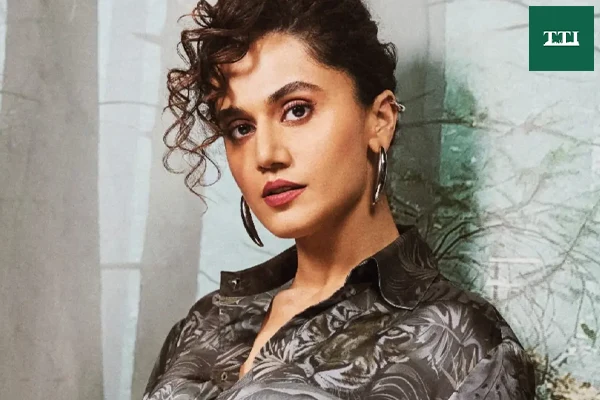
Taapsee Pannu, known for her candid and unfiltered approach to the film industry, has once again made headlines by exposing the regressive advice she received during her formative years in cinema. In a recent discussion, the actress opened up about the stifling expectations placed on female actors, revealing that she was explicitly told not to date and to prioritize working opposite “big stars” to ensure her survival in the industry.
The Pressure to Conform
Early in her career, Taapsee Pannu was often cautioned that the “shelf life” of a heroine is tragically short. According to the actress, the prevailing wisdom from industry veterans was that a female lead is only considered a “desirable heroine” as long as she remains single and works alongside established male A-listers.
“I was told that if I started dating, it would affect my desirability,” Taapsee shared, highlighting the double standards that still exist within the entertainment world. While male actors often see their stardom bolstered by their personal lives or high-profile relationships, women are frequently pressured to maintain a “single” status to satisfy a specific market image. This advice wasn’t just about her personal life; it was a strategic move aimed at keeping her “bankable” in the eyes of producers and audiences alike.
Also Read: The Madness of Perfection: How K3G’s Entire Budget Was Devoured by One Iconic Song
Chasing “Big Stars”
The actress further elaborated on the pressure to sign films based on the leading man rather than the script. In the initial phase of her career, she was encouraged to align herself with “big stars” to climb the ladder quickly. The logic presented to her was simple: being seen next to a superstar would provide immediate visibility and commercial safety, regardless of the substance of her role.
However, Taapsee’s journey has been a masterclass in defiance. Instead of becoming a decorative accessory in big-budget potboilers, she chose a path defined by “content-driven” cinema. From the courtroom drama Pink to the hard-hitting Thappad, she pivoted toward roles that demanded performance over proximity to stardom.
Breaking the Norms
Taapsee’s reflections serve as a poignant reminder of the “outsider” struggle. Without a film lineage to fall back on, the stakes were higher, and the advice to follow the “tried and tested” formula was louder. Yet, she refused to let these industry norms dictate her worth.
“You are told your career will end if you don’t do these things,” she noted. By choosing to prioritize her craft and personal happiness over industry diktats, Taapsee has not only sustained a successful career but has also redefined what it means to be a “leading lady” in modern Indian cinema. Today, she is one of the few actresses who can command a box office opening based on her name alone, proving that “desirability” is rooted in talent and authenticity rather than marital status or the fame of a co-star.
A New Chapter
The timing of these revelations is particularly significant as Taapsee continues to thrive both professionally and personally. Having recently moved into a more secure phase of her career—working on high-profile projects like Dunki and the Haseen Dillruba franchise—she speaks from a position of strength. Her story is a testament to the fact that while the industry may try to box women into specific roles and lifestyles, it is possible to break the mold and succeed on one’s own terms.
As Taapsee continues to challenge the status quo, her journey stands as an inspiration for younger actors entering the industry. It serves as a clear message: a heroine’s desirability isn’t a ticking clock, and her success isn’t dependent on the shadow of a “big star.”