


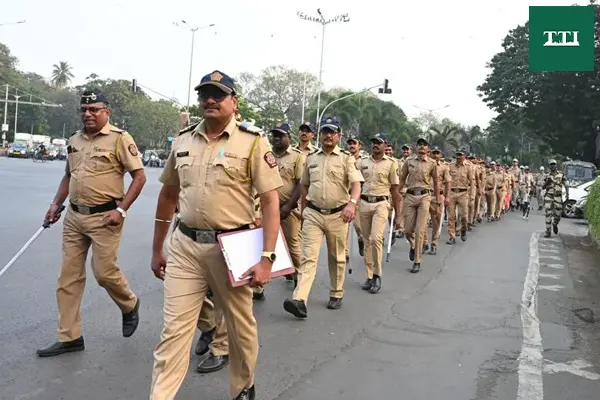
As the city of Mumbai prepares for the long-awaited Brihanmumbai Municipal Corporation (BMC) elections scheduled for January 15, 2026, the Mumbai Police department has announced a massive security mobilization plan. Aimed at ensuring a peaceful voting process across all 227 electoral wards, the department is deploying over 28,000 security personnel, including top-tier officials and specialized units, to manage the city’s complex electoral landscape.
The upcoming polls represent the first civic election for the metropolis since February 2017, and the scale of the security reflects the high stakes involved. During a recent Mumbai Police crime conference, station heads were briefed on a comprehensive deployment strategy designed to safeguard over 10,000 polling stations.
Massive Manpower Deployment
The security apparatus for the 2026 polls is characterized by an unprecedented level of manpower. According to official reports, the deployment will include five Additional Commissioners of Police, 20 Deputy Commissioners of Police, and over 2,000 police officers. Supporting this leadership tier are more than 25,000 police personnel who will be stationed across the city’s various neighborhoods.
In addition to the regular police force, the city will see the involvement of 4,000 Home Guards and 26 units of central and state security forces, which will be strategically positioned at sensitive locations. Three specialized riot control platoons have also been placed on standby to mitigate any potential unrest. Even the traffic department is contributing significantly, with 144 officers and over 1,000 personnel dedicated to bandobast (security arrangement) duties to maintain order on the city’s congested arteries.
Also Read: Government Policies Affecting Oil and Gas Industry in India
Focus on “Sensitive” Open Polling Stations
A unique challenge for the Mumbai Police this year is the high number of polling stations located in open areas. Out of the 10,231 total polling stations, more than 2,000 are situated in open grounds or public spaces using temporary tents.
Authorities have officially categorized these open booths as “sensitive” due to their lack of permanent enclosures, which makes them more difficult to secure than booths located within buildings. Data reveals that government buildings house the majority of booths (4,404), while private buildings and cooperative housing societies host the remainder. However, it is the 1,143 open stations in government-linked areas and the 1,047 in private premises that will receive the heaviest security saturation.
Strict Enforcement Zones and Public Order
To prevent voter intimidation and illegal gathering, the police will enforce a strict 100-meter “no-loitering” radius around every polling station. Only authorized Election Commission officials and voters will be permitted within these zones. Police officials have made it clear that any person found loitering without cause will face immediate legal action.
Despite the heavy security presence, police officials have noted that there is currently no reported tension along religious or caste lines in the city. The objective of the beefed-up security is preventative, focusing on maintaining the status quo and providing a safe environment for millions of Mumbaikars to exercise their franchise.
The Road to Results
The BMC election is a mammoth logistical undertaking for the city. With polling set for Thursday, January 15, the BMC is reportedly gearing up for 72 hours of continuous operations to manage the influx of voters and the subsequent transition to the counting phase.
The counting of votes is scheduled to take place on January 16, the day after polling. Until the final result is declared, the Mumbai Police will remain on high alert, maintaining a visible presence to ensure that the transition of power in India’s wealthiest civic body remains orderly and democratic. With 28,000 personnel on the streets, the message from the authorities is clear: Mumbai is ready for a safe and secure election day.