


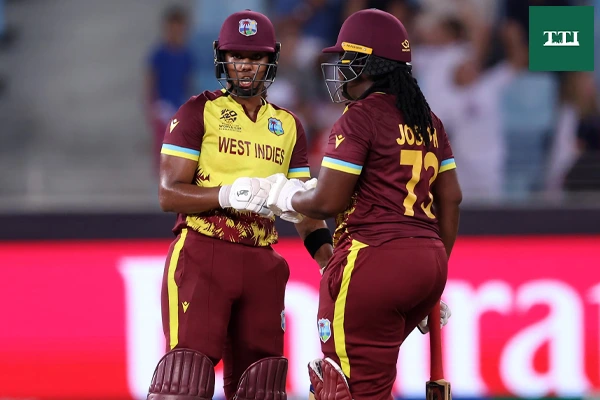
As the cricketing world turns its attention to the ICC Women’s T20 World Cup 2026, one of the most compelling early-stage matchups features the West Indies Women taking on the New Zealand Women. Scheduled as Match 4 of the tournament, this clash at the Hampshire Bowl in Southampton is more than just a group-stage encounter; it is a vital litmus test for two teams with rich histories but contrasting recent trajectories.
The Historical Context and Recent Form
Historically, New Zealand has held the upper hand in this rivalry, leading the head-to-head record significantly. However, the gap between these two sides has narrowed in recent major tournaments. The memory of the 2024 World Cup semi-final remains fresh, where the “White Ferns” managed to edge out the West Indies in a low-scoring thriller to reach the final. New Zealand entered that tournament on a ten-match losing streak but found their rhythm when it mattered most.
The West Indies, meanwhile, have become the unpredictable “wildcard” of women’s cricket. Their ability to power through top-tier sides was on full display in 2024 when they knocked out England. Heading into the 2026 edition, the Caribbean side looks to combine their trademark explosive batting with a more disciplined bowling approach, aiming to recapture the magic that saw them crowned champions back in 2016.
Pitch and Conditions at the Hampshire Bowl
The venue for this clash, the Hampshire Bowl (often referred to as the Utilita Bowl), typically offers a balanced contest between bat and ball. Early June weather in England can be fickle, potentially introducing a layer of moisture that would assist the seamers. New Zealand’s bowling attack, which relies heavily on swing and precision, might find these conditions slightly more familiar than the West Indies’ power-centric lineup.
However, the modern T20 game at Southampton has shown that if the sun stays out, the surface flattens, allowing for high-scoring affairs. The West Indies will likely hope for a dry, fast track where their hitters can clear the long boundaries, while New Zealand will prefer a surface that offers enough nibble to keep the West Indian openers from getting off to a flyer.
Key Tactical Battles
The primary showdown will undoubtedly be the battle of the captains and all-rounders. Hayley Matthews remains the heartbeat of the West Indies squad. As a top-order batter and a crafty off-spinner, her ability to influence both innings makes her the “prize wicket” for the New Zealanders. If Matthews is allowed to bat through the powerplay, the West Indies could easily post a total beyond New Zealand’s reach.
On the other side, New Zealand’s Sophie Devine and Suzie Bates bring an immense level of experience to the table. Their task will be to negate the West Indian spin threat, led by Afy Fletcher and Karishma Ramharack. In recent encounters, New Zealand’s spin duo of Amelia Kerr and Eden Carson has proved to be the difference-maker, often stifling the West Indian middle order during the crucial middle overs. The match may well be decided by which set of spinners can better adapt to the English lengths.
Prediction and Projected Outcomes
Predicting a winner between these two is difficult given their tendency for dramatic finishes. New Zealand enters the match with a more structured and tactically disciplined approach, which often yields results in high-pressure World Cup scenarios. Their fielding and running between the wickets are arguably superior, providing them with a “safety net” if the boundary hitting dries up.
Conversely, the West Indies possess a higher “ceiling.” When their power hitters like Deandra Dottin or Chinelle Henry find their range, they can take the game away from any opposition within a four-over span. If the West Indies can keep their extras down and survive the initial burst from the New Zealand seamers, they are well-positioned to pull off an upset.
However, considering the English conditions and the historical consistency of the White Ferns in group stages, New Zealand starts as the slight favorite. A likely outcome sees New Zealand setting or chasing a target in the region of 145–155, with their superior depth in the bowling department allowing them to defend a modest total. Regardless of the result, this Match 4 encounter is expected to set the tone for Group 2, with the winner taking a massive step toward the semi-finals.