


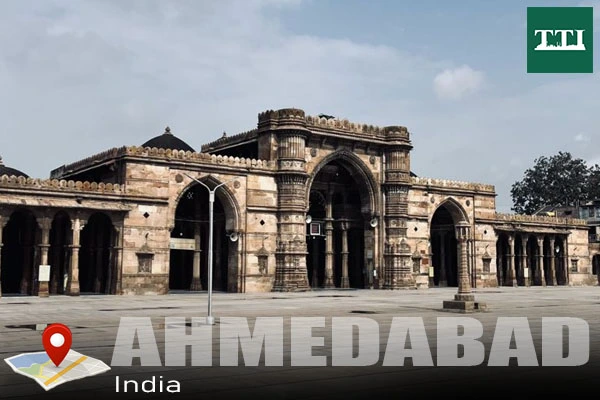
Ahmedabad, the largest city in the western Indian state of Gujarat, is a thriving metropolis that combines history, commerce, industry, and culture. Often referred to as the “Manchester of India” due to its strong textile industry, Ahmedabad has evolved from a historic trading city into a modern urban center with significant economic, educational, and cultural influence. Its rich heritage, entrepreneurial spirit, and dynamic lifestyle make Ahmedabad one of India’s most important cities.
Historical Origins
Ahmedabad was founded in 1411 by Sultan Ahmed Shah of the Gujarat Sultanate on the banks of the Sabarmati River. The city’s initial plan reflected careful urban design, with fortified walls, gates, and neighborhoods organized around commerce, religion, and public spaces. Over time, Ahmedabad became a center of trade, attracting merchants from across India and beyond.
During the Mughal period, the city continued to prosper as a commercial hub. In the 19th century, under British influence, Ahmedabad emerged as a prominent textile center, marking the beginning of its reputation as the “Manchester of India.” The city was also a center of India’s independence movement, with Mahatma Gandhi establishing the Sabarmati Ashram, which became a base for his social and political activities.
Geography and Urban Layout
Ahmedabad is situated on the banks of the Sabarmati River, in the western part of India. The city experiences a semi-arid climate, characterized by hot summers, monsoon rains, and mild winters. Its geographic location has historically supported trade and agriculture in the surrounding region.
The city is divided into Old Ahmedabad, with narrow winding streets, historic havelis, and religious structures, and New Ahmedabad, which features modern infrastructure, wide roads, commercial complexes, and industrial zones. Recent urban planning initiatives, including the Sabarmati Riverfront development, have enhanced public spaces and connectivity.
Economic Significance
Ahmedabad has long been a center of industry, commerce, and entrepreneurship. Historically, the textile industry dominated the city’s economy, with mills producing cotton fabrics for domestic and international markets. This legacy of industrial innovation continues today, with Ahmedabad hosting sectors such as chemicals, pharmaceuticals, engineering, IT, and finance.
The city is also home to numerous small and medium enterprises, contributing significantly to Gujarat’s economy. With a strong business-friendly environment and robust infrastructure, Ahmedabad attracts domestic and international investment, making it one of India’s fastest-growing urban economies.
Education and Research Institutions
Ahmedabad has emerged as a prominent educational hub in western India. Institutions such as the Indian Institute of Management Ahmedabad (IIMA), Gujarat University, Nirma University, and CEPT University are internationally recognized for their excellence in management, engineering, architecture, and design education.
These institutions attract students and professionals from across India and abroad, fostering a vibrant intellectual and professional ecosystem. Research centers, think tanks, and vocational institutes further enhance the city’s role as a knowledge hub.
Cultural Heritage and Arts
Ahmedabad’s culture is a reflection of its rich history and diverse population. The city celebrates a wide range of festivals, including Navratri, Diwali, Eid, and Makar Sankranti, with Navratri being particularly significant due to the tradition of Garba and Dandiya Raas dances.
Architecturally, Ahmedabad is home to historic mosques, temples, and havelis that showcase intricate craftsmanship. Notable landmarks include Jama Masjid, Sidi Saiyyed Mosque, Bhadra Fort, and the Swaminarayan Temple. In 2017, Ahmedabad was declared India’s first UNESCO World Heritage City, highlighting its exceptional urban heritage and historic significance.
The city also fosters contemporary arts, with institutions such as Nehru Foundation for Development, Calico Museum of Textiles, and cultural centers hosting exhibitions, performances, and workshops that celebrate both traditional and modern art forms.
Cuisine and Food Culture
Ahmedabad offers a rich culinary tradition that combines Gujarati flavors with multicultural influences. The cuisine is predominantly vegetarian, featuring dishes such as dhokla, khandvi, thepla, and undhiyu. Street food is popular, with local snacks like fafda-jalebi, ganthia, and sev drawing residents and visitors alike.
Non-vegetarian cuisine is also available, reflecting migration patterns and diverse communities. The city’s food culture is closely tied to festivals, religious practices, and communal gatherings, emphasizing both taste and tradition.
Transportation and Connectivity
Ahmedabad has a well-developed transport system that supports its population and industrial activity. The Ahmedabad Metro is gradually expanding to provide efficient public transport across the city. Buses, auto-rickshaws, taxis, and app-based transport options supplement daily commuting.
Ahmedabad is also a major rail and air hub. The Sardar Vallabhbhai Patel International Airport connects the city to major domestic and international destinations. Road networks link Ahmedabad with other cities in Gujarat and neighboring states, supporting trade, tourism, and industrial logistics.
Social Fabric and Urban Lifestyle
Ahmedabad’s residents are known for their entrepreneurial spirit, community involvement, and cultural pride. The city maintains a balance between tradition and modernity, with families often participating in community festivals while engaging in contemporary business and social practices.
The city also hosts a growing number of recreational spaces, shopping centers, cafes, and cultural venues, reflecting a lifestyle that combines work, leisure, and cultural engagement.
Tourism and Heritage Sites
Ahmedabad attracts tourists interested in history, architecture, culture, and urban heritage. Key attractions include the Sabarmati Ashram, which provides insights into Mahatma Gandhi’s life and philosophy, as well as historic markets like Manek Chowk and Law Garden that offer crafts, textiles, and local cuisine.
Heritage walks, riverfront activities, and art festivals further enhance the city’s appeal, making it a destination that combines learning, recreation, and cultural exploration.
Environmental Initiatives
Ahmedabad faces challenges related to urbanization, including water scarcity, pollution, and traffic congestion. To address these, the city has implemented initiatives such as rainwater harvesting, riverfront redevelopment, public transport expansion, and green space preservation.
Sustainable urban planning and citizen participation are increasingly emphasized to ensure that Ahmedabad’s development balances economic growth with environmental responsibility.
Ahmedabad in Contemporary India
Ahmedabad represents a city where tradition meets modernity, commerce meets culture, and heritage meets innovation. Its strategic location, business-friendly environment, and cultural richness make it a key player in India’s western region. The city continues to attract entrepreneurs, students, tourists, and investors, reinforcing its position as a vibrant metropolitan hub.
Conclusion
Ahmedabad is a city of contrasts and continuity. Its historic streets, thriving industries, cultural festivals, and educational institutions create a dynamic environment that honors the past while embracing the future. As Gujarat’s economic and cultural heart, Ahmedabad stands as a model of urban growth, resilience, and tradition in contemporary India.
Next post: Pune: The Oxford of the East and the Emerging Modern Metropolis
Also check: Hyderabad: The City of Nizams, Technology, and Cultural Synthesis