


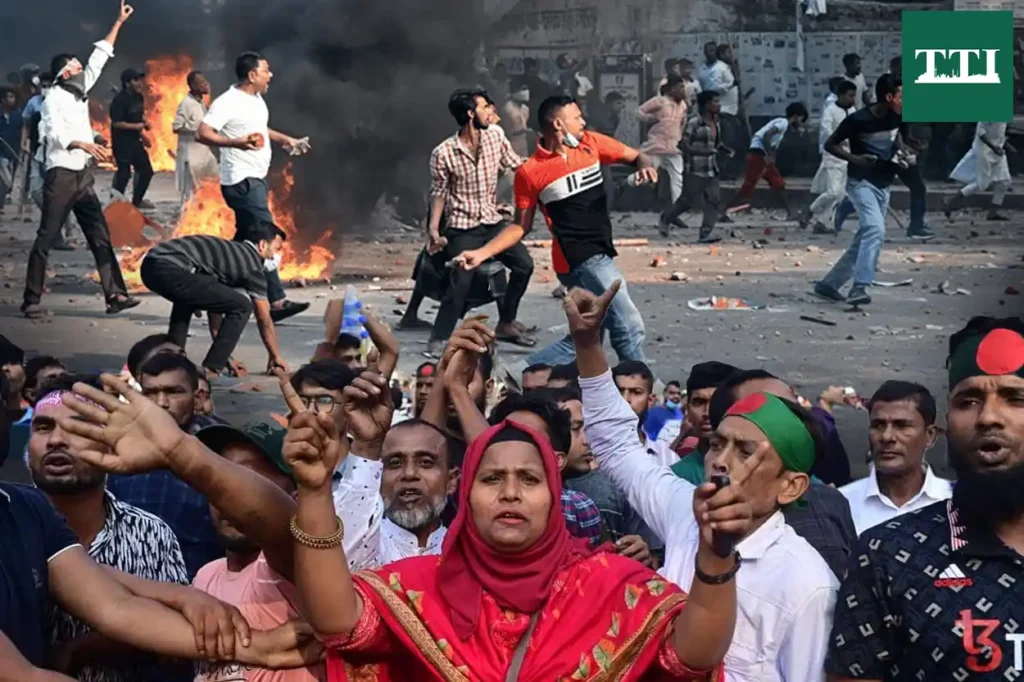
The social and political fabric of Bangladesh is currently being tested by a disturbing escalation of violence directed toward the Hindu minority community. In a span of just 18 days, six Hindu individuals have been murdered under brutal circumstances, signaling a precarious breakdown in law and order. The most recent wave of killings, occurring within a 24-hour window, has sent shockwaves through the country, prompting international outcries and urgent demands for the interim government to provide basic security to its vulnerable citizens.
The Recent Victims: Tragic Losses in Narsingdi and Jashore
Among the most harrowing of the recent incidents is the murder of Sarat Chakraborty Mani, a 40-year-old grocery shop owner in Narsingdi. Mani was a man who had sought a better life for his family, having worked in South Korea for several years before returning to his homeland to build a home and establish a small business. On a Monday night at Charsindur Bazaar, while he was attending to his shop as he did every day, he was suddenly set upon by unidentified assailants wielding sharp weapons. Despite the efforts of local residents who rushed him toward medical care, the injuries were too severe, and he passed away before reaching the hospital.
Mani’s death is not just a statistic; it is the loss of a man described by his neighbors as calm, humane, and entirely devoid of personal enemies. His family, including his wife Antara Mukherjee and his 12-year-old son Abhik, are left to grapple with a loss that seems motivated by nothing other than his religious identity. His own words, shared on social media shortly before his death, now serve as a chilling epitaph for the current state of the nation. On December 19, he shared his distress in a Facebook post: “So much fire everywhere, so much violence. My birthplace has turned into a valley of death,” according to reports by Blitz.
On the same day that Mani was killed, another targeted assault took place in Jashore, claiming the life of 45-year-old Rana Pratap Bairagi. Rana was a prominent figure in his community, serving as the acting editor of BD Khobor and managing an ice factory. The precision of the attack suggests a pre-planned execution. Witnesses reported that attackers arrived on a motorcycle at his factory in Kopalia Bazar, called him out, and shot him multiple times. The brutality was underscored by the responding authorities. Monirampur Police station officer-in-charge Md Raziullah Khan provided a somber account of the scene, stating: “Rana was shot three times in the head, and his throat was slit. Upon receiving the news, we went to the scene. The body has been recovered and sent for autopsy. We are investigating the perpetrators.”
Also Read: The Trump Contradiction: A Tale of Two Leaders and Selective Justice
A Pattern of Systematic Brutality
These two murders are part of a broader, more terrifying trend. In Mymensingh, the death of Dipu Chandra Das stands out for its sheer savagery; the garment factory worker was lynched by a mob, and his remains were hung from a tree and set on fire. Another victim, 50-year-old Khokon Das, a pharmacy owner, was intercepted and killed while returning home from work. Even within the supposedly secure confines of a workplace, safety is not guaranteed, as evidenced by the fatal shooting of Bajendra Biswas while he was on duty at a garment factory.
The violence has also taken on a gendered dimension, with reports of sexual assault used as a tool of terror. In Jhenaidah, the case of a 40-year-old widow who was kidnapped, tortured, and raped has sparked widespread indignation. Hospital superintendent Dr Mohammad Mustafizur Rahman confirmed the severity of the assault, noting: “Later, through medical examination, we came to know that she had been subjected to torture.” While local police have made arrests in this specific case, the sense of insecurity among Hindu women remains pervasive. Jhenaidah additional superintendent of police Bilal Hossain attempted to offer some assurance of justice, stating: “We have called the victim to the police station and registered her complaint. After completing the investigation, the police will take strict legal action against those responsible.”
The Path Forward and International Scrutiny
The interim government, led by Nobel Laureate Muhammad Yunus, faces immense pressure to stabilize the country. The recurring nature of these attacks—six deaths in less than three weeks—suggests that the current security measures are insufficient to deter those targeting minorities. The international community, particularly neighboring India, has voiced deep concern. The Indian government has characterized the situation as “unremitting hostility” against minorities, signaling that the stability of the region is at stake if these human rights violations continue unchecked.
For the people of Bangladesh, the path forward requires more than just police investigations after the fact; it requires a proactive commitment to secularism and the protection of all citizens regardless of faith. Until the perpetrators of these targeted killings are brought to justice and the rhetoric of hate is suppressed, the “valley of death” described by Sarat Mani will continue to haunt the nation’s conscience.
Also Read: Justice for Nikitha Godishala: Family Rejects Relationship Rumors, Alleges Financial Motive