


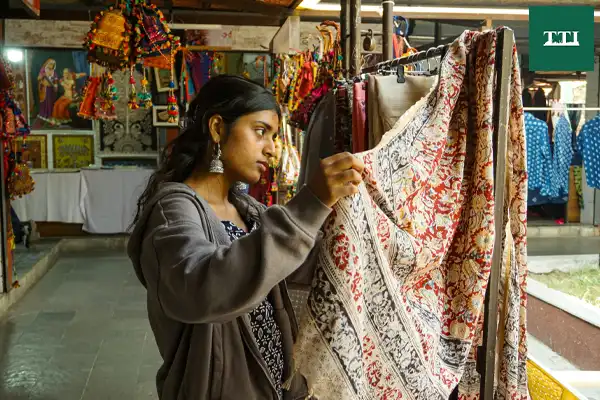
The story of Indian fashion is a dramatic chronicle of reclamation. Following independence, India faced a profound existential crisis. Centuries of colonial rule had reframed the subcontinent primarily as a convenient exporter of raw materials, while the indigenous crafts—once the envy of the world—were systematically marginalized. The violence of Partition further fractured the artisan community, displacing the very hands that held the secrets to ancient textiles. However, the resilience of Indian heritage proved unbreakable. What began as a desperate effort to preserve vanishing folk arts has evolved into an authoritative global movement, where Indian designers no longer just participate in the fashion conversation but lead it with a distinct, regal voice.
The Foundation of a New Identity
The revival began in the early 1950s, catalyzed by visionaries like Kamaladevi Chattopadhyay. As she took the helm of the Central Cottage Industries Emporium, she didn’t just sell products; she built an ecosystem for artisans. This era birthed trailblazers like Mohanjeet Grewal, a journalist-turned-designer who introduced the “mini sari” and gold-rimmed dhotis to the fashion boutiques of Paris. Grewal’s boutique, La Malle de l’Inde, was a defiant stand against the mass-manufactured monotony of the West, proving that the vibrant hand-blocked fabrics of Rajasthan could captivate the French elite. This was the first ripple in a wave that would eventually flood the international luxury market.
From Revivalism to Red Carpets
By the 1970s and 80s, the focus shifted from mere preservation to sophisticated adaptation. Ritu Kumar became a foundational figure by breathing new life into block printing and handloom weaving, making traditional aesthetics palatable for a modernizing society. Simultaneously, the duo Abu Jani and Sandeep Khosla redefined Indian luxury. Their work was unapologetically opulent, utilizing intricate zardozi embroidery and precious stone embellishments. They were among the first to successfully bridge the gap between Indian heritage and Hollywood glamour, placing Indian craftsmanship on international red carpets and signaling to the world that Indian fashion was synonymous with high-end luxury.
The Era of Liberalization and Bollywood Brilliance
The 1990s served as a pivotal turning point. Economic liberalization opened India to the world, and technology allowed designers to gain unprecedented visibility. This era saw the rise of Manish Malhotra, who leveraged the massive cultural export of Bollywood to set global trends. Malhotra’s ability to blend cinematic drama with contemporary silhouettes made him a household name. Meanwhile, designers like Tarun Tahiliani introduced innovative draping techniques that gave the traditional sari a modern, structural edge. It was during this period that Ritu Beri became the first Indian designer to showcase at Paris Fashion Week, officially shattering the glass ceiling for the generation to follow.
The Global Domination of the Modern Pioneers
As the millennium turned, the world witnessed the rise of Sabyasachi Mukherjee and Rahul Mishra. Sabyasachi’s genius lies in his ability to sell nostalgia; his romantic, vintage aesthetic resonated with a global diaspora yearning for their roots. On the other end of the spectrum, Manish Arora’s kaleidoscopic, avant-garde designs proved that Indian fashion could be whimsical and experimental, earning him a place in the hearts of the international fashion elite. Rahul Mishra further elevated the narrative by integrating sustainable practices and handloom weaving into high-fashion runways, proving that ancient techniques are the future of ethical luxury.
Today, Indian fashion is a powerhouse projected to reach a market value of ₹45.3 lakh crore by 2032. From the structured drapes of Gaurav Gupta to the vibrant prints of Masaba Gupta, Indian designers are telling a nuanced story of their land. They have successfully transitioned from being “inspired by” the West to being the inspiration for the West, weaving centuries-old beliefs and emotions into the very fabric of global culture.