


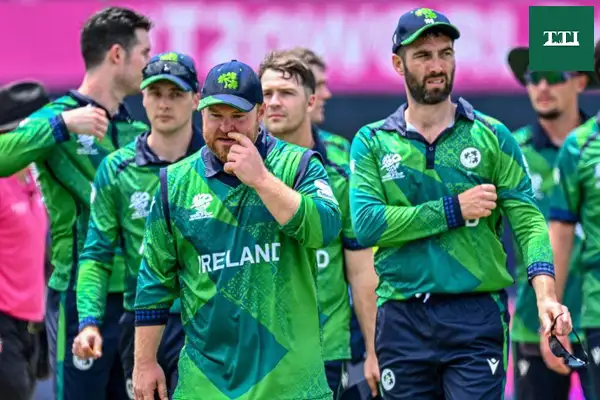
Cricket Ireland has officially announced its 15-player squad for the upcoming ICC Men’s T20 World Cup 2026, scheduled to be co-hosted by India and Sri Lanka. As the team gears up for the tenth edition of the global spectacle, the selection committee has opted for a blend of proven experience and dynamic young talent, signaling a clear intent to improve upon their previous performances on the world stage.
Paul Stirling to Lead the Charge
Veteran batter Paul Stirling will once again captain the side, marking his second consecutive T20 World Cup at the helm. Stirling’s leadership is seen as vital for a squad that relies heavily on its aggressive top-order play. Supporting him in a leadership capacity is Lorcan Tucker, who has been named vice-captain. Tucker’s dual role as a wicketkeeper and a stabilizing middle-order presence makes him a linchpin in the Irish setup.
The squad continuity is a notable theme in this announcement. Out of the 15 players selected, 12 were part of the 2024 T20 World Cup campaign in the USA and West Indies. This decision underscores the selectors’ faith in a settled group that has played together extensively over the last 18 months.
Also Read: Record Breakers: India’s Historic Surge Toward the 2026 World Cup
Infusion of New Talent
While the core remains familiar, the inclusion of three rising stars has generated significant excitement.
- Tim Tector (22): A top-order batter who offers a handy off-spin option, Tim joins his brother Harry in the squad, continuing the Tector family’s strong legacy in Irish cricket.
- Ben Calitz (23): A left-handed middle-order batter, Calitz provides a different tactical dimension to the batting lineup, especially against spin-heavy attacks expected in the subcontinent.
- Matthew Humphreys (23): A talented left-arm spinner, Humphreys’ inclusion is a strategic move tailored for the slow, turning tracks of Sri Lanka and India.
National selector Andrew White emphasized that these additions add “dynamism” and “tactical flexibility” to the team. White noted that the last year and a half has been spent testing various roles and combinations, and the management is confident that this 15-man unit is their strongest possible representation.
Addressing Past Challenges
Reflecting on the team’s journey, Andrew White admitted that Ireland “probably weren’t at our best in 2024.” After a memorable run in the 2022 tournament—where they famously defeated eventual champions England—the team felt they fell short of their potential in the previous edition. The 2026 tournament is viewed as a prime opportunity for redemption.
“To say we are very much looking forward to this T20 World Cup is an understatement,” White said. “We have been waiting to rectify [the 2024 performance] ever since.”
Tournament Outlook and Groupings
Ireland has been placed in Group B, a challenging pool that includes co-hosts Sri Lanka, powerhouse Australia, and competitive sides Oman and Zimbabwe.
The Irish campaign will kick off on February 8, 2026, against Sri Lanka in Colombo. All of Ireland’s group-stage matches are scheduled to be played in Sri Lanka. Having played several series in the subcontinent recently, the squad is expected to be well-adjusted to the humid conditions and low-bounce pitches characteristic of the region.
The Full 15-Player Squad:
- Paul Stirling (Captain)
- Lorcan Tucker (Vice-Captain/Wicketkeeper)
- Mark Adair
- Ross Adair
- Ben Calitz
- Curtis Campher
- Gareth Delany
- George Dockrell
- Matthew Humphreys
- Josh Little
- Barry McCarthy
- Harry Tector
- Tim Tector
- Ben White
- Craig Young
Preparation and Strategy
The squad features a potent bowling attack led by Josh Little and Mark Adair, both of whom have extensive experience in global T20 leagues. The presence of all-rounders like Curtis Campher and George Dockrell provides the “long batting lineup” that has become a hallmark of Ireland’s T20 strategy.
With the tournament set to begin on February 7 and conclude with the final on March 8, Ireland’s primary goal will be to secure a top-two finish in Group B to advance to the Super 8 stage. Given their history of causing major upsets, the “Men in Green” will be a team that higher-seeded nations overlook at their own peril.
Also Read: From Battlefield to Constitution: The Strategic Aftershocks of Operation Sindoor