


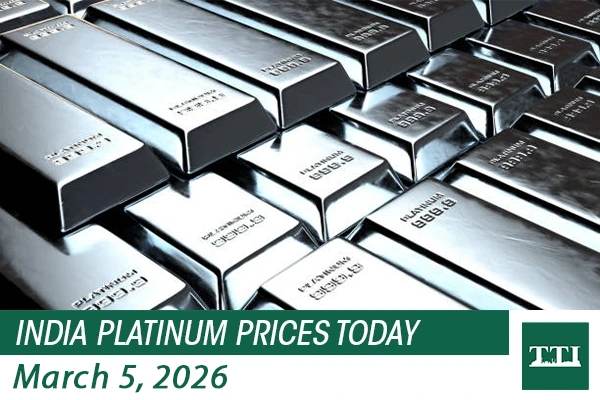
Platinum prices in India have hit a steady note today, March 5, 2026, as the market seeks a new equilibrium following the significant price swings seen at the start of the week. After a sharp correction on March 4th that mirrored a broader retreat in precious metals, the “white metal” is currently holding firm, offering a moment of calm for retail buyers and investors.
According to the latest data from Goodreturns, platinum rates are maintaining their levels from yesterday’s close, reflecting a period of consolidation in the domestic bullion market.
Today’s Platinum Rate in India (March 5, 2026)
As of today, the price of platinum in India stands at ₹6,310 per gram. Following the massive ₹456 per gram drop experienced yesterday, the price has remained unchanged in the last 24 hours.
Platinum Price Table (95% Purity – Pt 950)
| Quantity | Today’s Price (INR) | Yesterday’s Price (INR) | Price Change |
| 1 Gram | ₹6,310 | ₹6,310 | ₹0 |
| 8 Grams | ₹50,480 | ₹50,480 | ₹0 |
| 10 Grams | ₹63,100 | ₹63,100 | ₹0 |
| 100 Grams | ₹6,31,000 | ₹6,31,000 | ₹0 |
Note: The prices above are indicative and do not include the 3% Goods and Services Tax (GST), making charges, or local levies.
Platinum Rates in Major Cities
Platinum pricing is generally uniform across major Indian metros today, as the market processes global cues.
- Mumbai: ₹63,100 per 10g
- Delhi: ₹63,100 per 10g
- Chennai: ₹63,100 per 10g
- Bangalore: ₹63,100 per 10g
- Kolkata: ₹63,100 per 10g
Key Drivers for Platinum Prices Today
While gold is often driven by currency fluctuations and safe-haven demand, platinum’s value is uniquely tied to its role in the global industrial transition. Here is why the market is currently in a “wait-and-watch” mode:
- Macroeconomic Consolidation: After a volatile week where the US Dollar index hit near-99 levels, causing a sell-off in precious metals, the dollar has stabilized. This has stopped the immediate bleeding in platinum prices.
- Industrial Demand vs. Economic Cooling: Platinum is vital for automotive catalytic converters and the burgeoning hydrogen economy. Concerns about slowing global manufacturing are being offset by the structural supply deficit from major producers like South Africa.
- Geopolitical Sentiment: While tensions in the Middle East remain high, the lack of a fresh escalation in the last 24 hours has reduced the immediate “panic” premium usually baked into metal prices.
- Holi Festival Demand: Retail demand in India remains resilient during the festival season, providing a local “floor” for prices even when international markets are soft.
Platinum vs. White Gold: Why Buyers are Switching
In 2026, many Indian consumers are choosing platinum over white gold for engagement rings and high-end jewelry. Here’s why:
- Purity: Platinum jewelry (Pt 950) is 95% pure, whereas 18K white gold is only 75% gold mixed with alloys.
- Color Stability: Platinum is naturally white and will never fade to yellow. White gold requires rhodium plating, which must be redone every few years to maintain its luster.
- Hypoallergenic: Being a pure metal, platinum is ideal for those with sensitive skin, as it lacks the nickel often found in white gold alloys.
Conclusion
Today’s platinum price in India signals a period of stabilization. While the metal has corrected from its February highs, the long-term supply constraints suggest that current levels might be an attractive entry point for those looking to diversify their portfolios beyond traditional gold. For real-time updates and historical trends, always refer to the Goodreturns live platinum rates.
Disclaimer: The rates mentioned are for informational purposes. Precious metal prices are subject to market risks. Please consult with a certified financial advisor or authorized jeweler before making significant investment decisions.