


In a striking display of geopolitical and economic double standards, Pakistan has recently navigated a delicate tightrope between aggressive political posturing and desperate financial solicitation. As the nation announced a high-profile boycott of its T20 World Cup cricket match against India, it simultaneously rolled out a lavish red carpet for the India-born World Bank President, Ajay Banga. This stark contrast has drawn global attention to Islamabad’s struggle to balance nationalistic rhetoric with the harsh reality of a collapsing economy.
The Cricket Boycott and Political Posturing
The decision to skip the marquee T20 World Cup clash against India was framed by Islamabad as a “considered stance” of solidarity with Bangladesh. Pakistan Prime Minister Shehbaz Sharif justified the move by claiming the government was standing against “politics on the sports field,” a statement many analysts found ironic given that the boycott itself is a deeply political act. The boycott followed a series of disputes within the International Cricket Council (ICC) after Bangladesh was replaced by Scotland for refusing to play in India due to security concerns.
By weaponizing cricket, Pakistan attempted to project an image of regional defiance. However, this stance has been met with significant domestic and international backlash. The ICC has already warned of serious consequences for the Pakistan Cricket Board (PCB), noting that such forfeitures impact the global cricket ecosystem and lead to massive financial losses for sponsors and broadcasters. While the government maintains its “clear stand,” the move is increasingly viewed as a symbolic gesture that the country can ill afford.
Also Read: The Silent Conquest: How Bob Khating Won Tawang
Red Carpets for “Dollars” and Debt
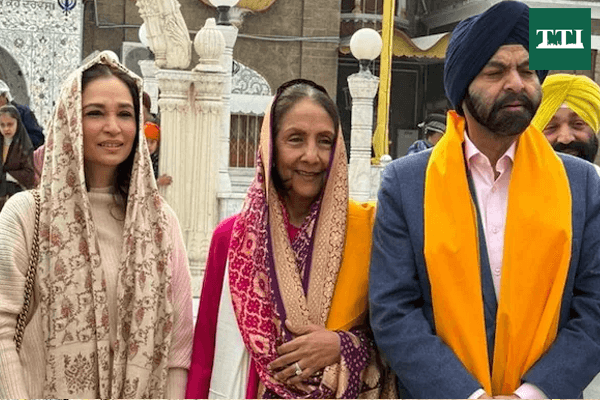
The rigid political wall Pakistan built against Indian cricket seemed to vanish the moment Ajay Banga, the Indian-origin head of the World Bank, arrived on Pakistan soil. Born in Pune, Maharashtra, Banga was received with “extraordinary fanfare” that exceeded typical diplomatic protocols for a financial executive. The reception featured horse-mounted escorts, marching bands playing Bollywood tracks, and students lined up across streets adorned with massive banners of Banga alongside Punjab Chief Minister Maryam Nawaz Sharif.
The motive behind this “mehman nawazi” (hospitality) is rooted in Pakistan’s dire fiscal situation. With an external debt approaching $135 billion, roughly 20 percent of which is owed to the World Bank, Islamabad is desperate to curry favor with its creditors. Banga’s visit, though partly personal—including a trip to his ancestral home in Khushab and religious sites like Gurdwara Panja Sahib—was used by the Pakistani leadership to lobby for a $20 billion financial assistance package over the next decade.
Economic Desperation Overrides Rhetoric
The irony of the situation reached its peak when Pakistani officials presented Banga with revenue records of his family’s ancestral home—the very property his father, an Indian Army officer, was forced to flee during the 1947 Partition. While intended as a gesture of goodwill, critics labeled the move as “tone-deaf” and “sycophantic,” highlighting the lengths to which the government would go to secure a “loan cheque.”
Prime Minister Shehbaz Sharif recently admitted to feeling “ashamed” and “humiliated” by the necessity of traveling the world to seek foreign assistance, noting that such dependence bows the nation’s head in shame. This candid admission underscores the reality that while Pakistan may choose to boycott a cricket match to satisfy political narratives, it cannot afford to boycott the Indian-born head of the institution that holds the keys to its economic survival.
A Public Outcry Over Hypocrisy
The contrast has sparked a wave of criticism within Pakistan. Citizens and social media users have openly mocked the government’s “new way of begging,” pointing out the absurdity of treating a “bank employee” like a global head of state while simultaneously preaching defiance against his country of birth.
As Pakistan continues to reel under massive debt and failing privatization efforts, the “Banga Visit” serves as a vivid illustration of the country’s current predicament: a nation attempting to play the role of a proud regional power on the cricket pitch while being forced into a posture of submission in the halls of global finance. The red carpet for Banga may have been lined with flowers, but for many, it remains a symbol of an economy on life support and a foreign policy defined by deep-seated hypocrisy.
Also Read: Chennai on High Alert: H5N1 Confirmed After Massive Crow Deaths; Health Advisory Issued