


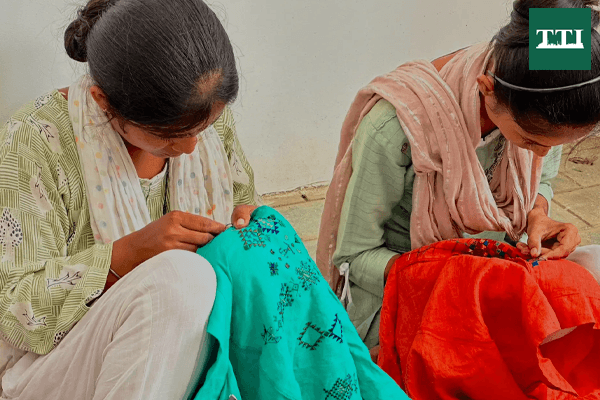
While fashion is often viewed through the lens of metropolitan runways and global luxury brands, its truest roots in India are frequently found in the quiet, resourceful streets of its small towns. In an evocative exploration of style, local identity, and the evolution of personal taste, we delve into the unique sartorial landscape of growing up in mofussil India. This journey reveals that fashion was never just about what was “in season”; it was about community, adaptation, and the enduring charm of the tailor-made.
The local tailor: The ultimate couturier
In small-town India, the relationship with fashion began not at a mall, but at the wooden desk of the local tailor. Before the explosion of ready-to-wear brands, the tailor was the gatekeeper of style. Every garment was a collaborative project. You didn’t just buy a dress; you selected the fabric from a local textile shop, debated the neck design using a dog-eared catalog, and negotiated the exact “fitting” that would satisfy both modesty and trend. This process instilled a deep understanding of construction, fabric quality, and the value of a garment that was made specifically for one’s body. It taught us that “luxury” wasn’t a price tag, but the perfect fall of a hand-stitched hem.
Also Read: Gems of Rajasthan: Navigating the Best Fine and Festive Jewellery Ateliers
Borrowing from the big screen
Without the instant gratification of social media, Bollywood served as the primary window into the wider world of glamour. However, fashion in a small town was an act of translation. When a blockbuster hit the local single-screen cinema, the outfits seen on screen weren’t bought—they were mimicked. Seeing a specific silhouette on an actress meant describing it to the tailor the next day. This taught a generation how to adapt high-fashion concepts into everyday wear, blending the aspirational glitter of Mumbai with the practical realities of small-town life. It was a lesson in creative interpretation, proving that style is a language you can speak even if you don’t have the original vocabulary.
The Sunday Market and the thrill of the hunt
Shopping was rarely a sterile experience. The weekly “haat” or Sunday market was where the hunt for uniqueness happened. Amidst the chaos of spice vendors and plastic ware, one could find hidden gems—discarded export surpluses, traditional handlooms brought in from nearby villages, or affordable trinkets that could transform an outfit. This environment nurtured an eye for detail and the patience to sift through the mundane to find the extraordinary. It was here that many learnt the art of “high-low” styling long before it became a trendy term in fashion magazines.
The Sunday best and the politics of modesty
Growing up in a tight-knit community meant that what you wore was often a conversation with your neighbors. Fashion was balanced against the social fabric of the town. There was a distinct “Sunday best” or “festival attire” that commanded respect and celebrated heritage. Navigating the unspoken rules of modesty while trying to express individuality was a delicate dance. It taught a nuanced lesson in how clothes function as a social signal, reflecting one’s respect for tradition while subtly pushing boundaries through a choice of color or a slightly modern cut.
Sustainability as a way of life
Long before sustainability became a corporate buzzword, it was the default setting in small-town households. Clothes had long lifecycles. A festive lehenga was repurposed into a blouse; a brother’s shirt became a sister’s oversized tunic; and eventually, everything became a soft duster for the house. This circular approach to fashion wasn’t driven by a trend, but by a deep-seated respect for resources. It taught us that a garment’s value didn’t diminish with age; it simply evolved.
The shift to the global stage
As the digital divide shrank and e-commerce reached the farthest corners of the country, the local fashion landscape changed. The exclusivity of the “tailor-made” began to compete with the speed of fast fashion. However, those who grew up in the era of the local tailor and the Sunday market carry a unique perspective. They understand that fashion is inherently personal and deeply rooted in one’s environment. The transition from small-town alleys to metropolitan life brings a realization: the most stylish people are often those who haven’t forgotten the resourcefulness and authenticity of their roots.
In conclusion, growing up in small-town India provided a fashion education that no design school could replicate. It was an education in patience, craftsmanship, and the soul of clothing. It taught us that while trends are global, style is—and always will be—local.
Also Read: The Death of Minimalism: Welcoming the Return of the “Makeup-Makeup” Look