


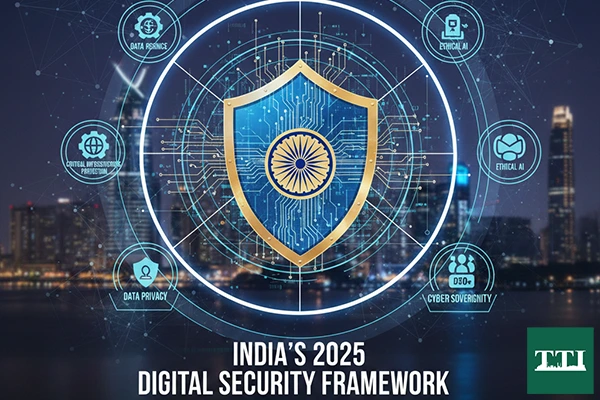
The rapid digitization of India’s economy has brought unparalleled convenience, but it has also opened the floodgates for sophisticated cyber-attacks and financial fraud. In a decisive move to protect its citizens and infrastructure, the Indian government, through the Department of Telecommunications (DoT) and the Ministry of Electronics and Information Technology (MeitY), has introduced a suite of stringent regulations under the Telecommunication Cyber Security (TCS) Amendment Rules, 2025 and the Digital Personal Data Protection (DPDP) Rules, 2025.
These updates represent a fundamental shift in how digital identities, devices, and personal data are managed in the world’s most populous democracy.
1. The New Pillars of Telecom Security
At the heart of India’s latest push is the Telecommunication Cyber Security (TCS) Amendment Rules, 2025. These rules address critical gaps in the existing framework, focusing on the “telecom identifiers”—such as mobile numbers and IMEI codes—that act as the keys to a person’s digital life.
The Mobile Number Validation (MNV) Platform
One of the most significant introductions is the institutionalization of the Mobile Number Validation (MNV) platform. This decentralized, privacy-compliant system allows digital service providers (like banks and e-commerce apps) to verify in real-time if a mobile number genuinely belongs to the person claiming it.
The primary goal is to eradicate “mule accounts”—bank accounts opened using fake or stolen identities—which are frequently used to launder money from cyber-scams. By ensuring that a telecom identifier is linked to a verified individual, the government aims to restore trust in digital transactions.
Scrubbing the Resale Device Market
India has a massive second-hand smartphone market, but it has often been a “gray zone” for stolen or cloned devices. The 2025 rules now mandate that any entity dealing in refurbished or resale devices must scrub every device’s IMEI number against a centralized government database of blacklisted and stolen phones. This “Device Setu” initiative ensures that unsuspecting buyers do not end up with illegal hardware and helps law enforcement track stolen equipment more effectively.
2. Accountability for “Telecom Identifier User Entities” (TIUEs)
The 2025 amendments introduced a new regulatory category: Telecom Identifier User Entities (TIUEs). This includes any business—from food delivery startups to multinational tech giants—that uses mobile numbers, IP addresses, or IMEIs for user authentication.
Mandatory Data Sharing and Traceability
TIUEs are now legally obligated to share relevant telecom-identifier data with the government under specific conditions. This is designed to improve the traceability of cyber-frauds. When a scam occurs, authorities can now move faster to pinpoint the source by following the digital breadcrumbs left across different platforms.
The Rise of the CTSO
Every telecom entity is now required to appoint a Chief Telecommunication Security Officer (CTSO). To ensure national accountability, the CTSO must be an Indian citizen and a resident of India. This officer is responsible for:
- Implementing a robust internal cybersecurity policy.
- Reporting security breaches to the government within six hours of detection.
- Establishing a Security Operations Centre (SOC) for real-time threat monitoring.
3. The DPDP Rules: Protecting the “Data Principal”
While the DoT secures the pipes and devices, MeitY is securing the data flowing through them. The Digital Personal Data Protection (DPDP) Rules, 2025, notified in November 2025, provide the operational manual for the landmark 2023 Act.
Consent as the Bedrock
Under the new rules, “bundled consent” is a thing of the past. Companies, referred to as Data Fiduciaries, must provide a “standalone” notice in plain language that explains:
- Exactly what data is being collected.
- The specific purpose for that collection.
- How a user (the Data Principal) can withdraw consent or file a complaint.
The Role of Consent Managers
To simplify the user experience, the government has introduced Consent Managers. These are independent entities that act as a single point of contact for individuals to manage, review, and withdraw their consent across multiple platforms. This puts the power back into the hands of the citizen, rather than forcing them to navigate the labyrinthine settings of dozens of different apps.
4. Financial Penalties and Economic Impact
The cost of non-compliance has never been higher. The DPDP Act allows for staggering penalties to ensure that companies take these rules seriously:
- ₹250 crore ($30 million approx.): For failure to prevent a personal data breach.
- ₹200 crore: For failing to notify the Board or affected individuals about a breach.
- ₹200 crore: For violating obligations related to children’s data.
Challenges for Startups and MSMEs
While large corporations have the resources to build SOCs and hire CTSOs, small and medium enterprises (MSMEs) face a steep uphill battle. Industry bodies like NASSCOM have raised concerns over the “compliance burden,” noting that the cost of validating mobile numbers through the MNV platform (estimated at ₹1.5 to ₹3 per query) could be 30 to 60 times higher than current OTP-based systems. There is a fear that these costs might eventually be passed down to the consumer, potentially slowing digital adoption in rural areas.
5. Looking Ahead: The Roadmap to 2027
The implementation of these rules is following a phased approach to give the industry time to adjust:
- Late 2025: Establishment of the Data Protection Board of India, the primary enforcement body.
- Late 2026: Registration opens for Consent Managers.
- May 2027: Full enforcement of all provisions, including mandatory data erasure and advanced security requirements.
Conclusion
India’s new digital security landscape is a bold attempt to balance the needs of a booming digital economy with the necessity of national security and individual privacy. By tightening the rules around telecom identifiers and personal data, the government is building a “digital fortress.” However, the success of this framework will depend on how effectively the government can support smaller businesses in meeting these high standards without stifling innovation.