


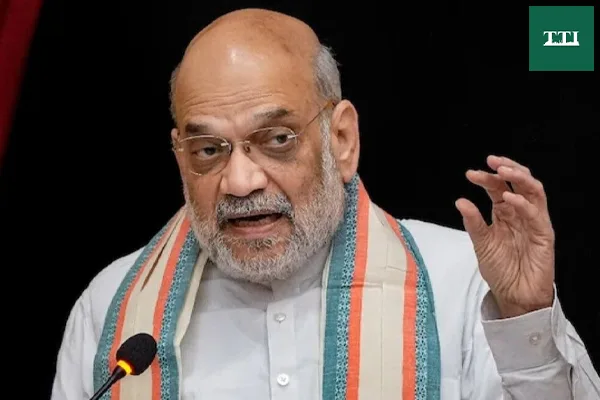
As the political landscape heats up across India, the 2026 Assembly elections have brought a wave of high-profile activity to several key states. Central to this momentum is Union Home Minister Amit Shah’s arrival in Assam, marking a significant push for the ruling Bharatiya Janata Party (BJP) as it prepares for upcoming electoral challenges in the Northeast and beyond.
Amit Shah’s High-Stakes Visit to Assam
Union Home Minister Amit Shah landed in Assam for a crucial two-day visit, signaling the central government’s commitment to the region’s development and security. Upon his arrival, he was warmly received by Assam Chief Minister Himanta Biswa Sarma, a key strategist for the BJP in the Northeast. The visit is packed with a series of high-level engagements designed to consolidate the party’s presence before the state goes to the polls.
During his stay, Shah is scheduled to launch several major infrastructure and development projects. These initiatives are expected to touch upon various sectors, including connectivity, healthcare, and digital governance, aiming to reinforce the “double-engine growth” narrative championed by the NDA government. Beyond the public ceremonies, the Home Minister will hold closed-door meetings with senior state leadership and party officials to review the political climate and fine-tune election strategies.
Also Read: 10 Natural Superfoods to Boost Your Health
The Broader Electoral Context: Five Regions in Focus
The political churn is not limited to Assam. As 2026 progresses, five distinct regions—West Bengal, Tamil Nadu, Kerala, Assam, and the Union Territory of Puducherry—are preparing for assembly polls. The stakes are exceptionally high, with each region presenting a unique set of political dynamics.
In West Bengal, Chief Minister Mamata Banerjee has already begun escalating her campaign. She recently announced her intention to take her opposition to the ongoing State Institutional Reform (SIR) exercise directly to New Delhi. By signaling a broader political push, Banerjee aims to position the Trinamool Congress (TMC) as a formidable challenger to the central government’s policies, setting the stage for a heated confrontation in the upcoming elections.
Strategic Alliances and Seat-Sharing in the South
Moving toward Southern India, the pre-poll atmosphere in Tamil Nadu and Kerala is characterized by intense negotiations and strategic maneuvering. In Kerala, the Congress party is working to resolve internal rifts to present a united front. Notable developments include Shashi Tharoor meeting with senior leaders Rahul Gandhi and Mallikarjun Kharge to address local grievances and ensure the party remains focused on the electoral battle ahead.
In both Tamil Nadu and Kerala, political parties are already deep into discussions regarding strategic alliances. The focus is currently on early seat-sharing arrangements to avoid the last-minute friction that often plagues large coalitions. These early moves are seen as essential for building a cohesive campaign capable of swaying the electorate in states where regional identities and local issues play a dominant role.
Looking Ahead: The Road to 2026
The current political activity serves as a precursor to what is expected to be a transformative election cycle. Recent “Mood of the Nation” polls suggest a strong position for the NDA on a national level, projecting a potential win of 352 seats if Lok Sabha polls were held today. However, assembly elections often hinge on localized factors, making these state-level visits and strategic shifts critical.
As Amit Shah continues his engagements in Assam and Mamata Banerjee prepares for her Delhi offensive, the political narrative is shifting from general governance to active campaigning. The upcoming months will likely see more frequent visits from central leaders, the announcement of populist schemes, and a further sharpening of ideological divides.
For voters in these five regions, the influx of projects and the focus on strategic alliances indicate that the race for the 2026 Assembly has officially entered its most active phase. With high-stakes meetings and major project launches, the political temperature is set to remain high as parties vie for control in these pivotal territories.
Also Read: INDIA Bloc Fortress: MOTN Predicts Near-Total Sweep for DMK-Congress Alliance in Tamil Nadu