


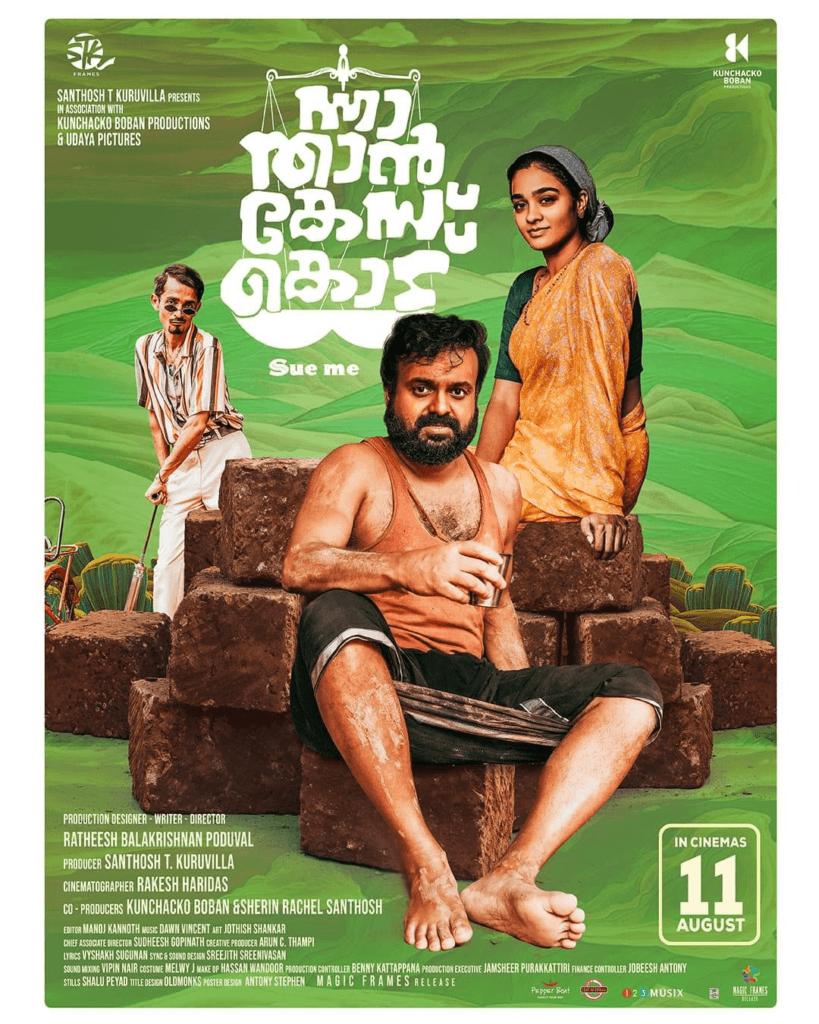
Nna Thaan Case Kodu (2022) is a Malayalam-language comedy-drama that blends humor, social commentary, and family dynamics into a compelling cinematic experience. Directed by Ratheesh Balakrishnan Poduval and starring Kunchacko Boban in the lead role, the film has been praised for its unique storytelling, engaging performances, and relatable depiction of everyday life in Kerala. The movie stands out in contemporary Malayalam cinema for its combination of light-hearted comedy with underlying social issues, offering both entertainment and thoughtful reflection.
The story centers on Pavithran (Kunchacko Boban), an ordinary man living in a small village, whose life takes a humorous yet thought-provoking turn when he becomes embroiled in a series of legal and bureaucratic challenges. Pavithran’s simple and honest nature contrasts with the often absurd and convoluted world of law, government, and societal expectations. The narrative unfolds as he navigates these challenges, encountering quirky characters, unexpected obstacles, and comedic situations that reflect broader societal realities. The film uses these scenarios to comment on justice, civic responsibility, and the human tendency to navigate complex systems with creativity and resilience.

Performances and Character Portrayals
Kunchacko Boban delivers a nuanced performance as Pavithran, capturing the character’s sincerity, intelligence, and occasional exasperation with everyday absurdities. His timing in both comedic and emotional sequences adds depth to the character, making Pavithran relatable to audiences. Supporting actors, including Alencier Ley Lopez, Salim Kumar, and Ranjitha Menon, contribute significantly to the film’s charm, providing memorable portrayals of villagers, officials, and family members who interact with Pavithran throughout his journey.
The chemistry between the characters adds to the film’s comedic and dramatic effectiveness. Each supporting character is distinct, enhancing both humor and narrative development. Salim Kumar’s comedic timing and expressive performance provide a lighter counterbalance to the central character’s struggles, while Alencier Ley Lopez’s portrayal of authority figures adds tension and satirical commentary on bureaucratic inefficiencies. The ensemble cast ensures that each interaction contributes meaningfully to the story while keeping viewers engaged.
Storytelling and Direction
Director Ratheesh Balakrishnan Poduval’s storytelling approach prioritizes character-driven narrative and situational humor over flashy visual effects or conventional drama. The screenplay carefully balances comedic sequences with moments of reflection, allowing the audience to both laugh and consider the social themes presented. The pacing of the film is deliberate, gradually building comedic tension while unfolding Pavithran’s journey through a series of escalating challenges.
The director uses humor as a vehicle to explore social commentary, highlighting issues such as legal bureaucracy, corruption, and community dynamics without appearing preachy or heavy-handed. Situational comedy arises naturally from character interactions, misunderstandings, and the contrast between Pavithran’s earnestness and the absurdities of the systems he confronts. By combining humor with relatable scenarios, Nna Thaan Case Kodu appeals to a wide audience while delivering a meaningful narrative experience.
Themes and Social Commentary
The film explores themes of justice, civic responsibility, and resilience in the face of systemic challenges. Pavithran’s interactions with bureaucracy and legal processes reflect the difficulties ordinary citizens often face, providing both comedic material and insight into societal issues. The film emphasizes the importance of honesty, ingenuity, and persistence when navigating complex systems, suggesting that even small actions can have meaningful impacts.
Family and community also play a central role in the narrative, highlighting intergenerational relationships, social expectations, and the support systems that help individuals overcome challenges. The story demonstrates how personal integrity and moral courage can influence not only individual outcomes but also community dynamics. By weaving these themes into a comedic framework, the film offers a thoughtful yet accessible reflection on contemporary social issues.
Cinematic Style and Technical Elements
The cinematography by Mukesh Muraleedharan captures the essence of village life in Kerala, using natural lighting, authentic locations, and intimate framing to create a sense of realism. Close-ups are used effectively to capture the nuances of character expressions, particularly Pavithran’s reactions to absurd or challenging situations. Wide shots establish the spatial and social context, helping viewers appreciate the community and environment in which the story unfolds.
Editing by Ranjan Abraham ensures a smooth narrative flow, balancing comedic timing with plot development. The film’s rhythm allows audiences to absorb both the humor and the underlying social commentary without feeling rushed or overwhelmed. The combination of cinematography and editing creates a cohesive visual style that supports the narrative’s comedic and dramatic elements.
Music and Soundtrack
The music in Nna Thaan Case Kodu, composed by Dawn Vincent, complements the film’s tone, enhancing both emotional and comedic moments. Background scores are used strategically to underscore tension, humor, and character interactions, while songs are integrated seamlessly into the narrative. The soundtrack supports the storytelling without distracting from the plot, contributing to the immersive experience of the film.
Sound design plays a key role in amplifying comedic sequences, emphasizing timing, environmental cues, and character reactions. The effective use of ambient sounds, dialogue clarity, and strategic audio effects ensures that the audience remains engaged and connected to the story throughout.
Audience Reception and Critical Response
Upon release, Nna Thaan Case Kodu received positive responses from both audiences and critics. Viewers appreciated its relatable humor, engaging characters, and the balance between comedy and social commentary. Kunchacko Boban’s performance was widely praised, along with the supporting cast’s contribution to the film’s charm. Critics highlighted the director’s ability to tell an entertaining yet meaningful story, noting that the film successfully combines light-hearted humor with thoughtful reflections on contemporary societal issues.
The film’s box office performance was solid, reflecting the audience’s appetite for intelligent, family-friendly comedies that offer both entertainment and insight. Its success further established Malayalam cinema’s reputation for producing films that blend humor, social relevance, and strong character-driven narratives.

Conclusion / Final Thoughts
In conclusion, Nna Thaan Case Kodu (2022) is a Malayalam comedy-drama that effectively combines humor, social commentary, and relatable storytelling. Kunchacko Boban’s performance as Pavithran is the heart of the film, supported by a talented ensemble cast that brings humor, tension, and warmth to the narrative. Director Ratheesh Balakrishnan Poduval’s focus on character-driven storytelling and situational comedy allows the film to entertain while subtly reflecting on issues of justice, bureaucracy, and community life. With its engaging plot, memorable characters, and thoughtful humor, Nna Thaan Case Kodu offers audiences a delightful and meaningful cinematic experience.
FAQs
1. Who is the lead actor in Nna Thaan Case Kodu (2022)?
Kunchacko Boban plays Pavithran, the central character navigating comedic and bureaucratic challenges.
2. What is the main storyline of the film?
The film follows Pavithran as he deals with legal and bureaucratic obstacles in his village, using wit and perseverance to overcome absurd situations while maintaining integrity.
3. How does the film blend comedy with social commentary?
Humor arises naturally from character interactions and situational absurdities, while underlying social themes such as justice, bureaucracy, and community dynamics provide depth and meaning.
4. How was the film received by audiences and critics?
The film was praised for its relatable humor, strong performances, and thoughtful storytelling, achieving both critical acclaim and a positive audience response.
Next Topic: Roberrt (2021) Kannada Movie: Mass Hero Performance
Also Check: Bheemla Nayak (2022) Telugu Movie Action Analysis