


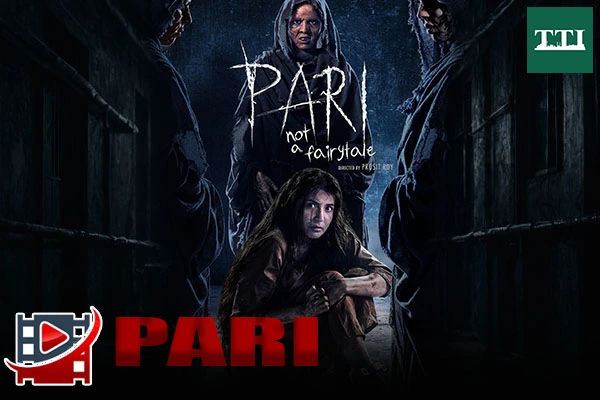
Released in 2018, Pari is one of Bollywood’s most unconventional horror films, directed by Prosit Roy and produced by Anushka Sharma. Unlike traditional horror movies, Pari blends supernatural elements with dark psychological themes, folklore, and striking visuals, creating a cinematic experience that feels like a modern dark fairytale. Praised for its originality, haunting narrative, and atmospheric tension, the film stands out as a redefining moment in Indian horror.
Plot Overview and Supernatural Themes
Pari revolves around Rukhsana (Anushka Sharma), a mysterious woman who appears to have supernatural qualities, and her relationship with Arnab (Parambrata Chatterjee), a man who discovers the dark secret behind her existence. The film is centered on a cult and a curse that has plagued Rukhsana since her birth, connecting the narrative to both horror folklore and modern societal fears. The story gradually unfolds, revealing a complex web of fear, superstition, and human cruelty, which sets the tone for a psychologically intense experience.
What makes Pari particularly striking is its focus on moral ambiguity. The characters are neither purely good nor evil, and the horror is intertwined with questions about humanity, punishment, and social taboos. Instead of relying solely on jump scares or gore, the film cultivates fear through narrative tension, suspenseful pacing, and the unsettling ambiguity of its central character.
Cast and Performances
Anushka Sharma delivers a career-defining performance as Rukhsana. She embodies both vulnerability and menace, making the character simultaneously sympathetic and terrifying. Sharma’s ability to convey fear, anger, and confusion through subtle facial expressions and body language intensifies the horror experience. Parambrata Chatterjee, who plays Arnab, provides a grounded performance that balances the narrative, representing the rational perspective amidst the supernatural chaos. Supporting actors, including Rajat Kapoor and Ritabhari Chakraborty, enhance the story, creating a well-rounded ensemble that adds credibility and depth to the horror.
The cast’s performances are critical in maintaining the film’s tension. Their interactions and believable reactions to the supernatural events make the narrative emotionally engaging, ensuring that viewers are invested in both the story and its eerie atmosphere.
Cinematography and Visual Storytelling
Pari is visually striking, using cinematography to amplify the unsettling mood. The film employs dim lighting, muted color palettes, and deliberate framing to evoke a sense of dread. The visuals are carefully composed to emphasize isolation, entrapment, and the supernatural aura surrounding Rukhsana. Shadows, reflections, and fog are used effectively to create a chilling ambiance without relying on conventional horror clichés.
The filmmakers also employ long takes and slow camera movements to sustain tension. Scenes are structured to make the audience feel the weight of the environment and the characters’ fear. Visual symbolism, such as recurring motifs of blood, confinement, and distorted reflections, enhances the psychological horror, making the film both visually and thematically compelling.
Themes and Symbolism
Pari explores themes rarely touched upon in mainstream Bollywood horror. The film examines societal superstitions, the consequences of human cruelty, and the duality of innocence and evil. Rukhsana herself is a symbolic figure—she represents the fear of the unknown, the consequences of past sins, and the complexity of human morality. By embedding these themes into the horror narrative, Pari transcends simple scares and offers a thought-provoking experience.
Another significant theme is isolation, both physical and emotional. Rukhsana’s character embodies the fear of being misunderstood and rejected, and the film uses her alienation to intensify the psychological horror. This focus on character-driven fear makes the horror resonate beyond the screen, creating an unsettling, lingering effect on the audience.
Music, Sound Design, and Atmosphere
The sound design in Pari is integral to its horror. Minimalist background music, sudden silences, and ambient sounds build tension throughout the film. The occasional crescendo of music punctuates key moments, heightening suspense without overshadowing the narrative. Unlike many horror films that rely on loud sound effects for scares, Pari uses audio subtly, making the audience anticipate danger rather than react to it. This approach contributes to a more sophisticated and enduring horror experience.
The combination of visuals and sound design works together to create a world that feels oppressive, uncanny, and dangerous. Every frame and sound choice is calculated to make viewers feel the film’s tension, drawing them deeper into its dark fairytale setting.
Impact and Reception
Pari received praise for its originality, direction, performances, and atmospheric storytelling. Critics highlighted its dark, unconventional approach to horror, noting that it diverged from Bollywood’s usual reliance on clichéd scares or horror-comedy tropes. The film has been described as a psychological and supernatural experience that challenges audiences to think critically about morality, superstition, and fear.
Though not a massive commercial blockbuster, Pari gained a cult following and is frequently cited as an example of intelligent, artful horror in Indian cinema. Its success demonstrated that Bollywood audiences are receptive to horror films that push boundaries, explore dark themes, and prioritize storytelling and character development over cheap scares.
Conclusion
Pari redefines horror in Bollywood by combining psychological tension, folklore-inspired supernatural elements, and strong performances. Anushka Sharma’s haunting portrayal, coupled with atmospheric cinematography and subtle sound design, creates a film that is both unsettling and emotionally engaging. By exploring complex themes such as human morality, superstition, and isolation, Pari elevates Indian horror beyond traditional formulas. It is a must-watch for viewers seeking a dark, thought-provoking, and visually compelling horror experience.
FAQs
1. What is the plot of Pari?
Pari follows Rukhsana, a mysterious woman with a dark past, and explores supernatural curses, human cruelty, and psychological horror.
2. Who are the lead actors in Pari?
Anushka Sharma stars as Rukhsana, with Parambrata Chatterjee as Arnab, supported by Rajat Kapoor and Ritabhari Chakraborty.
3. What makes Pari different from other Indian horror films?
It combines psychological and supernatural horror with dark fairytale elements, minimal jump scares, and a focus on moral and social themes.
4. How does cinematography enhance the horror in Pari?
Dim lighting, muted color palettes, shadows, and long takes create an immersive and unsettling atmosphere.
5. What themes does Pari explore?
The film addresses superstition, morality, isolation, human cruelty, and the duality of innocence and evil.
6. Was Pari commercially successful?
While not a blockbuster, it received critical acclaim and developed a cult following for its originality and artistic approach to horror.
Next Topic: Pizza: The South Indian Horror Thriller With a Shocking Twist
Also Check: Bhoot: Why Silence Made This One of India’s Scariest Movies