


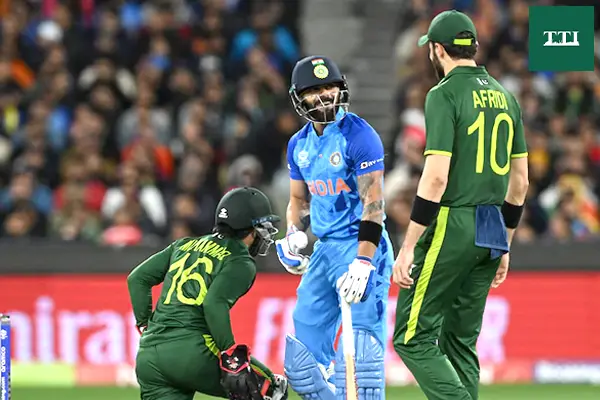
The 2026 ICC Women’s T20 World Cup is set to ignite with one of the most storied rivalries in sporting history. Match 6 of the tournament, scheduled for June 14, 2026, at the historic Edgbaston Stadium in Birmingham, brings together India and Pakistan. This encounter is not just a game of bat and ball; it is a high-stakes battle that often dictates the momentum for the remainder of the group stage. As both teams prepare to navigate Group 1 alongside giants like Australia and South Africa, this early fixture becomes a “must-win” for securing a path toward the semi-finals.
Historical Dominance vs. Improving Resilience
India enters this match with a significant psychological advantage. Historically, the “Women in Blue” have held a firm grip over their neighbors in the T20 format, winning the vast majority of their head-to-head encounters. In recent years, India’s professionalization through the Women’s Premier League (WPL) has created a depth in talent that few teams can match. Their ability to produce match-winners from the top order down to the lower middle order has made them a formidable force in ICC events.
Pakistan, however, has shown flashes of brilliance and a growing resilience. Under the leadership of Fatima Sana, the squad has focused on a more aggressive brand of cricket. While they have historically struggled to chase down large totals against India, their bowling unit—led by the likes of Sadia Iqbal and Nashra Sandhu—has consistently found ways to trouble top-tier batters. The 2026 edition represents a chance for Pakistan to bridge the gap and prove that the rivalry is becoming more competitive on the field.
Also Read: A Southampton Showdown: Can the West Indies Overpower the White Ferns in Match 4?
Key Player Battles at Edgbaston
The outcome of this match will likely be decided by a few critical individual contests. At the top of the order, India’s Smriti Mandhana and Shafali Verma will look to exploit the fielding restrictions during the powerplay. If they survive the opening burst from Pakistan’s Diana Baig, India could potentially post a total beyond Pakistan’s reach. Conversely, if Pakistan can remove the Indian openers early, the pressure will shift to Harmanpreet Kaur to stabilize the middle order.
For Pakistan, the batting leans heavily on Muneeba Ali and the experienced Sidra Amin. They will face a stern test against India’s Renuka Singh Thakur, whose ability to swing the ball in English conditions is well-documented. Additionally, the spin-bowling prowess of Deepti Sharma remains a major hurdle for Pakistan. Deepti’s knack for picking up wickets in the middle overs while maintaining a low economy rate often stifles Pakistan’s scoring rate, forcing errors that lead to a collapse.
Tactical Outlook and Pitch Conditions
Edgbaston is known for offering a fair contest between bat and ball. In June, the English overhead conditions can often assist seamers early in the day, but the pitches generally flatten out, favoring stroke-makers as the match progresses. India’s tactical flexibility, with a plethora of all-rounders like Sneh Rana and Vastrakar, allows them to adapt to whether the pitch is a “green top” or a dry, spinning surface.
Pakistan’s strategy will likely revolve around their spinners “boring” the Indian batters into playing risky shots. By keeping the lines tight and the field spread, they aim to frustrate a team that prefers to score quickly. However, the modern Indian side has become increasingly adept at finding gaps and using their feet to negate spin, which remains the primary challenge for the Pakistani bowling attack.
Predicted Outcome
Predicting a winner in an India-Pakistan clash always carries an element of unpredictability due to the immense pressure involved. However, based on current form, squad depth, and recent tournament history, India starts as the clear favorite. Their superior batting depth and the experience of playing in high-pressure leagues give them the edge needed to handle the Edgbaston crowd.
Pakistan is certainly capable of an upset if their bowlers can trigger a top-order collapse, but India’s consistency in ICC group stages suggests they will likely secure the win. Expect a competitive first half, but India’s clinical finishing in the latter stages of both innings should see them home, moving them one step closer to the knockout rounds.