


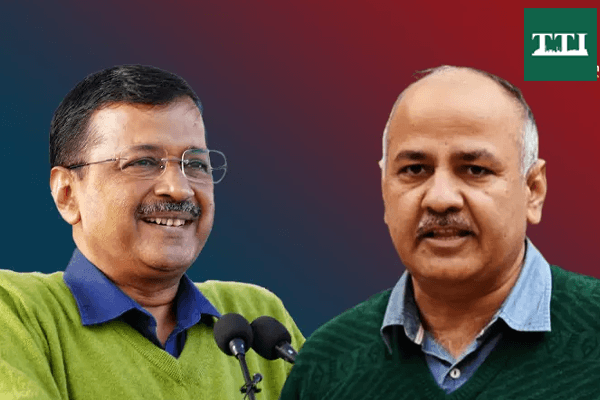
In a landmark ruling that has sent shockwaves through the political landscape, the Rouse Avenue Court on February 27, 2026, discharged former Delhi Chief Minister Arvind Kejriwal and his former deputy Manish Sisodia in the high-profile Delhi excise policy case. The court’s decision to clear all 23 accused—including BRS leader K. Kavitha—rests on a scathing assessment of the prosecution’s case, which the judge described as failing to meet even the “basic threshold” required to proceed to trial.
The verdict follows years of a legal battle that saw senior AAP leadership imprisoned and the Delhi government in a state of administrative turmoil. In its detailed order, the court observed that the allegations of a “central conspiratorial role” were largely based on conjecture rather than concrete material.
No Prima Facie Case Against Kejriwal
A primary pillar of the court’s discharge order was the complete lack of direct evidence against Arvind Kejriwal. The judge noted that the prosecution failed to place any material on record that could establish a prima facie case against the former Chief Minister. The court emphasized that a sitting constitutional authority cannot be implicated based on vague assertions.
Crucially, the allegations against Kejriwal were found to be rooted in a single, weak witness statement that lacked any independent corroboration. The court remarked that such “misleading averments” in the chargesheet were insufficient to sustain serious criminal charges. The judge underscored that mere participation in policy-making or the approval of a Cabinet decision does not translate to criminal intent or a meeting of minds for illegal gain.
Also Read: JNU “Long March” Turns Violent: Students and Police Clash Over UGC Norms
Collapse of the Conspiracy Theory
The Central Bureau of Investigation (CBI) had long contended that the 2021-22 excise policy was a product of an “overarching conspiracy” designed to benefit a “South Group” in exchange for kickbacks. However, the court systematically dismantled this narrative. Special Judge Jitender Singh observed that the theory of an “institutional conspiracy” was not supported by the evidentiary record.
The court found that the excise policy was actually the result of a consultative and deliberative exercise involving various stakeholders and administrative safeguards. The “conspiracy theory,” as projected by the agency, was found to suffer from internal contradictions. The judge noted that in the absence of a demonstrably unlawful implementation, the prosecution’s theory was reduced to mere conjecture.
Investigative Lapses and Procedural Concerns
Perhaps the most stinging part of the judgment was the court’s critique of the CBI’s investigative methods. The judge flagged several “lacunae” in the voluminous chargesheet, noting that many claims were not supported by any witness testimony or physical evidence.
The court went a step further by recommending departmental action against the Investigating Officer (IO). This recommendation stemmed from the observation that the investigation appeared to involve “anticipatory manipulation” rather than a fair pursuit of truth. The judge warned that the practice of turning an accused into an “approver” to fill gaps in a weak narrative is a dangerous precedent that undermines the rule of law.
Lack of Material Evidence and “Money Trail”
Regarding Manish Sisodia, who spent over 500 days in custody, the court found no material indicating criminal intent. The judge pointed out that no recovery of incriminating documents or “proceeds of crime” was ever made from Sisodia. The prosecution’s claim regarding a “36-page printout” that allegedly proved the conspiracy also collapsed when it was found to be inconsistent with official records and timelines.
Under the Prevention of Corruption Act, a “demand” for illegal gratification is a mandatory requirement for prosecution. The court noted the total absence of proof of any such demand or quid pro quo.
Victory of “Kattar Imaandari”
Following the verdict, an emotional Arvind Kejriwal addressed the media, breaking down as he embraced Manish Sisodia. “The court has said today that Kejriwal, Manish Sisodia, and AAP are honest,” he stated, asserting that the case was a political conspiracy to “finish” his party.
While the CBI has indicated its intention to challenge the discharge in the Delhi High Court, the trial court’s order serves as a significant legal vindication for the AAP leadership. The ruling reinforces the principle that criminal prosecution, particularly of those in constitutional roles, must be grounded in solid evidence rather than political narratives or procedural conjecture.
Also Read: Facts Disregarded: Court Orders Action Against CBI Officer in Delhi Liquor Case