


India’s fintech sector has experienced unprecedented growth over the last decade, emerging as one of the most dynamic areas of innovation in the country. With increasing smartphone penetration, digital payment adoption, and supportive government policies, fintech startups are transforming the way Indians access financial services. The year 2026 continues this trend, showcasing key players, emerging technologies, and market trends shaping the future of financial technology in India. This article provides an in-depth analysis of the rise of fintech startups in India, their impact, and what investors and consumers can expect moving forward.
Overview of India’s Fintech Ecosystem
The Indian fintech ecosystem is diverse, encompassing digital payments, lending platforms, wealth management, insurance technology (insurtech), and blockchain-based financial solutions. The sector has grown rapidly, fueled by consumer demand for convenience, efficiency, and secure digital financial services.
Government initiatives like the Digital India Program, Unified Payments Interface (UPI), and financial inclusion schemes have accelerated fintech adoption. Startups leveraging these platforms are redefining banking, payment, and investment solutions, providing access to millions of previously unbanked or underserved individuals.
India’s fintech landscape also attracts significant venture capital funding. Investors recognize the high growth potential, with startups scaling quickly due to technology-driven efficiencies, innovative business models, and favorable regulatory frameworks.
Key Players in 2026
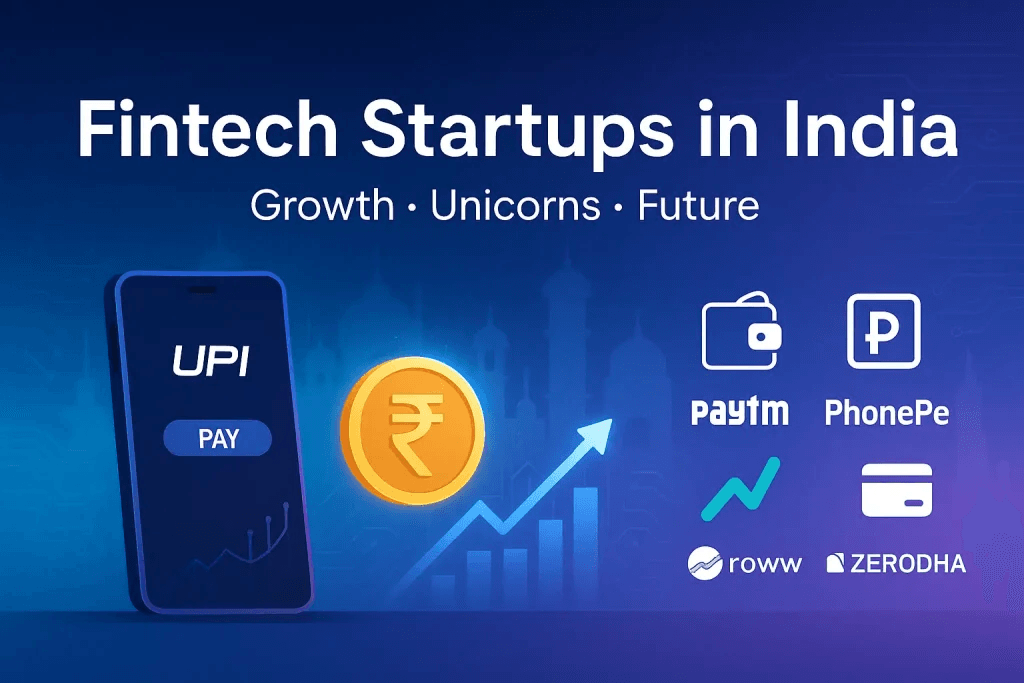
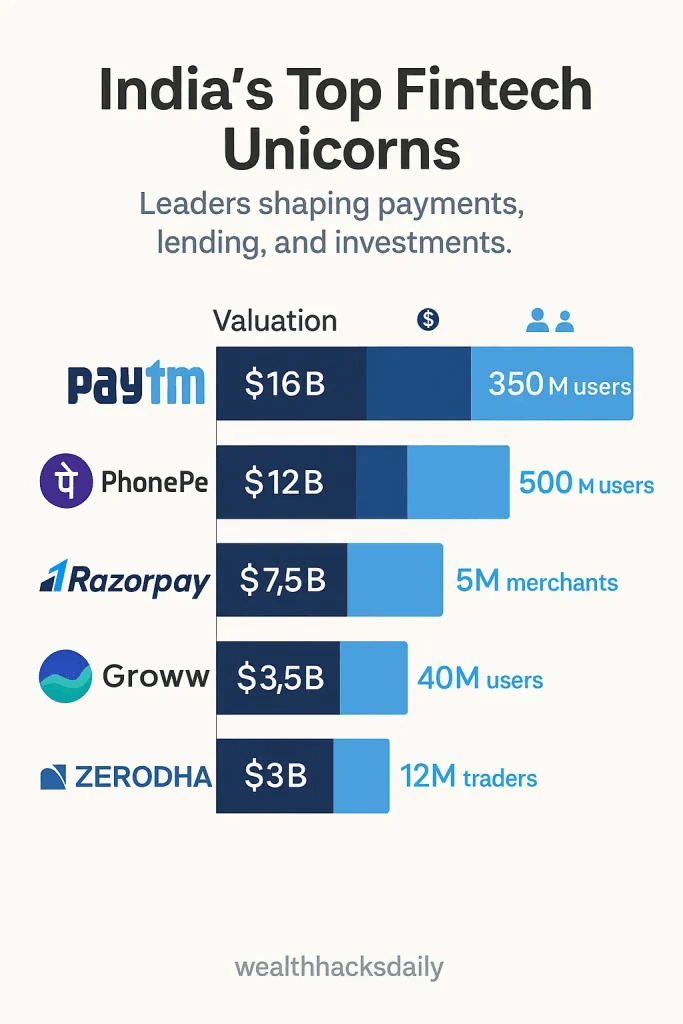
Several fintech startups have emerged as leaders in India, driving adoption and innovation across sectors:
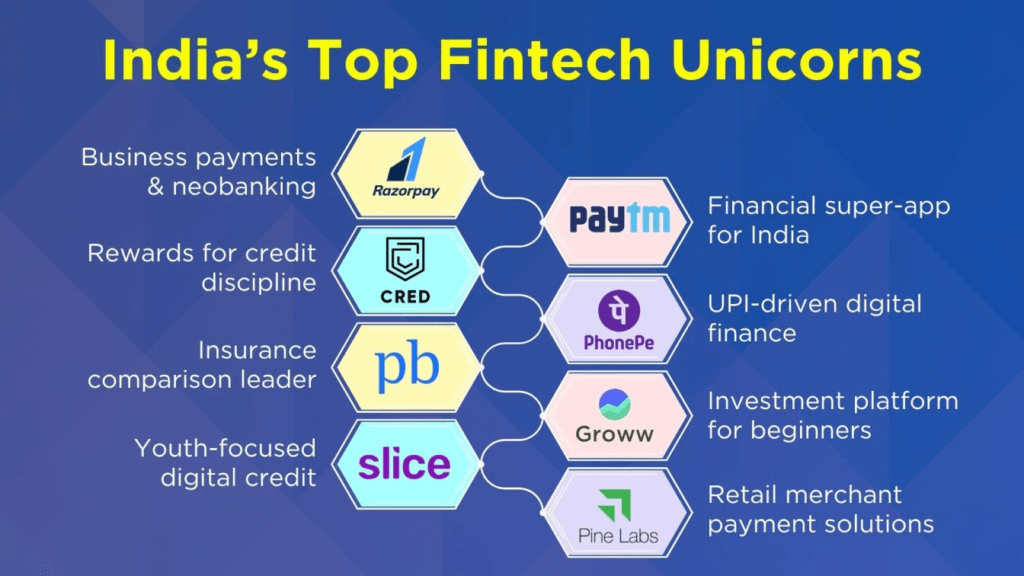
1. Paytm: Paytm remains a major player in digital payments, e-wallet services, and financial products such as insurance and lending. Its continuous integration of new technologies keeps it at the forefront of India’s fintech revolution.
2. Razorpay: Focused on payment gateways and business solutions, Razorpay has become essential for small and medium enterprises (SMEs), enabling seamless online transactions and financial management tools.
3. Cred: Cred leverages credit management and rewards platforms to encourage timely bill payments and responsible credit use. Its gamified model appeals to tech-savvy consumers seeking financial convenience.
4. Groww and Zerodha: These startups provide simplified investment platforms for mutual funds, stocks, and other financial products, democratizing access to wealth management for retail investors.
5. BharatPe and Cashfree: BharatPe supports merchant payments and lending solutions, while Cashfree focuses on payment processing and banking automation, serving both startups and large businesses.
These companies exemplify how Indian fintech startups are addressing gaps in financial services, combining technology, user-centric design, and regulatory compliance.
Emerging Trends in Fintech
Several trends are shaping the fintech landscape in India in 2026:
Digital Payments Expansion: UPI and mobile wallet adoption continue to grow, with consumers increasingly opting for contactless, seamless payment methods. Integration with e-commerce and offline retail platforms is expanding digital transaction volume.
Embedded Finance: Startups are offering banking and lending services within non-financial platforms. For example, e-commerce apps providing credit at checkout or ride-sharing apps integrating insurance coverage are examples of embedded finance trends.
Blockchain and Crypto Solutions: Blockchain technology is being used for secure transactions, cross-border remittances, and decentralized finance (DeFi) products. While cryptocurrencies are regulated, blockchain adoption remains strong in financial services innovation.
AI and Data Analytics: Artificial intelligence is enabling smarter credit scoring, fraud detection, customer support, and personalized financial recommendations. Fintech startups are leveraging AI to reduce operational risks and enhance user experience.
Financial Inclusion: Startups are bridging the gap for underserved populations, providing microloans, insurance products, and digital banking access in rural areas, fostering economic participation and social impact.
Challenges for Fintech Startups
Despite rapid growth, fintech startups in India face challenges:
Regulatory Compliance: Navigating evolving regulations, such as data privacy, digital lending, and cryptocurrency policies, requires startups to maintain rigorous compliance mechanisms.
Cybersecurity Risks: As digital transactions increase, fintech companies face heightened risks of data breaches and fraud, necessitating robust security infrastructure.
Competition: With a booming fintech ecosystem, competition is intense, requiring continuous innovation and customer retention strategies.
Consumer Awareness: While digital adoption is growing, educating consumers about safe financial practices remains critical to prevent misuse and build trust.
Opportunities and Future Outlook
India’s fintech sector is poised for continued growth, supported by technology, regulatory support, and rising consumer demand. Startups focusing on AI-driven solutions, blockchain integration, and inclusive financial services are likely to lead the next phase of innovation.
Investment opportunities in fintech remain strong, with venture capital, private equity, and strategic partnerships fueling expansion. Fintech companies are increasingly collaborating with traditional banks and global financial institutions to enhance reach and capabilities.
The sector is also expected to expand into underserved areas, such as rural banking, insurance penetration, and SME financing. By addressing gaps in traditional financial services, fintech startups can drive significant economic and social impact while generating substantial business growth.
Conclusion
In conclusion, fintech startups in India continue to reshape the financial landscape, offering innovative solutions across payments, lending, investment, and insurance sectors. The rise of digital adoption, government support, and technology-driven innovation has positioned India as a leading fintech hub globally. While challenges like regulatory compliance, cybersecurity, and competition persist, the opportunities for growth and transformation are immense. Startups that combine technological innovation, customer-centric design, and responsible financial practices are likely to thrive, contributing to India’s economic development and financial inclusion goals.
FAQs
1. What are the key sectors in India’s fintech industry?
Digital payments, lending, wealth management, insurtech, and blockchain-based financial solutions are the primary sectors driving fintech growth.
2. How are fintech startups contributing to financial inclusion?
Startups provide digital banking, microloans, and insurance services to underserved populations, enhancing access to financial services across India.
3. What role does AI play in Indian fintech?
AI is used for credit scoring, fraud detection, customer support, and personalized financial recommendations, improving efficiency and user experience.
4. What are the main challenges faced by fintech startups?
Regulatory compliance, cybersecurity risks, intense competition, and consumer awareness are significant challenges for fintech companies.
Next Topic: Gold Investment India 2026 – Physical vs Digital Guide
Also Check: Indian Stock Market Outlook 2026 – Key Trends India